华东师范大学学报(自然科学版) ›› 2026, Vol. 2026 ›› Issue (5): 167-177.doi: 10.3969/j.issn.1000-5641.2026.05.014

• 数据治理 • 上一篇    

面向 AI Agent 能力生态的开源协作治理: OpenClaw 案例研究

耿航航, 陈小伟, 韩凡宇, 王伟*()   

  1. 华东师范大学 数据科学与工程学院, 上海 200062
  • 收稿日期:2026-07-28 出版日期:2026-09-25 发布日期:2026-09-12
  • 通讯作者: 王伟 E-mail:wwang@dase.ecnu.edu.cn

Open-source collaboration governance for AI Agent capability ecosystems: A case study of OpenClaw

Hanghang GENG, Xiaowei CHEN, Fanyu HAN, Wei WANG*()   

  1. School of Data Science and Engineering, East China Normal University, Shanghai 200062, China
  • Received:2026-07-28 Online:2026-09-25 Published:2026-09-12
  • Contact: Wei WANG E-mail:wwang@dase.ecnu.edu.cn

摘要:

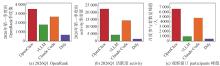
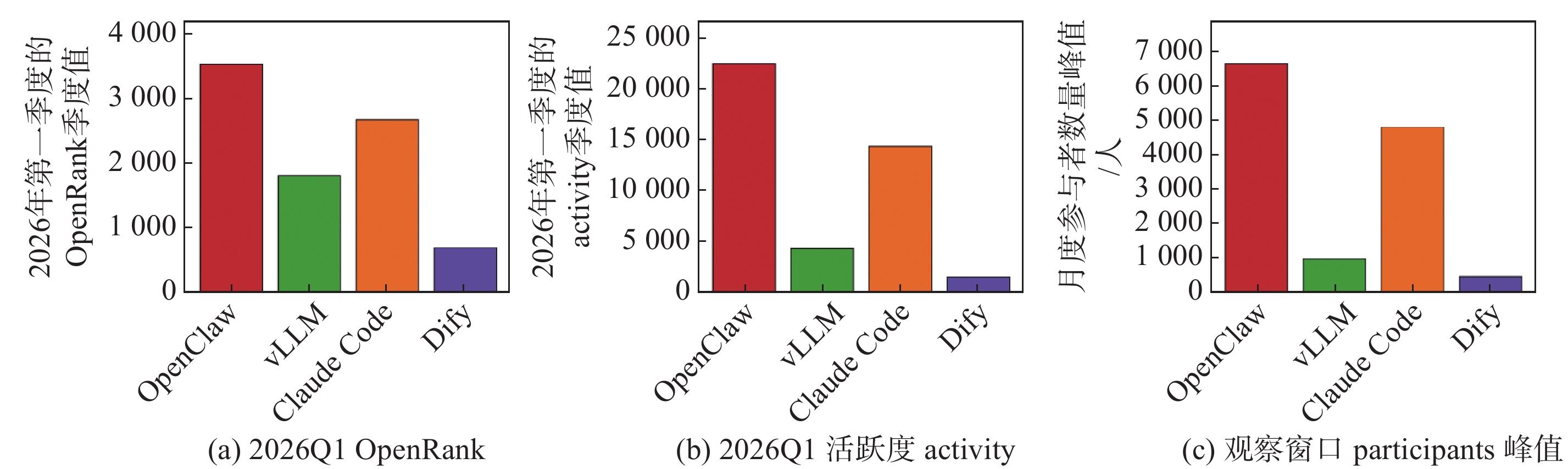
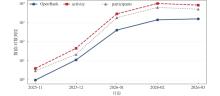
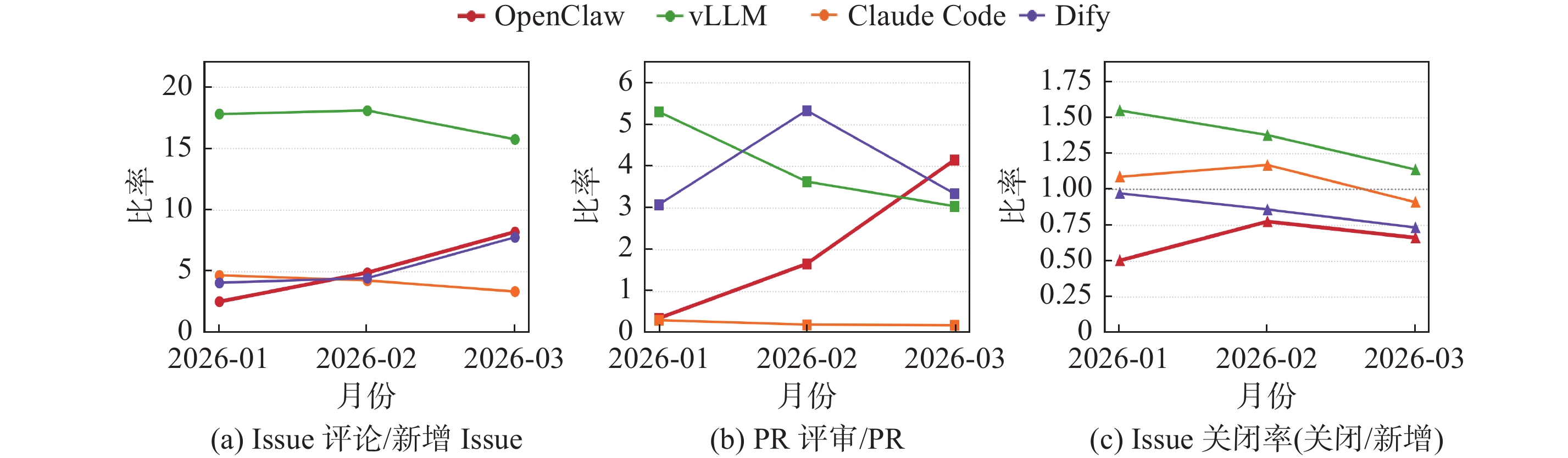
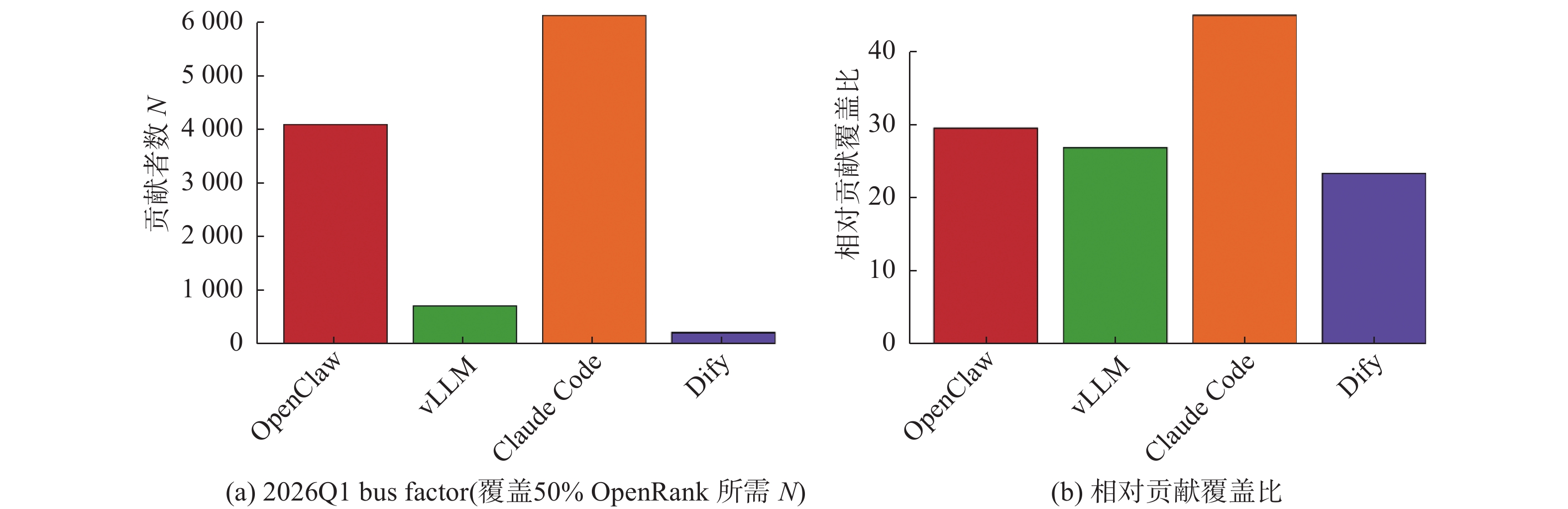
人工智能原生 (Artificial Intelligence-native, AI-native) 开源项目正从代码仓库演化为连接模型、工具、插件与用户场景的能力生态, 其早期的关注爆发是否能够转化为稳定的协作治理能力, 仍缺乏量化证据. 本文基于 OpenDigger 公开数据, 从项目影响力、参与规模、问题处理能力和贡献分布4个维度, 分析 OpenClaw 在 2025 年11月至2026年3月的早期协作动态, 并与 vLLM、Claude Code、Dify 3个同窗口 AI 原生项目进行对照. 结果表明, OpenClaw 的关注增长已经转化为实际协作扩张, 2026 年第一季度 OpenRank 与 activity 均高于3个对照项目; Issue 关闭率为 0.70, 是4个项目中的最低值, 问题处理能力未能跟上参与者和协作事件的增长; 组织层的活动高度集中在主仓库, 仓库内部则呈现长尾贡献分布. 较高的 bus factor 说明贡献参与面较广, 但其治理含义仍需结合核心维护者结构判断. 研究结果提示, AI 原生开源项目在扩大参与规模的同时, 还需要建设与之匹配的问题处理和贡献吸收机制.

关键词: OpenClaw, 开源协作, 贡献结构

Abstract:

AI-native (Artificial Intelligence-native) open-source projects are evolving beyond code repositories into capability ecosystems that integrate models, tools, plugins, and user scenarios. However, quantitative evidence on whether an early surge in attention translates into stable collaborative governance capacity is limited. Using publicly available OpenDigger data, this study examines OpenClaw’s early collaboration dynamics from November 2025 to March 2026 across four dimensions: project influence, participation scale, issue-handling capacity, and contribution distribution. These dimensions are then compared with those of three AI-native open-source projects—vLLM, Claude Code, and Dify—over the same observation window. The results show that OpenClaw’s growth in attention translated into substantive collaboration expansion. In the first quarter of 2026, both its OpenRank and activity surpassed those of the three open-source projects. However, OpenClaw’s issue close rate was 0.70—the lowest among the four projects—indicating that its issue-handling capacity could not keep up with the growth in participants and collaboration events. At the organizational level, activity was highly concentrated in the core repository, while contributions within that repository exhibited a long-tail distribution. A relatively high bus factor suggests broad contributor participation; however, its governance implications must be assessed in conjunction with the structure of the core maintainer group. These findings suggest that, as AI-native open-source projects expand participation, they need to develop corresponding mechanisms for issue handling and contribution absorption.

Key words: OpenClaw, open-source collaboration, contribution structure

中图分类号: