
 中文核心期刊
华东师范大学学报(自然科学版) ›› 2026, Vol. 2026 ›› Issue (1): 87-98.doi: 10.3969/j.issn.1000-5641.2026.01.008
周启星*( ), 王辉(), 程思雯
收稿日期:2025-10-20
接受日期:2025-12-01
出版日期:2026-01-25
发布日期:2026-01-29
通讯作者:
周启星
E-mail:zhouqx@nankai.edu.cn;wh13646018712@163.com
作者简介:王 辉, 男, 博士研究生, 研究方向为环境修复与污染治理. E-mail: wh13646018712@163.com
基金资助:
Qixing ZHOU*(), Hui WANG(), Siwen CHENG
Received:2025-10-20
Accepted:2025-12-01
Online:2026-01-25
Published:2026-01-29
Contact:
Qixing ZHOU
E-mail:zhouqx@nankai.edu.cn;wh13646018712@163.com
摘要:
污水处理行业作为关键碳排放源, 其减污降碳协同转型对实现碳中和目标具有重要战略意义. 系统综述了支撑污水处理领域实现碳中和的各类新兴技术, 聚焦生物强化、资源回收与能源自给、新型功能材料、自然与混合系统、数字化协同耦合模式等核心方向, 阐释了不同技术路径的减碳机制与应用价值. 研究发现, 生物强化技术通过革新微生物代谢路径削减温室气体排放与能耗; 资源回收技术将有机污染物转化为清洁能源, 推动处理系统实现能源自给并形成碳汇效应; 新型功能材料通过靶向捕集温室气体、强化电子传递等方式进一步降低碳排放强度; 自然与混合系统依托生态循环实现碳的主动固定与能量再生; 数字化协同耦合模式则通过全流程智能调控, 推动污水处理厂从碳排放主体转型为碳资产生产者. 当前新兴技术规模化应用面临微生物调控困难、监测体系不完善、碳核算标准滞后及经济成本与环境效益失衡等瓶颈. 未来需从技术研发、政策机制、产业生态层面协同发力, 通过强化功能微生物调控、构建模块化技术体系、完善碳交易政策与绿色金融工具等措施, 推动污水处理行业从传统能源消耗端升级为资源产出中枢, 为全球碳中和实践提供系统性解决方案.
中图分类号:
周启星, 王辉, 程思雯. 污水处理新技术助力实现碳中和: 路径、机制与展望[J]. 华东师范大学学报(自然科学版), 2026, 2026(1): 87-98.
Qixing ZHOU, Hui WANG, Siwen CHENG. New wastewater treatment technologies advance carbon neutrality: Pathways, mechanisms, and outlook[J]. J* E* C* N* U* N* S*, 2026, 2026(1): 87-98.
图1
污水处理过程中涉及的直接碳排放和间接碳排放"
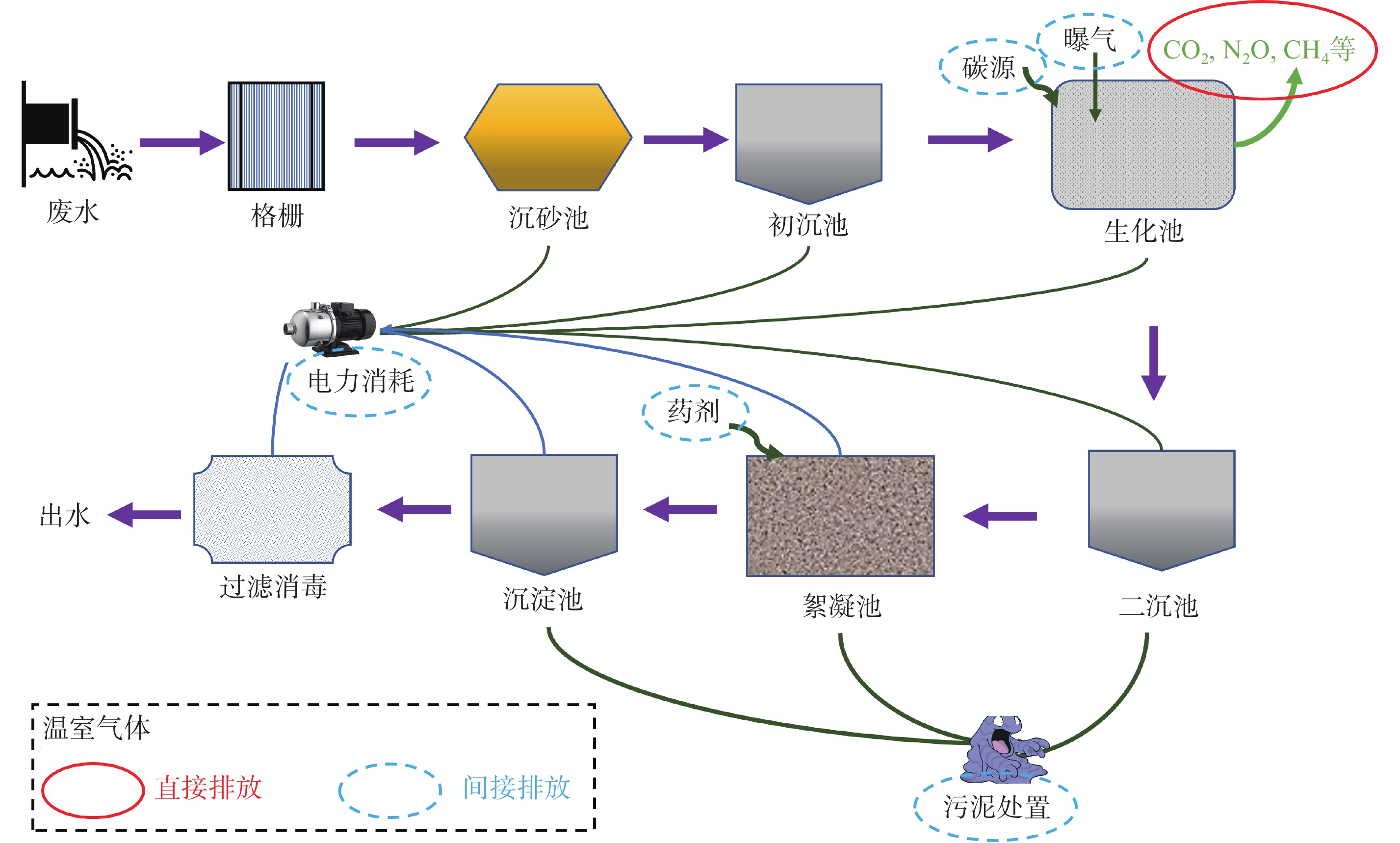
图2
生物强化技术助力污水处理过程中减污降碳"
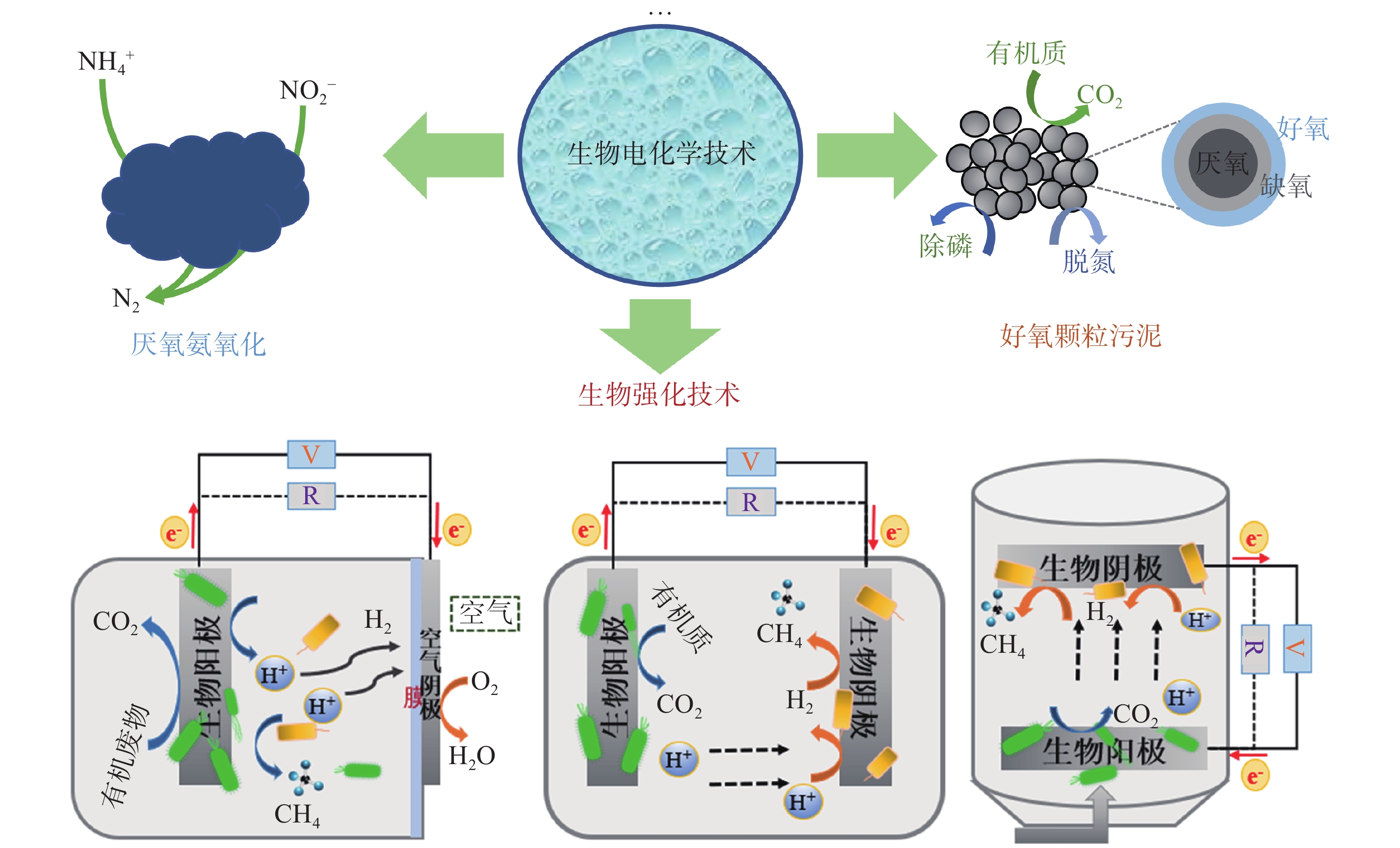
图3
人工湿地与藻-菌共生系统助力废水处理过程中的碳减排"
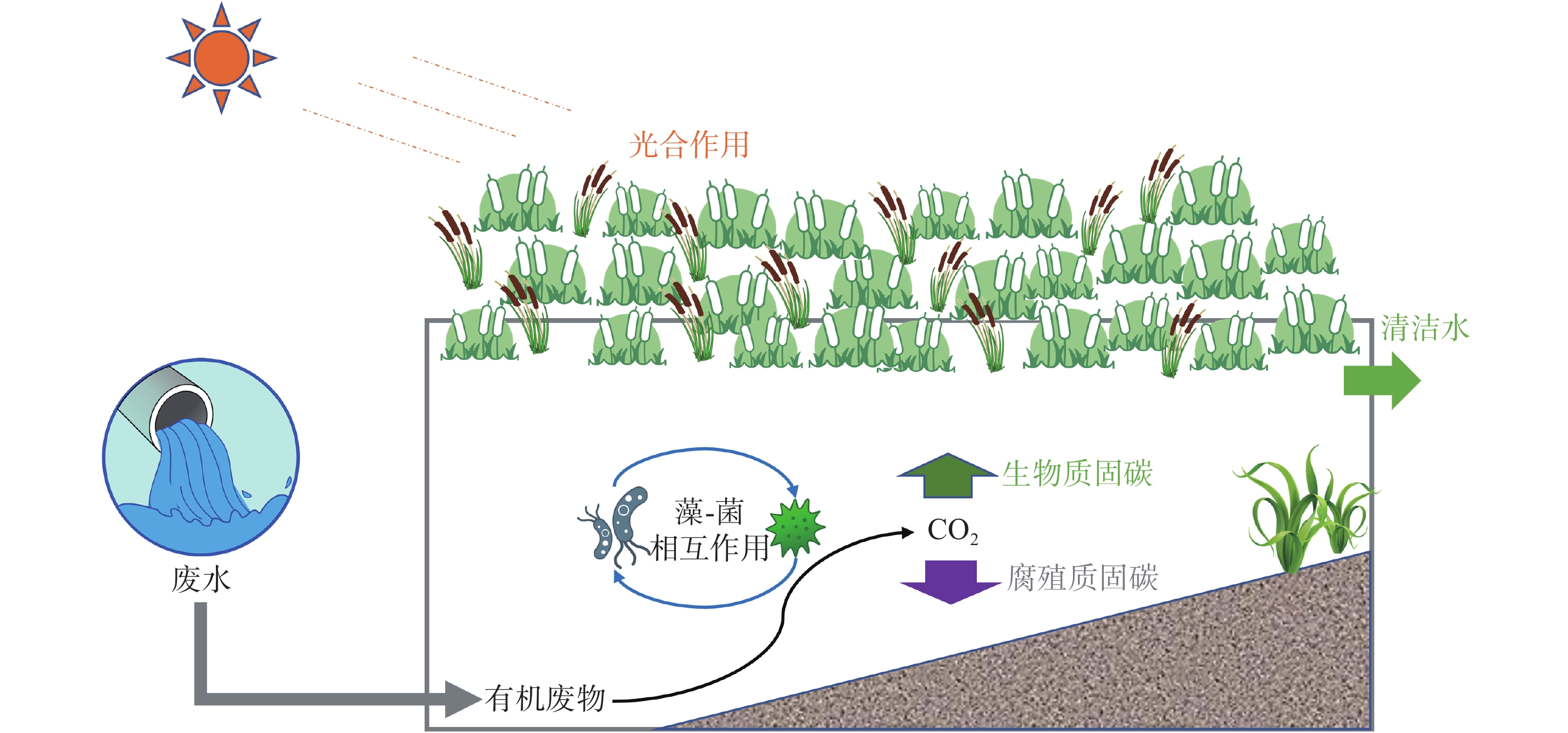
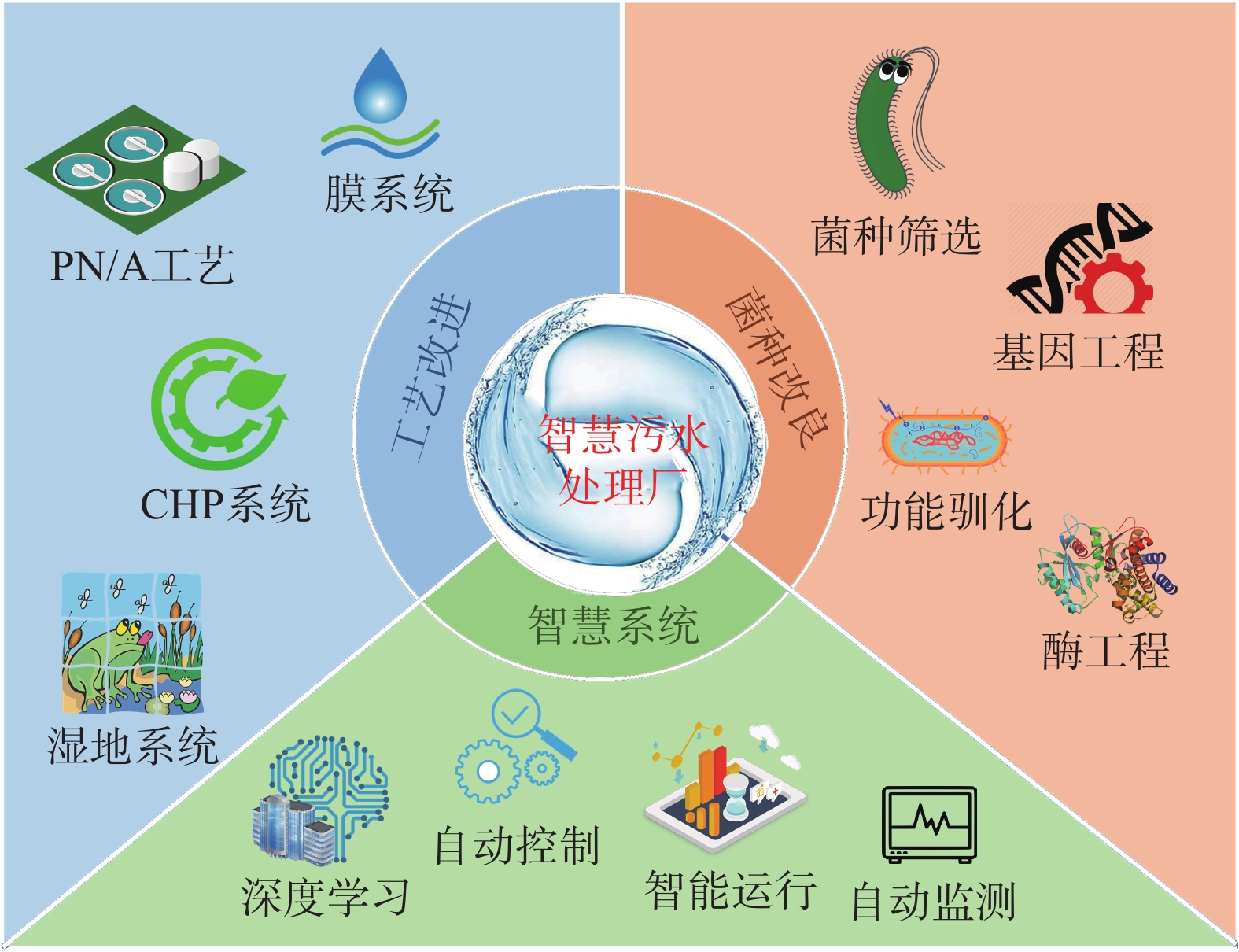
图4
智慧污水处理厂的发展方向"
| 1 | LIU R B, MA Y, ZHANG H L, et al.. A review-based estimation of GHG emissions of China’s wastewater management system. Journal of Environmental Management, 2025, 380, 124869. |
| 2 | GONG A, WANG G T, QI X, et al.. Energy recovery and saving in municipal wastewater treatment engineering practices. Nature Sustainability, 2025, 8 (1): 112- 119. |
| 3 | SHUKURU B N, POLITAEVA N A.. Mitigating CH4 and N2O emissions from domestic and industrial wastewater. Renewable and Sustainable Energy Reviews, 2025, 210, 115203. |
| 4 | 王晓辉.. 基于碳中和目标的污水处理厂低碳技术路径与应用. 智能建筑与智慧城市, 2025, (6): 138- 140. |
| 5 | 彭栓, 刘永, 毛国柱, 等.. 中国污水处理行业温室气体减排关键问题及对策. 环境科学, 2025, 46 (1): 129- 139. |
| 6 | 邱巨龙, 刘树洋, 王华, 等.. 污水处理厂温室气体排放核算与减排路径研究. 环境监测管理与技术, 2024, 36 (3): 83- 87. |
| 7 | PROBST B S, TOETZKE M, KONTOLEON A, et al.. Systematic assessment of the achieved emission reductions of carbon crediting projects. Nature Communications, 2024, 15, 9562. |
| 8 | SHAN Y L, TIAN K L, LI R Q, et al.. Global methane footprints growth and drivers 1990-2023. Nature Communications, 2025, 16, 8184. |
| 9 | TIAN H Q, LU C Q, CIAIS P, et al.. The terrestrial biosphere as a net source of greenhouse gases to the atmosphere. Nature, 2016, 531 (7593): 225- 228. |
| 10 | YAN G X, KENWAY S J, LAM K L, et al.. Greenhouse gas emission dynamics and trajectories in urban water supply and wastewater systems. Water Research, 2025, 275, 123153. |
| 11 | THAKUR I S, MEDHI K.. Nitrification and denitrification processes for mitigation of nitrous oxide from waste water treatment plants for biovalorization: Challenges and opportunities. Bioresource Technology, 2019, 282, 502- 513. |
| 12 | YESIL H, TUGTAS A E, ÇALLI B.. Beyond landfills: Transforming biodegradable waste into climate solutions and valuable resources. Reviews in Environmental Science and Bio/Technology, 2025, 24 (3): 805- 829. |
| 13 | LIU M Y, YUAN X L, CHEN L P, et al.. Parameter-sensitive life cycle assessment of sludge incineration technologies integrating energy balance model. Waste Management, 2025, 201, 114783. |
| 14 | ZHOU H, WANG Z Y, LIU B B, et al.. Regional heterogeneity of sustainable wastewater sludge management in China. Resources, Conservation and Recycling, 2024, 209, 107755. |
| 15 | CHEN F, LEI J Y, LIU Z L, et al.. A comparative study on the average CO2 emission factors of electricity of China. Energies, 2025, 18 (3): 654. |
| 16 | SONG Y P, DU L L, WANG B G, et al.. Flexible carbon source regulation for mitigating greenhouse gas emissions in full-scale wastewater treatment. Environmental Science & Technology, 2025, 59 (19): 9517- 9528. |
| 17 | SONG C H, ZHU J J, WILLIS J L, et al.. Oversimplification and misestimation of nitrous oxide emissions from wastewater treatment plants. Nature Sustainability, 2024, 7 (10): 1348- 1358. |
| 18 | ZHENG L W, HU Y B, SU B, et al.. The potential of wastewater treatment on carbon storage through ocean alkalinity enhancement. Science Advances, 2025, 11 (18): eads0313. |
| 19 | CHAPIN F T, WETTERMARK D, BOLORINOS J, et al.. Load-shifting strategies for cost-effective emission reductions at wastewater facilities. Environmental Science & Technology, 2025, 59 (4): 2285- 2294. |
| 20 | 牛子帆, 赖春宇, 赵和平.. 中国污水处理温室气体排放量估算与分析. 能源环境保护, 2023, 37 (4): 109- 120. |
| 21 | ZHANG X Y, LIU Y.. Resource recovery from municipal wastewater: A critical paradigm shift in the post era of activated sludge. Bioresource Technology, 2022, 363, 127932. |
| 22 | KAZEMIAN S, ZAMAN R, IRANMANESH M, et al.. Assessing the carbon footprint of the agriculture, forestry, and fishing industry of Australia. Sustainability Accounting, Management and Policy Journal, 2025, 16 (5): 1243- 1268. |
| 23 | 中国城市发展研究会. 城镇污水处理厂碳排放核算标准: T/CRSUD 001—2023 [S]. 北京: 中国城市发展研究会, 2023. |
| 24 | 陈健华, 刘玫, 孙亮, 等.. 组织温室气体排放核算ISO国际标准修订进展及解读. 标准科学, 2015, (12): 121- 123. |
| 25 | LAN K, YAO Y.. Dynamic life cycle assessment of energy technologies under different greenhouse gas concentration pathways. Environmental Science & Technology, 2022, 56 (2): 1395- 1404. |
| 26 | YU S L, DENG S H, ZHOU A, et al.. Life cycle assessment of energy consumption and GHG emission for sewage sludge treatment and disposal: A review. Frontiers in Energy Research, 2023, 11, 1123972. |
| 27 | MEDINA-MARTOS E, ISTRATE I R, VILLAMIL J A, et al.. Techno-economic and life cycle assessment of an integrated hydrothermal carbonization system for sewage sludge. Journal of Cleaner Production, 2020, 277, 122930. |
| 28 | TAN J, YE M, LIN C H, et al.. Assigning strategic COD flow to enhance denitrification coupled with anaerobic digestion and anammox for systematic upgradation of advanced nitrogen removal from food waste digestate. Chemical Engineering Journal, 2024, 493, 152740. |
| 29 | NI L F, WANG P F, ZHOU G, et al.. In situ electrocatalytic nitrate-to-nitrite conversion-driven anammox in MBRs for extremely efficient ammonium-containing wastewater treatment. Water Research, 2025, 285, 124148. |
| 30 | CAO S B, YAN W W, YU L, et al.. Challenges of THP-AD centrate treatment using partial nitritation-anammox (PN/A)–inhibition, biomass washout, low alkalinity, recalcitrant and more. Water Research, 2021, 203, 117555. |
| 31 | CAO S B, KOCH K, DUAN H R, et al.. In a quest for high-efficiency mainstream partial nitritation-anammox (PN/A) implementation: One-stage or two-stage?. Science of the Total Environment, 2023, 883, 163540. |
| 32 | KAUR M, GUO B, IORHEMEN O T.. Potential for the recovery of xanthan from aerobic granular sludge wastewater systems–A review. Resources, Conservation and Recycling, 2024, 207, 107688. |
| 33 | SEPÚLVEDA-MARDONES M, CAMPOS J L, MAGRÍ A, et al.. Moving forward in the use of aerobic granular sludge for municipal wastewater treatment: An overview. Reviews in Environmental Science and Bio/Technology, 2019, 18 (4): 741- 769. |
| 34 | WANG H, ZHOU Q X.. Bioelectrochemical systems–A potentially effective technology for mitigating microplastic contamination in wastewater. Journal of Cleaner Production, 2024, 450, 141931. |
| 35 | 梁家伟, 周亶, 蒋东云, 等.. 生物电化学系统强化厌氧消化的机理和底物效应. 中国沼气, 2023, 41 (6): 26- 33. |
| 36 | WANG Z, LIU Y J, ZHANG A N, et al.. A review of process development, mechanistic insights, and enhancement technologies for anaerobic digestion in industrial wastewater treatment. Journal of Environmental Chemical Engineering, 2025, 13 (5): 118217. |
| 37 | KHURANA P, PULICHARLA R, KAUR BRAR S.. Antibiotic-metal complexes in wastewaters: Fate and treatment trajectory. Environment International, 2021, 157, 106863. |
| 38 | YAN Y, LIN B, ZHANG L H, et al.. Electrochemical oxidation processes based on renewable energy towards carbon neutrality: Oxidation fundamentals, catalysts, challenges and prospects. Chemical Engineering Journal, 2024, 487, 150447. |
| 39 | VINARDELL S, ASTALS S, PECES M, et al.. Advances in anaerobic membrane bioreactor technology for municipal wastewater treatment: A 2020 updated review. Renewable and Sustainable Energy Reviews, 2020, 130, 109936. |
| 40 | HAMIDI M N.. Membrane bioreactor technology for greywater treatment: A review. Separation and Purification Technology, 2025, 361, 131451. |
| 41 | NKOSI S D, MALINGA S P, MABUBA N.. Microplastics and heavy metals removal from fresh water and wastewater systems using a membrane. Separations, 2022, 9 (7): 166. |
| 42 | PAN Y S, GAO S H, GE C, et al.. Removing microplastics from aquatic environments: A critical review. Environmental Science and Ecotechnology, 2023, 13, 100222. |
| 43 | KUMAR P, SINGH RANA S P, SAKSHI, et al.. Nanoparticle-Driven cathode for hydrogen production in microbial electrolysis cell: Synergies and impact. Fuel, 2025, 393, 135020. |
| 44 | YANG M D, PAN H Y, MA X H, et al.. Energy self-sufficiency and carbon neutrality potential of Chinese urban wastewater treatment. Journal of Cleaner Production, 2024, 475, 143657. |
| 45 | XUE W D, ZHOU Q X, WANG P F, et al... Sulfur-mediated transformation from osmium nanocrystals to single atoms for efficient alkaline hydrogen evolution reaction. Proceedings of the National Academy of Sciences of the United States of America, 2025, 122 (27): e2426207122. |
| 46 | ZHANG X Y, LIU Y.. Circular economy is game-changing municipal wastewater treatment technology towards energy and carbon neutrality. Chemical Engineering Journal, 2022, 429, 132114. |
| 47 | SHIN C, SZCZUKA A, LIU M J, et al.. Recovery of clean water and ammonia from domestic wastewater: Impacts on embodied energy and greenhouse gas emissions. Environmental Science & Technology, 2022, 56 (12): 8712- 8721. |
| 48 | ZHAO S L, LI Y C, YIN H J, et al.. Three-dimensional graphene/Pt nanoparticle composites as freestanding anode for enhancing performance of microbial fuel cells. Science Advances, 2015, 1 (10): e1500372. |
| 49 | WU Z Y, XU J, WU L, et al.. Three-dimensional biofilm electrode reactors (3D-BERs) for wastewater treatment. Bioresource Technology, 2022, 344, 126274. |
| 50 | ZHU D D, ZHOU Q X.. Nitrogen doped g-C3N4 with the extremely narrow band gap for excellent photocatalytic activities under visible light. Applied Catalysis B: Environmental, 2021, 281, 119474. |
| 51 | BALAKRISHNAN A, CHINTHALA M, POLAGANI R K, et al.. Removal of tetracycline from wastewater using g-C3N4 based photocatalysts: A review. Environmental Research, 2023, 216, 114660. |
| 52 | FAN K, WANG Y, TIAN C C, et al.. Metal-organic frameworks for CO2 capture: Tailoring structure and function through modification strategies. Chemical Engineering Journal, 2025, 522, 167344. |
| 53 | GENG H, XU Y, LIU R, et al.. Magnetic porous microspheres altering interfacial thermodynamics of sewage sludge to drive metabolic cooperation for efficient methanogenesis. Water Research, 2024, 261, 122022. |
| 54 | HUANG W Q, LI Y N, LI X F, et al.. Recent progress on customizable multi-dimensional carbon-supported metal–organic frameworks (Cx/MOFs) composites for efficient adsorption of gases and vapors. Separation and Purification Technology, 2025, 363, 132203. |
| 55 | XU P W, LI Z, WU X H, et al.. Strategies for effective nitrous oxide capture: From materials to mechanisms. Coordination Chemistry Reviews, 2025, 535, 216627. |
| 56 | VAN LIMBERGEN T, BONNÉ R, HUSTINGS J, et al.. Plant microbial fuel cells from the perspective of photovoltaics: Efficiency, power, and applications. Renewable and Sustainable Energy Reviews, 2022, 169, 112953. |
| 57 | RUSYN I, GÓMORA-HERNÁNDEZ J C.. Constructed wetland microbial fuel cell as enhancing pollutants treatment technology to produce green energy. Biotechnology Advances, 2024, 77, 108468. |
| 58 | KUMAR M, CHAND N, TIWARI H, et al.. Advances in bioelectrochemical constructed wetlands for clean water and green energy. Sustainable Energy Technologies and Assessments, 2025, 82, 104536. |
| 59 | CHEN Z, GAO H, ZHANG J, et al.. Making waves: Microbial-nitrate-zero valent iron/manganese synergy suppresses arsenic mobilization and greenhouse gas emissions in constructed wetlands. Water Research, 2025, 287, 124492. |
| 60 | WANG S T, ZHAO Q L, JIANG J Q, et al.. Insight into the organic matter degradation enhancement in the bioelectrochemically-assisted sludge treatment wetland: Transformation of the organic matter and microbial community evolution. Chemosphere, 2022, 290, 133259. |
| 61 | AHMAD MALLA M, AHMAD ANSARI F, BUX F, et al.. Re-vitalizing wastewater: Nutrient recovery and carbon capture through microbe-algae synergy using omics-biology. Environmental Research, 2024, 259, 119439. |
| 62 | MARSOL-VALL A, AITTA E, GUO Z, et al.. Green technologies for production of oils rich in n-3 polyunsaturated fatty acids from aquatic sources. Critical Reviews in Food Science and Nutrition, 2022, 62 (11): 2942- 2962. |
| 63 | GREENMAN J, THORN R, WILLEY N, et al.. Energy harvesting from plants using hybrid microbial fuel cells; potential applications and future exploitation. Frontiers in Bioengineering and Biotechnology, 2024, 12, 1276176. |
| 64 | NEGI D, VERMA S, SINGH S, et al.. Nitrogen removal via anammox process in constructed wetland–A comprehensive review. Chemical Engineering Journal, 2022, 437, 135434. |
| 65 | WU H Z, YANG H, YANG G X, et al.. Synergistic pollution and carbon emission reductions via constructed wetland coupled microbial fuel cell: A critical review. Journal of Water Process Engineering, 2025, 78, 108675. |
| 66 | GUO H L, QIN Q, HU M Z, et al.. Treatment of refinery wastewater: Current status and prospects. Journal of Environmental Chemical Engineering, 2024, 12 (2): 112508. |
| 67 | LIU Y B, MANCUSO G, PETROTTO L, et al.. AI-driven solutions in wastewater treatment and agricultural reuse systems: A comprehensive review. Journal of Environmental Management, 2025, 393, 127008. |
| 68 | XU W L, WANG Y J, WANG Y T, et al.. Application and innovation of artificial intelligence models in wastewater treatment. Journal of Contaminant Hydrology, 2024, 267, 104426. |
| 69 | HUANG H, MA R, REN H Q.. Scientific and technological innovations of wastewater treatment in China. Frontiers of Environmental Science & Engineering, 2024, 18 (6): 72. |
| 70 | YANG F, XIONG X.. Carbon emissions, wastewater treatment and aquatic ecosystems. Science of the Total Environment, 2024, 921, 171138. |
| 71 | LI X Y, SU J M, WANG H, et al.. Bibliometric analysis of artificial intelligence in wastewater treatment: Current status, research progress, and future prospects. Journal of Environmental Chemical Engineering, 2024, 12 (4): 113152. |
| 72 | INBAR O, AVISAR D.. Enhancing wastewater treatment through artificial intelligence: A comprehensive study on nutrient removal and effluent quality prediction. Journal of Water Process Engineering, 2024, 61, 105212. |
| 73 | CHRYSOCHOIDIS V, ANDERSEN M H, REMIGI E U, et al.. Critical evaluation of different mass transfer equations to model N2O emissions from water resource recovery facilities with diffuse aeration. Environmental Technology, 2024, 45 (17): 3339- 3353. |
| 74 | YANG G, CAO J M, CUI H L, et al.. Artificial sweetener enhances the spread of antibiotic resistance genes during anaerobic digestion. Environmental Science & Technology, 2023, 57 (30): 10919- 10928. |
| 75 | BADGUJAR K C, BADGUJAR V C, DESHMUKH D S, et al.. Sustainable production of biodiesel by lipase catalysis in supercritical carbon dioxide: Revealing key research gaps, process engineering, scale-up, sustainability, circular economy perspective and challenges. Bioresource Technology, 2025, 438, 133219. |
| [1] | 俞辰茜, 张翔宇, 韦政, 林剑波, 何岩. 基于ESG + E的城镇污水处理厂评价体系研究[J]. 华东师范大学学报(自然科学版), 2025, 2025(2): 132-140. |
| [2] | 黄民生, 杨银川, 崔贺, 杨乐, 何岩, 曹承进. 新型悬浮填料强化硝化作用试验研究[J]. 华东师范大学学报(自然科学版), 2019, 2019(6): 115-122. |
| [3] | 艾仕云;鲜跃仲;陈俊水;蔡琪;金利通. 纳米CuO/TiO2的光催化降解及其应用[J]. 华东师范大学学报(自然科学版), 2003, 2003(1): 62-67. |
| 阅读次数 | ||||||
|
全文 |
|
|||||
|
摘要 |
|
|||||
