
 中文核心期刊
J* E* C* N* U* N* S* ›› 2026, Vol. 2026 ›› Issue (5): 109-118.doi: 10.3969/j.issn.1000-5641.2026.05.009
• Data Intelligent Technologies • Previous Articles
Mingshu TANG1, Minghe YU1,*( ), Tiancheng ZHANG2, Ge YU2
Received:2026-07-08
Online:2026-09-25
Published:2026-09-12
Contact:
Minghe YU
E-mail:yuminghe@mail.neu.edu.cn
CLC Number:
Mingshu TANG, Minghe YU, Tiancheng ZHANG, Ge YU. Survey of audio-driven cross-modal interaction technologies[J]. J* E* C* N* U* N* S*, 2026, 2026(5): 109-118.
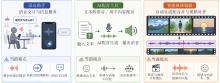
Fig.1
Typical application scenarios and pain points of audio cross-modal interaction"
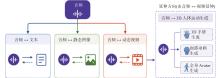
Fig.2
Diagram of research scope"
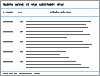
Table 1
Horizontal comparison of audio-text, audio-image, and audio-video cross-modal interaction"
| 对比维度 | 音频–文本 | 音频–图像 | 音频–视频/3D运动 |
| 交互对象 | 自然语言描述、问答文本 | 静态图像中的场景、物体 | 视频帧序列、面部活动、肢体活动、 3D运动 |
| 核心任务 | 检索、对齐、生成、联合理解 | 无监督表示学习、检索、融合理解 | 对齐、生成、联合理解、3D运动 |
| 应用场景 | 音频描述生成、音频问答、跨模态检索 | 声源定位、音频辅助图像理解、 跨模态检索 | 音视频同步、音视频联合理解、音频驱动表情/手势/全身动作生成 |
| 输入输出形式 | 音频–文本/文本–音频 | 音频–图像 | 音频–视频/音频–3D运动 |
| 技术路线 | 对比学习、扩散模型、音频语言模型 | 音视频同步自监督、统一嵌入空间建模 | 时序对比学习、扩散生成、 VAE/高斯泼溅 |
| 代表性工作 | CLAP[ Qwen-Audio[ | SoundNet[ CAV-MAE[ | AV-HuBERT[ |
| 数据基础 | 音频–文本数据逐渐完善, 但细粒度标注仍有限 | 直接配对的音频–图像数据较少, 常依赖视频帧或弱监督构造 | 视频数据规模较大, 但高质量音画同步 标注和3D运动数据获取成本高 |
| 实时部署 可行性 | TTS/ASR已成熟, LLM推理延迟高 | 商业化尚未真正起步 | 生成模型推理慢, 3D运动实时性困难 |
| 主要瓶颈 | 细粒度时序建模、情感可控生成 | 配对数据匮乏、评估标准不统一 | 长时序一致性、物理合理性、 实时推理效率 |
| 发展成熟度 | 较高, 已形成较完整的任务和数据体系 | 较低, 仍以表示学习和弱监督对齐为主 | 生成和数字人方向发展快, 但部署约束更强 |
Table 2
Summary of representative datasets in multimodal audio research"
| 数据集名称 | 年份 | 规模 | 模态 | 标注类型 | 适用任务 | 状态 | 主要局限 |
| ESC-50[ | 2015 | 纯音频 | 人工标注50类事件 | 音频事件分类 | 公开 | 规模小, 主要用于基准测试 | |
| FSD50K[ | 2022 | 约5.1万条 | 纯音频 | 人工标注200类事件 | 音频事件分类、预训练 | 公开 | 类别覆盖有限 |
| AudioCaps[ | 2019 | 约5万条 | 音频–文本 | 人工描述 | 音频描述、检索 | 公开 | 规模有限, 描述较简略 |
| Clotho[ | 2020 | 约 | 音频–文本 | 人工描述 (5条/音频) | 音频描述、检索 | 公开 | 样本量小, 标注多样性高但 规模受限 |
| WavCaps[ | 2024 | 约40万条 | 音频–文本 | ChatGPT自动弱标注 + 清洗 | 音频描述、检索、对齐 | 公开 | 质量参差不齐, 存在语义噪声 |
| VGGSound[ | 2020 | 约30万条 | 音频–图像–视频 | 弱标签 (自动采集) | 音视觉对齐、事件分类 | 公开 | 存在标签噪声, 片段时长仅10 s |
| AudioSet[ | 2017 | 约208万条 | 音频 (含视频ID) | 人工标注527类事件 | 音频事件分类、预训练 | 公开 | 仅提供音频标签, 需二次获取 视频数据 |
| BEAT[ | 2022 | 数小时 | 音频-3D运动 | 动作捕捉 + 人工标注 | 手势/面部/全身骨骼 | 受限 | 数据规模小, 场景单一 |
| EMAGE[ | 2024 | 数小时 (动捕) | 音频-3D运动 | 动作捕捉标注 | 全身面部/手部 | 受限 | 规模不足, 缺乏多人交互场景 |
| 1 | Huang R J, Li M Z, Yang D C, et al. AudioGPT: understanding and generating speech, music, sound, and talking head [C]//Proceedings of the AAAI Conference on Artificial Intelligence. 2024, 38(21): 23802-23804. |
| 2 | Chu Y F, Xu J, Zhou X H, et al. Qwen-Audio: advancing universal audio understanding via unified large-scale audio-language models [PP/OL]. V1. arXiv (2023-11-13)[2026-07-11]. https://arxiv.org/abs/2311.07919. |
| 3 | Oncescu A M, Koepke A S, Henriques J F, et al. Audio retrieval with natural language queries [C]//Interspeech 2021. ISCA, 2021: 2411-2415. |
| 4 | Kim C D, Kim B, Lee H, et al. AudioCaps: generating captions for audios in the wild [C]//Annual Conference of the North American Chapter of the Association for Computational Linguistics (NAACL-HLT). 2019: 119-132. |
| 5 | Drossos K, Lipping S, Virtanen T. Clotho: an audio captioning dataset [C]//2020 IEEE International Conference on Acoustics, Speech and Signal Processing (ICASSP). IEEE, 2020: 736-740. |
| 6 | Xin Y F, Zou Y X. Improving audio-text retrieval via hierarchical cross-modal interaction and auxiliary captions [C]//Interspeech 2023. ISCA, 2023: 341-345. |
| 7 | Xie Y X, Zhu Z H, Zhuang X W, et al. GPA: global and prototype alignment for audio-text retrieval [C]//Interspeech 2024. ISCA, 2024: 5078-5082. |
| 8 | Elizalde B, Deshmukh S, Al Ismail M, et al. CLAP: learning audio concepts from natural language supervision [C]//2023 IEEE International Conference on Acoustics, Speech and Signal Processing (ICASSP). IEEE, 2023: 1-5. |
| 9 | Wu H H, Seetharaman P, Kumar K, et al. Wav2CLIP: learning robust audio representations from CLIP [C]//2022 IEEE International Conference on Acoustics, Speech and Signal Processing (ICASSP). IEEE, 2022: 4563-4567. |
| 10 | Iashin V, Xie W, Rahtu E, et al. Synchformer: efficient synchronization from sparse cues [C]//2024 IEEE International Conference on Acoustics, Speech and Signal Processing (ICASSP). IEEE, 2024: 5325-5329. |
| 11 | Chen S Y, Wang C Y, Chen Z Y, et al.. WavLM: large-scale self-supervised pre-training for full stack speech processing. IEEE Journal of Selected Topics in Signal Processing, 2022, 16 (6): 1505- 1518. |
| 12 | Baevski A, Zhou H, Mohamed A, et al. wav2vec 2.0: a framework for self-supervised learning of speech representations [C]//Advances in Neural Information Processing Systems (NeurIPS). 2020: 12449-12460. |
| 13 | Wang Y, Skerry-Ryan R J, Stanton D, et al. Tacotron: towards end-to-end speech synthesis [C]//Interspeech 2017. ISCA, 2017: 4006-4010. |
| 14 | Ren Y, Hu C, Tan X, et al. FastSpeech 2: fast and high-quality end-to-end text to speech [C]//International Conference on Learning Representations (ICLR). 2021. |
| 15 | Wang C, Chen S, Wu Y, et al. Neural codec language models are zero-shot text to speech synthesizers [PP/OL]. V1. arXiv (2023-01-05)[2026-07-11]. https://arxiv.org/abs/2301.02111. |
| 16 | Liu H, Chen Z, Yuan Y, et al. AudioLDM: text-to-audio generation with latent diffusion models [C]//International Conference on Machine Learning (ICML). PMLR, 2023: 21450-21474. |
| 17 | Kreuk F, Synnaeve G, Polyak A, et al. AudioGen: textually guided audio generation [PP/OL]. V1. arXiv (2022-09-30)[2026-07-11]. https://arxiv.org/abs/2209.15352. |
| 18 | Tang C, Yu W, Sun G, et al. SALMONN: towards generic hearing abilities for large language models [PP/OL]. V1. arXiv (2023-10-20)[2026-07-11]. https://arxiv.org/abs/2310.13289. |
| 19 | Deshmukh S, Elizalde B, Singh R, et al. Pengi: an audio language model for audio tasks [C]//Advances in Neural Information Processing Systems (NeurIPS). 2023: 18090-18108. |
| 20 | Gong Y, Liu A H, Luo H, et al. Listen, think, and understand [PP/OL]. V1. arXiv (2023-05-18)[2026-07-11]. https://arxiv.org/abs/2305.10790. |
| 21 | Aytar Y, Vondrick C, Torralba A. SoundNet: learning sound representations from unlabeled video [C]//Advances in Neural Information Processing Systems (NeurIPS). 2016: 892-900. |
| 22 | Girdhar R, El-Nouby A, Liu Z, et al. ImageBind: one embedding space to bind them all [C]//IEEE/CVF Conference on Computer Vision and Pattern Recognition (CVPR). 2023: 15180-15190. |
| 23 | Gong Y, Rouditchenko A, Liu A H, et al. Contrastive audio-visual masked autoencoder [C]//International Conference on Learning Representations (ICLR). 2023. |
| 24 | Deng J, Dong W, Socher R, et al. ImageNet: a large-scale hierarchical image database [C]//IEEE Conference on Computer Vision and Pattern Recognition (CVPR). 2009: 248-255. |
| 25 | Zhao H, Gan C, Rouditchenko A, et al. The sound of pixels [C]//European Conference on Computer Vision (ECCV). 2018: 570-586. |
| 26 | Tian Y, Li D, Xu C. Unified multisensory perception: weakly-supervised audio-visual video parsing [C]//European Conference on Computer Vision (ECCV). 2020: 436-454. |
| 27 | Shi B, Hsu W N, Lakhotia K, et al. Learning audio-visual speech representation by masked multimodal cluster prediction [C]//International Conference on Learning Representations (ICLR). 2022: 1-24. |
| 28 | Zhang W, Cun X, Wang X, et al. SadTalker: learning realistic 3D motion coefficients for stylized audio-driven single image talking face animation [C]//IEEE/CVF Conference on Computer Vision and Pattern Recognition (CVPR). 2023: 8652-8661. |
| 29 | Li J, Kang D, Pei W, et al. Audio2Gestures: generating diverse gestures from speech audio with conditional variational autoencoders [C]//IEEE International Conference on Computer Vision (ICCV). 2021: 11293-11302. |
| 30 | Liu H, Zhu Z, Becherini G, et al. EMAGE: towards unified holistic co-speech gesture generation via expressive masked audio gesture modeling [C]//IEEE/CVF Conference on Computer Vision and Pattern Recognition (CVPR). 2024: 1144-1154. |
| 31 | Aneja S, Sevastopolsky A, Kirschstein T, et al. GaussianSpeech: audio-driven personalized 3D gaussian avatars [C]//IEEE International Conference on Computer Vision (ICCV). 2025: 13065-13075. |
| 32 | 郭星星, 肖雁南, 温佩芝, 等.. 基于注意力机制的音频驱动数字人脸视频生成方法. 计算机科学, 2026, 53 (2): 245- 252. |
| 33 | Chen X, Fang H, Lin T Y, et al. Microsoft COCO Captions: data collection and evaluation server [PP/OL]. V1. arXiv (2015-04-01)[2026-07-11]. https://arxiv.org/abs/1504.00325. |
| 34 | Piczak K J. ESC: dataset for environmental sound classification [C]//ACM International Conference on Multimedia (ACM MM). 2015: 1015-1018. |
| 35 | Fonseca E, Favory X, Pons J, et al.. FSD50K: an open dataset of human-labeled sound events. IEEE/ACM Transactions on Audio, Speech, and Language Processing, 2022, 30, 829- 852. |
| 36 | Mei X, Meng C, Liu H, et al.. WavCaps: a ChatGPT-assisted weakly-labelled audio captioning dataset for audio-language multimodal research. IEEE/ACM Transactions on Audio, Speech, and Language Processing, 2024, 32, 3339- 3352. |
| 37 | Chen H, Xie W, Vedaldi A, et al. VGGSound: a large-scale audio-visual dataset [C]//2020 IEEE International Conference on Acoustics, Speech and Signal Processing (ICASSP). IEEE, 2020: 721-725. |
| 38 | Gemmeke J F, Ellis D P W, Freedman D, et al. Audio set: an ontology and human-labeled dataset for audio events [C]//2017 IEEE International Conference on Acoustics, Speech and Signal Processing (ICASSP). IEEE, 2017: 776-780. |
| 39 | Liu H, Zhu Z, Iwamoto N, et al. BEAT: a large-scale semantic and emotional multi-modal dataset for conversational gesture synthesis [C]//European Conference on Computer Vision (ECCV). 2022: 612-630. |
| [1] | Xufei WANG, Huarong XU, Panfeng CHEN, Mei CHEN, Dan MA, Zhengxi CHEN, Xu TIAN, Hui LI. ATBench: Benchmark for evaluating analysis trajectories in end-to-end data analysis [J]. J* E* C* N* U* N* S*, 2025, 2025(5): 43-52. |
| [2] | Xiaowei CHEN, Wei WANG, Fanyu HAN, Guanglei BAO, Fei DONG, Hao HUO, Chen LIU. OSS Insight: A platform for open source ecosystem spatiotemporal data analysis and insights [J]. J* E* C* N* U* N* S*, 2025, 2025(5): 170-182. |
| [3] | SHI Bing, XIA Fan, SONG Shu-bin, XIAO Li-min, DONG Qi-wen, ZHOU Ao-ying, XU Lin-hao. Design and implementation of operation subsystem in graduate student management system [J]. Journal of East China Normal University(Natural Sc, 2017, 2017(5): 225-235. |
| [4] | BIAN Hao-Qiong, CHEN Yue-Guo, DU Xiao-Yong, GAO Yan-Jie. Equi-join optimization on spark [J]. Journal of East China Normal University(Natural Sc, 2014, 2014(5): 261-270. |
| Viewed | ||||||
|
Full text |
|
|||||
|
Abstract |
|
|||||
