
 中文核心期刊
J* E* C* N* U* N* S* ›› 2026, Vol. 2026 ›› Issue (3): 161-173.doi: 10.3969/j.issn.1000-5641.2026.03.013
• Environmental Quality and Ecological Remediation • Previous Articles Next Articles
Shufan JIANG1,2,3, Chunfu TONG1,2,3,*( ), Tao WANG1,2,3, Shengnan ZHANG1,2,3, Wei OUYANG1,2,3
Received:2025-03-21
Accepted:2026-03-02
Online:2026-05-25
Published:2026-05-27
Contact:
Chunfu TONG
E-mail:cftong@sklec.ecnu.edu.cn
CLC Number:
Shufan JIANG, Chunfu TONG, Tao WANG, Shengnan ZHANG, Wei OUYANG. Effects of planting density and area of floating-bed plants on nitrogen and phosphorus removal from water[J]. J* E* C* N* U* N* S*, 2026, 2026(3): 161-173.
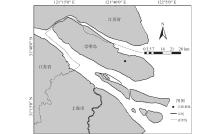
Fig.1
Schematic diagram of the location of the experimental base"
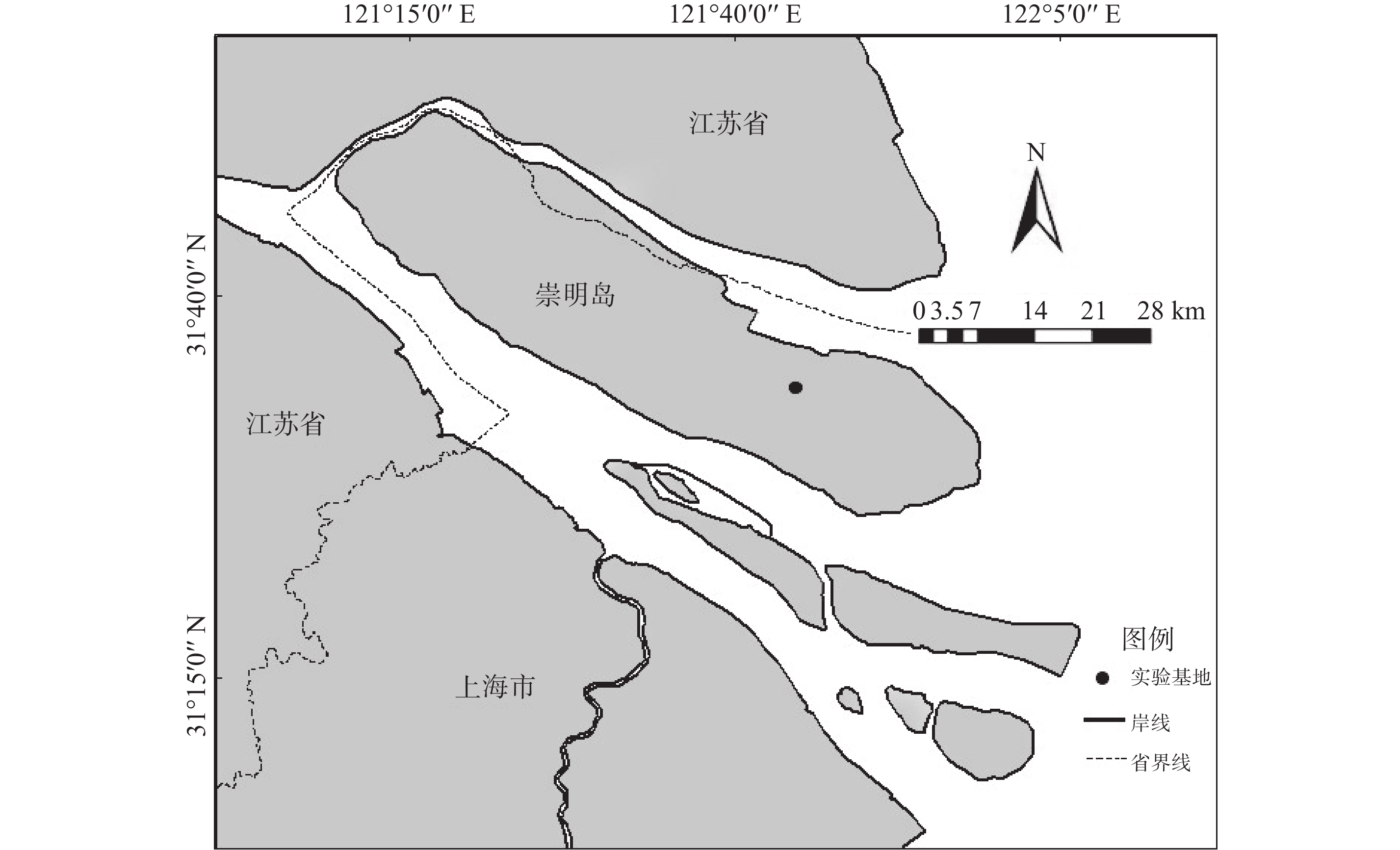
Fig.2
Illustration of floating-bed water tank control experiment device"
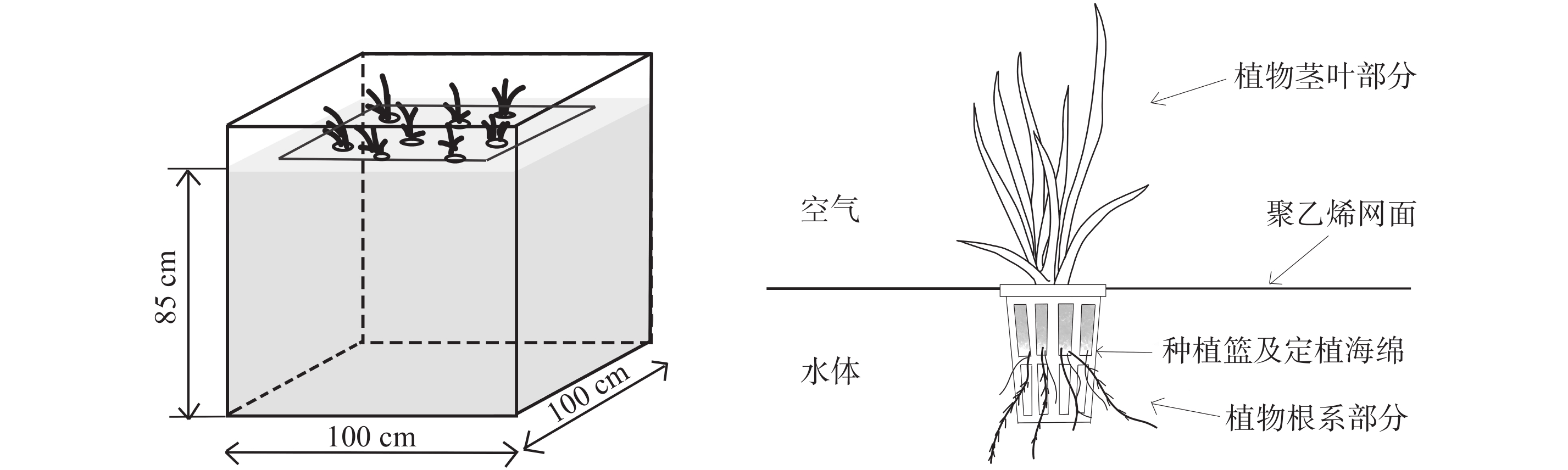
Table 1
Planting density and planting area of floating-beds in different treatment groups"
| 处理组 | 种植密度/(株/m2) | 浮床面积 (N=4) |
| 1 | 0 | S |
| 2 | 4 | S |
| 3 | 8 | S |
| 4 | 12 | S |
| 5 | 16 | S |
| 6 | 20 | S |
| 7 | 8 | 50%S |
| 8 | 8 | 25%S |
Fig.3
Experimental setup of floating-bed"
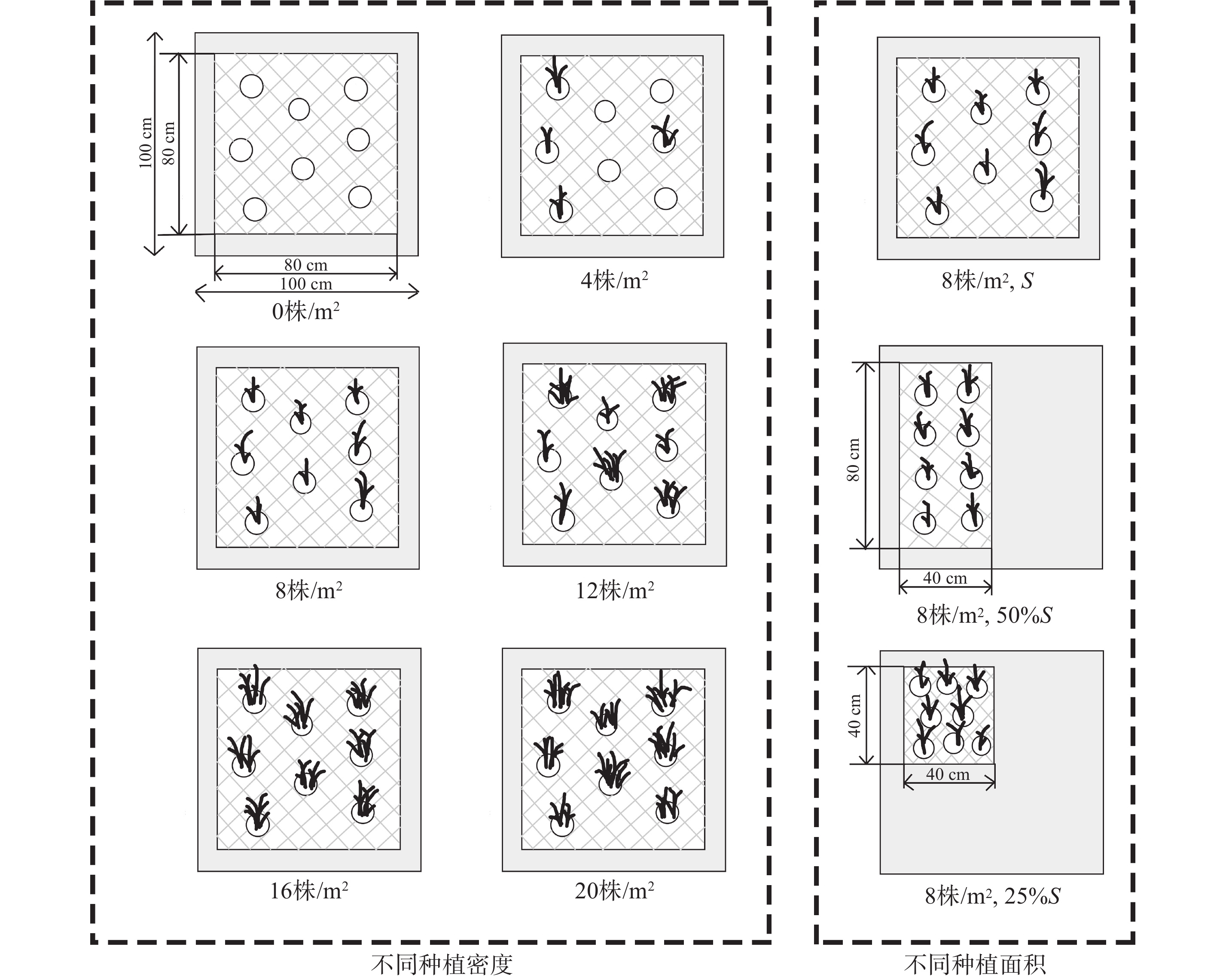
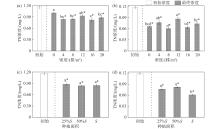
Fig.4
Variations of TN and TP concentrations in water of different treatment groups (mean±SE)"
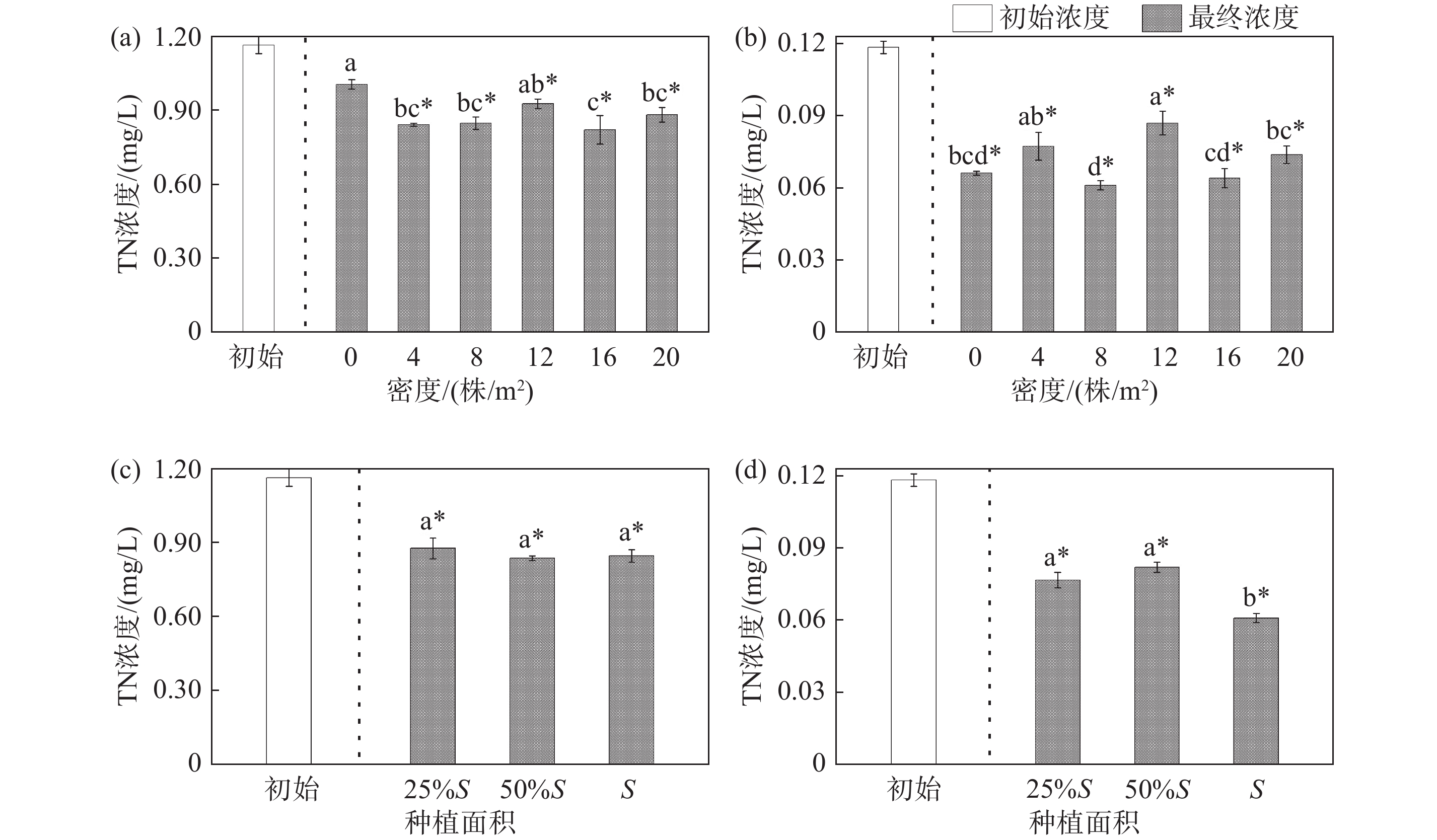
Fig.5
Variations of average biomass of floating-bed plants in different treatment groups (mean±SE)"
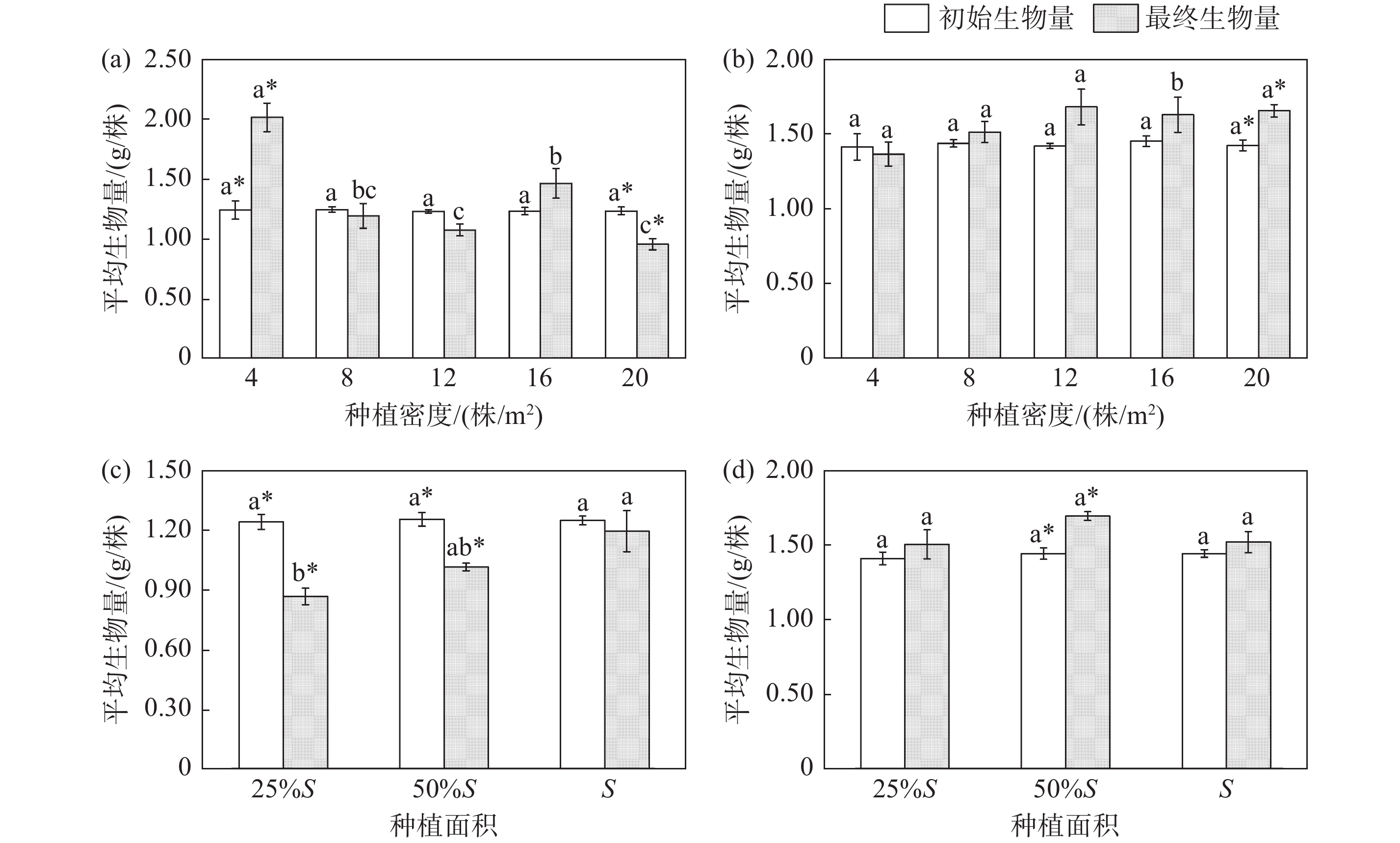
Fig.6
Variations of TN and TP contents in floating-bed plants under different planting densities (mean±SE)"
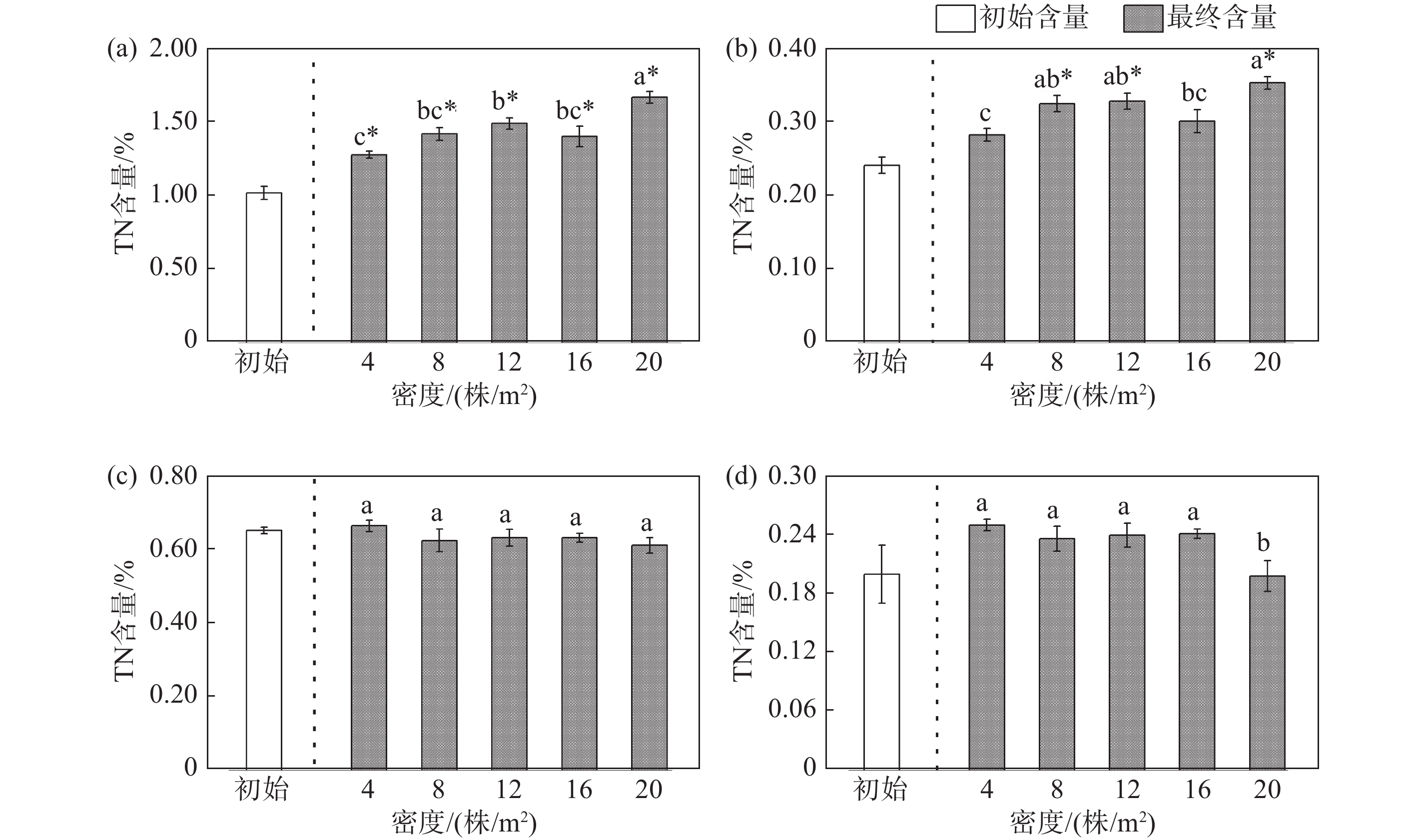
Fig.7
Variations of TN and TP contents in floating-bed plants under different planting areas (mean±SE)"
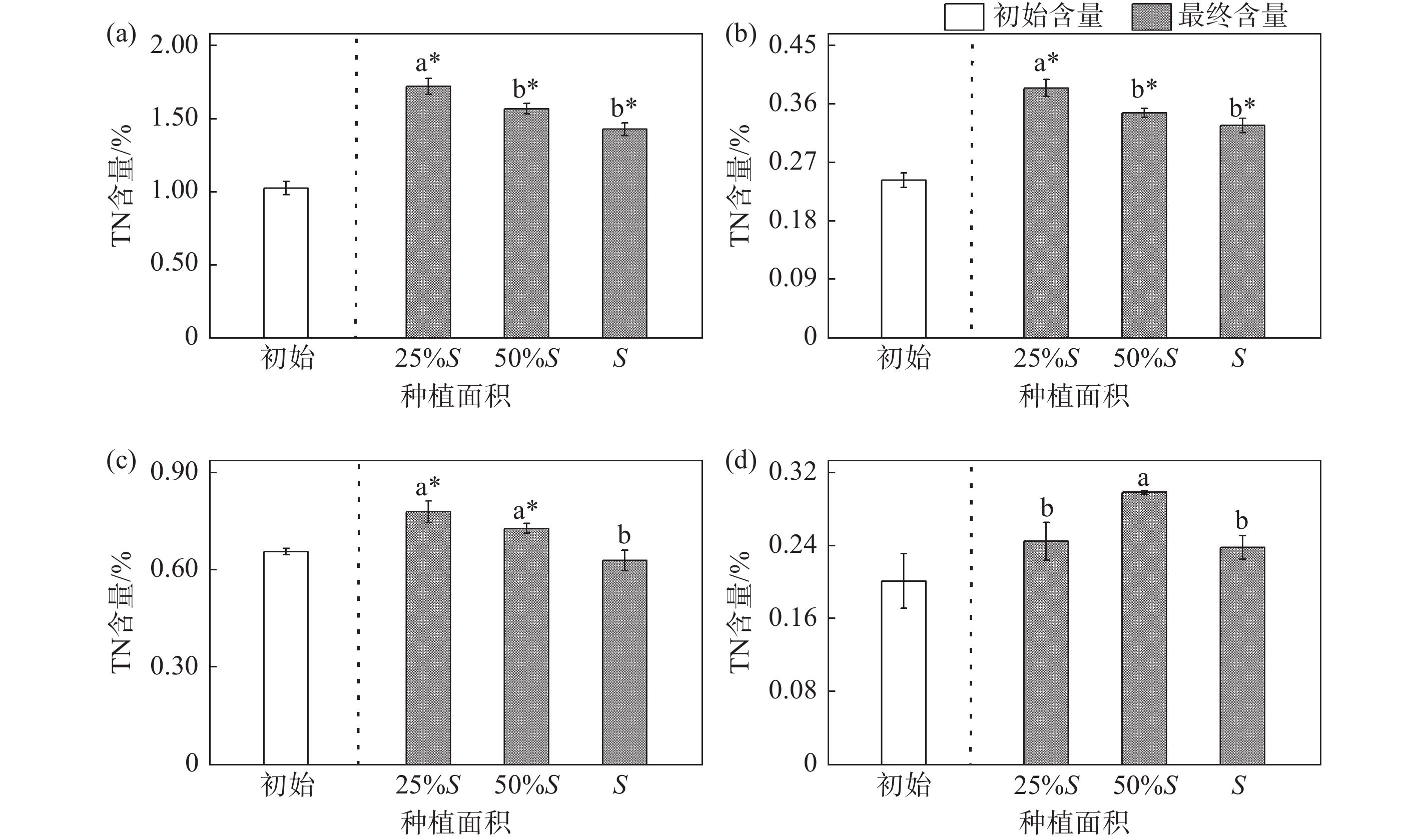
Table 2
The contribution of plants on floating-beds to water TN removal under different planting densities and planting areas (mean±SE)"
| 种植密度/ (株/m2) | 种植面积 | 水体氮去除量/ mg | 水体氮去除率/ % | 植物氮累积量/mg | 氮去除贡献率/% | ||||
| 茎叶 | 根系 | 茎叶 | 根系 | 总贡献率 | |||||
| 0 | S | 126.40±16.50c | 12.89±1.68c | – | – | – | – | – | |
| 4 | S | 265.30±5.17ab | 27.05±0.53ab | 52.78±2.35bc | –0.62±1.40a | 19.95±1.17bc | –0.25±0.53a | 19.70±1.00cd | |
| 8 | S | 260.40±21.70abA | 26.55±2.21abA | 32.95±6.76cA | 0.29±2.82aB | 12.74±2.58cA | 0.12±1.10aB | 12.86±1.52dA | |
| 12 | S | 193.39±16.23bc | 19.72±1.66bc | 41.56±6.64bc | 15.99±5.65a | 22.45±4.78bc | 8.77±3.21a | 31.22±5.95bc | |
| 16 | S | 283.28±49.82a | 28.89±5.08a | 125.13±18.01a | 13.33±10.37a | 46.01±6.26a | 5.58±3.73a | 51.59±5.48a | |
| 20 | S | 230.97±25.33ab | 23.55±2.58ab | 67.28±11.13b | 17.07±12.26a | 30.77±6.98b | 6.99±5.90a | 37.76±4.06b | |
| 8 | 50%S | 268.54±8.17A | 27.38±0.83A | 24.20±2.73A | 22.82±1.02A | 8.96±0.82A | 8.51±0.34A | 17.46±0.88A | |
| 8 | 25%S | 234.21±36.20A | 23.88±3.69A | 17.05±5.89A | 19.35±6.52A | 8.72±4.09A | 8.51±2.34A | 17.24±4.26A | |
Table 3
The contribution of plants on floating-beds to water TP removal under different planting densities and planting areas (mean±SE)"
| 种植密度/ (株/m2) | 种植面积 | 水体磷去除量/ mg | 水体磷去除率/ % | 植物磷累积量/mg | 磷去除贡献率/% | ||||
| 茎叶 | 根系 | 茎叶 | 根系 | 总贡献率 | |||||
| 0 | S | 44.46±0.73abc | 44.19±0.73abc | – | – | – | – | – | |
| 4 | S | 34.96±4.88cd | 34.75±4.85cd | 10.87±0.66b | 2.31±0.28b | 32.72±4.10ab | 7.48±2.13b | 40.20±6.04bc | |
| 8 | S | 48.78±1.66aA | 48.47±1.65aA | 6.76±1.49bA | 5.49±1.21bB | 13.92±3.11bA | 11.22±2.42bB | 25.14±0.87cB | |
| 12 | S | 26.78±4.23d | 26.62±4.20d | 6.73±2.35b | 14.11±2.32a | 27.87±9.01ab | 60.36±16.93a | 88.23±22.21a | |
| 16 | S | 46.18±3.37ab | 45.90±3.35ab | 22.26±2.52a | 16.54±3.88a | 49.86±8.51a | 35.65±7.40ab | 85.51±8.24ab | |
| 20 | S | 38.00±3.10bc | 37.77±3.08bc | 7.93±2.30b | 8.72±3.73ab | 22.55±8.47b | 25.93±13.55b | 48.48±21.61abc | |
| 8 | 50%S | 30.84±1.82B | 30.65±1.80B | 3.70±0.70A | 17.17±0.37A | 11.75±1.51A | 56.31±3.94A | 68.06±2.64A | |
| 8 | 25%S | 35.40±2.75B | 35.18±2.73B | 2.49±1.40A | 6.31±1.68B | 7.25±3.71A | 17.19±3.93B | 24.45±6.04B | |
| 1 | REZANIA S, PARK J, RUPANI P F, et al.. Phytoremediation potential and control of Phragmites australis as a green phytomass: An overview. Environmental Science and Pollution Research, 2019, 26 (8): 7428- 7441. |
| 2 | 王朴, 梁玉婷, 康凯丽.. 湿生植物对富营养化水体修复研究. 安徽农业科学, 2021, 49 (12): 8- 12. |
| 3 | 黄思程, 童春富, 朱宜平.. 浮床种植对挺水植物中重金属赋存特征的影响. 华东师范大学学报(自然科学版), 2023 (3): 33- 42. |
| 4 | RANA S, BAG S K, GOLDER D, et al.. Reclamation of municipal domestic wastewater by aquaponics of tomato plants. Ecological Engineering, 2011, 37 (6): 981- 988. |
| 5 | 蒋跃. 浮床植物生态特性及其抑藻效果研究 [D]. 上海: 华东师范大学, 2016. |
| 6 | TANNER C C, HEADLEY T R.. Components of floating emergent macrophyte treatment wetlands influencing removal of stormwater pollutants. Ecological Engineering, 2011, 37 (3): 474- 486. |
| 7 | AL LAMI M H, WHELAN M J, BOOM A, et al.. Mechanistic understanding of nitrogen behaviour in floating treatment wetlands: Abatement of ammonia flux. IOP Conference Series: Earth and Environmental Science, 2021, 779 (1): 012093. |
| 8 | SAMAL K, KAR S, TRIVEDI S, et al.. Assessing the impact of vegetation coverage ratio in a floating water treatment bed of Pistia stratiotes. SN Applied Sciences, 2021, 3 (1): 120. |
| 9 | 陈家长, 孟顺龙, 胡庚东, 等.. 空心菜浮床栽培对集约化养殖鱼塘水质的影响. 生态与农村环境学报, 2010, 26 (2): 155- 159. |
| 10 | 郝霆, 向太吉, 张平录, 等.. 生态浮床对池塘浮游植物群落结构的影响. 河北渔业, 2019 (8): 16- 20. |
| 11 | 张择瑞, 刘鑫, 胡淑恒, 等.. 种植密度对绿萝浮床净化富营养水体效果的影响. 中国给水排水, 2020, 36 (11): 81- 86. |
| 12 | 吴科君. 植物浮床系统对三峡库区支流库湾富营养化水体的净化效果研究 [D]. 重庆: 西南大学, 2020. |
| 13 | REZANIA S, TAIB S M, MD DIN M F, et al.. Comprehensive review on phytotechnology: Heavy metals removal by diverse aquatic plants species from wastewater. Journal of Hazardous Materials, 2016, 318, 587- 599. |
| 14 | KEIZER-VLEK H E, VERDONSCHOT P F M, VERDONSCHOT R C M, et al.. The contribution of plant uptake to nutrient removal by floating treatment wetlands. Ecological Engineering, 2014, 73, 684- 690. |
| 15 | KYAMBADDE J, KANSIIME F, GUMAELIUS L, et al.. A comparative study of Cyperus papyrus and Miscanthidium violaceum-based constructed wetlands for wastewater treatment in a tropical climate. Water Research, 2004, 38 (2): 475- 485. |
| 16 | BUNCE J T, NDAM E, OFITERU I D, et al.. A review of phosphorus removal technologies and their applicability to small-scale domestic wastewater treatment systems. Frontiers in Environmental Science, 2018, 6, 8. |
| 17 | 郑洁敏, 牛天新, 陈煜初, 等.. 三十九种观赏挺水植物应用于人工浮岛水质净化潜力的比较. 北方园艺, 2013 (6): 72- 76. |
| 18 | 杨大魁.. 经济植物浮床系统对富营养化水体净化效果研究. 水利规划与设计, 2018 (11): 53- 56. |
| 19 | 黄海平, 谢从新, 何绪刚, 等.. 密度和收割对水蕹菜净水效果的影响. 渔业现代化, 2012, 39 (1): 22- 26. |
| 20 | HUANG X F, CHEN Z P, LIU Z L, et al.. The optimal planting coverage rate and wastewater concentration for water spinach floating bed on geese wastewater purification. Polish Journal of Environmental Studies, 2022, 31 (1): 691- 700. |
| 21 | 吴英杰, 马璐瑶, 陈琛, 等.. 北美海蓬子生态浮床对养殖海水的净化和对虾的增产效果. 环境工程学报, 2018, 12 (12): 3351- 3361. |
| 22 | LYNCH J, FOX L J, OWEN J S Jr, et al.. Evaluation of commercial floating treatment wetland technologies for nutrient remediation of stormwater. Ecological Engineering, 2015, 75, 61- 69. |
| 23 | 赵泉, 朱联东, 李艳墙, 等.. 富营养化水体中水培蕹菜的种植密度研究. 资源开发与市场, 2011, 27 (1): 1- 3. |
| 24 | 彭颖. 冬季水芹浮床对富营养化水体的修复研究 [D]. 重庆: 重庆大学, 2015. |
| 25 | GABALLAH M S, ISMAIL K, ABOAGYE D, et al.. Effect of design and operational parameters on nutrients and heavy metal removal in pilot floating treatment wetlands with Eichhornia crassipes treating polluted lake water. Environmental Science and Pollution Research, 2021, 28 (20): 25664- 25678. |
| 26 | 袁泉, 任艳, 周文宗, 等.. 水蕹菜浮床对盐碱地池塘水质与中华绒螯蟹生长的影响. 淡水渔业, 2019, 49 (6): 94- 99. |
| 27 | 洪文旭, 骆心钰, 李沛翰, 等.. 生态浮床修复景观水的研究与应用. 能源与环境, 2024 (6): 146- 148. |
| 28 | 上海市统计局. 崇明统计年鉴-2023[M]. 北京: 中国统计出版社, 2023. |
| 29 | 王涛, 童春富, 吴逢润, 等.. 崇明岛内河大型底栖动物群落组成及分布特征. 海洋学报, 2021, 43 (9): 71- 80. |
| 30 | 从婷婷, 童春富, 赵成建, 等.. 崇明岛内河夏季鱼类群落组成及分布特征. 生态学报, 2021, 41 (5): 2067- 2076. |
| 31 | 刘丹.. 崇明地表水水质变化趋势分析. 环境与发展, 2020, 32 (7): 118- 119. |
| 32 | 自然图鉴编辑部. 常见园林植物识别图鉴 [M]. 北京: 人民邮电出版社, 2016. |
| 33 | 邱园园, 申健.. 黄菖蒲防治水体富营养化的效果研究进展. 农业与技术, 2024, 44 (16): 103- 106. |
| 34 | 宋凤鸣, 周健, 刘文竹, 等.. 耐盐湿地植物筛选应用研究进展. 天津农业科学, 2017, 23 (9): 101- 109. |
| 35 | CLAPA D, FIRA A, JOSHEE N.. An efficient ex vitro rooting and acclimatization method for horticultural plants using float hydroculture. HortScience, 2013, 48 (9): 1159- 1167. |
| 36 | 中华人民共和国生态环境部. 水质总氮的测定碱性过硫酸钾消解紫外分光光度法: HJ 636—2012 [S]. 北京: 中国环境出版社, 2012. |
| 37 | 国家环境保护局. 水质总磷的测定钼酸铵分光光度法: GB 11893—89 [S]. 北京: 中国标准出版社, 1989. |
| 38 | 中华人民共和国自然资源部. 生态地球化学评价动植物样品分析方法第5部分: 钡、钙、铜、铁、钾、镁、锰、钠、镍、磷、硫、锶和锌含量的测定微波消解-电感耦合等离子体原子发射光谱法: DZ/T 0253.5—2022 [S]. 北京: 地质出版社, 2023. |
| 39 | 唐伟, 许海, 詹旭, 等.. 生态浮床对千岛湖水体氮、磷净化效果研究. 环境科学研究, 2022, 35 (4): 926- 935. |
| 40 | 葛滢, 王晓月, 常杰.. 不同程度富营养化水中植物净化能力比较研究. 环境科学学报, 1999, 19 (6): 690- 692. |
| 41 | 王伟亚, 张静, 侯红勋, 等.. 2种不同根系类型植物脱氮除磷对比研究. 环境保护科学, 2022, 48 (6): 110- 115. |
| 42 | WANG C Y, SAMPLE D J.. Assessment of the nutrient removal effectiveness of floating treatment wetlands applied to urban retention ponds. Journal of Environmental Management, 2014, 137, 23- 35. |
| 43 | ZHAO X H, ZHAO X Y, CHEN C, et al.. Ecological floating bed for decontamination of eutrophic water bodies: Using alum sludge ceramsite. Journal of Environmental Management, 2022, 311, 114845. |
| 44 | SONG J, LI Q, WANG X C.. Superposition effect of floating and fixed beds in series for enhancing nitrogen and phosphorus removal in a multistage pond system. Science of the Total Environment, 2019, 695, 133678. |
| 45 | 周佳林, 段婧婧, 王宁, 等.. 陆生蔬菜浮床对富营养化水体氮、磷的去除以及水体、根系细菌群落分析. 生态与农村环境学报, 2024, 40 (1): 107- 118. |
| 46 | BU F P, XU X Y.. Planted floating bed performance in treatment of eutrophic river water. Environmental Monitoring and Assessment, 2013, 185 (11): 9651- 9662. |
| 47 | 可小丽, 李庆勇, 黄秋标, 等.. 罗非鱼-鱼腥草共生系统中鱼菜不同配比对池塘水质及细菌群落结构的影响. 水产学报, 2022, 46 (9): 1604- 1619. |
| 48 | 宋威. 植物浮床系统对城镇污水处理厂一级A出水的深度净化研究 [D]. 河北 保定: 河北农业大学, 2023. |
| 49 | SAMAL K, KAR S, TRIVEDI S.. Ecological floating bed (EFB) for decontamination of polluted water bodies: Design, mechanism and performance. Journal of Environmental Management, 2019, 251, 109550. |
| 50 | CHEN C J, WANG F, HONG Y, et al.. The biomass accumulation and nutrient storage of five plant species in an in-situ phytoremediation experiment in the Ningxia irrigation area. Scientific Reports, 2019, 9, 11365. |
| 51 | ZHANG L M, JIN Y, YAO S M, et al.. Growth and morphological responses of duckweed to clonal fragmentation, nutrient availability, and population density. Frontiers in Plant Science, 2020, 11, 618. |
| 52 | 王晶, 王冬梅, 黄端, 等.. 黄菖蒲叶片对水分的生物学响应及其净化水质作用. 广西植物, 2014, 34 (4): 484- 488. |
| 53 | JIA C X, YANG M, QU J Q, et al.. Distribution and accumulation characteristics of nitrogen and phosphorus of 16 species of plants on ecological floating-bed. Advances in Engineering Technology Research, 2022 (1): 55- 61. |
| 54 | 朱静平, 程凯, 孙丽.. 水培植物净化系统不同氮、磷去除作用的贡献. 环境科学与技术, 2011, 34 (5): 175- 178. |
| 55 | YADAV S, KUMAR J, MALYAN S K, et al.. Evaluating pilot-scale floating wetland for municipal wastewater treatment using Canna indica and Phragmites australis as plant species. Sustainability, 2023, 15 (18): 13601. |
| 56 | 韩雪宜, 王怡, 王振, 等.. 浮床覆盖率对再生水补给景观水体的影响研究. 环境科学与技术, 2022, 45 (10): 183- 188. |
| 57 | REHLING F, SANDNER T M, MATTHIES D.. Biomass partitioning in response to intraspecific competition depends on nutrients and species characteristics: A study of 43 plant species. Journal of Ecology, 2021, 109 (5): 2219- 2233. |
| 58 | ZOBEL M, ZOBEL K.. Studying plant competition: From root biomass to general aims. Journal of Ecology, 2002, 90 (3): 578- 580. |
| [1] | Sicheng HUANG, Chunfu TONG, Yiping ZHU. Effects of floating-bed planting on the retention of heavy metals by emergent hydrophytes [J]. Journal of East China Normal University(Natural Science), 2023, 2023(3): 33-42. |
| [2] | ZHAO Feng, ZHANG Yong, HUANG Min-sheng, WU Xiao-hui,ZHANG Yi-fan, HE Yan. Study on the purification effects of aquatic plant floating-beds for urban polluted water [J]. Journal of East China Normal University(Natural Sc, 2011, 2011(6): 57-64. |
| [3] | WU Xiao-hui;ZHANG Dan;HUANG Min-sheng;ZHANG Yong;HE Yan . Dynamic junior monitoring of phytoplankton in the process of malodorous river remediation by staged ecological floating-beds [J]. Journal of East China Normal University(Natural Sc, 2011, 2011(1): 95-103. |
| Viewed | ||||||
|
Full text |
|
|||||
|
Abstract |
|
|||||
