
 中文核心期刊
J* E* C* N* U* N* S* ›› 2026, Vol. 2026 ›› Issue (5): 178-195.doi: 10.3969/j.issn.1000-5641.2026.05.015
• Data Intelligent Applications • Previous Articles
Kunhua JI1, Haoyang JIN1, Wenhui LIU2, Dingjiang HUANG1,*( )
)
Received:2026-07-24
Accepted:2026-08-14
Online:2026-09-25
Published:2026-09-12
Contact:
Dingjiang HUANG
E-mail:djhuang@dase.ecnu.edu.cn
CLC Number:
Kunhua JI, Haoyang JIN, Wenhui LIU, Dingjiang HUANG. Large language models and multi-agent systems empowering new-type power systems[J]. J* E* C* N* U* N* S*, 2026, 2026(5): 178-195.
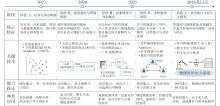
Fig.1
Timeline of technological evolution (2023–2026)"
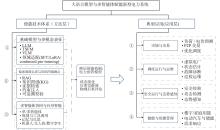
Fig.2
Large language models and multi-agent systems empowering new-type power systems: a method-application classification tree"
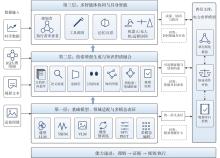
Fig.3
Three-tier progressive architecture of enabling technologies"
Table 1
Representative studies on LLM- and multi-agent-enabled technologies (methodology layer) for new-type power systems"
| 分类定位 | 技术路线 | 基座/架构 | 数据/算例 | 核心贡献与局限 | 参考文献 | 发表年份 |
| 综述与 基准评测 | 行业应用与挑战系统梳理 | — | — (综述) | 凝练高风险/合规/责任三大挑战; 偏定性 | [ | 2025 |
| 预测技术 LLM 综述 | — | — (综述) | 归纳 LLM 预测4类技术路线; 聚焦预测 | [ | 2025 | |
| 通用人工智能展望 | 通用 LLM | — (综述) | 国内奠基性框架与应用图景; 早期、案例少 | [ | 2024 | |
| 系统性综述与展望 | 多种 LLM | — (综述) | 覆盖电力系统多场景 LLM 应用并提出 未来方向; 侧重全景性梳理 | [ | 2026 | |
| 可再生能源系统 LLM 综述 | 多种 LLM | — (综述) | 覆盖预测/控制/政策/故障诊断; 偏可再生侧 | [ | 2026 | |
| 基础模型、领域适配与多模态表征 | 微调 LLM 评估新能源消纳 | LLM | 消纳算例 | LLM 用于消纳能力评估; 数据未充分公开 | [ | 2025 |
| 联邦学习与基础模型协同 | 基础模型 | — (框架/展望) | 联邦 FM–电网协同架构; 偏框架 | [ | 2026 | |
| 自监督预训练时序 FM | 自研 PowerPM | 大规模电力时序 | 代表性电力时序 FM; 算力门槛高 | [ | 2024 | |
| 时序 FM 的 PEFT | 时序 FM | EV 充电负荷 | 低成本适配 FM; 任务单一 | [ | 2026 | |
| 闭环路由稀疏 MoE 时序 FM | 时序 FM (MoE) | 建筑短期负荷 | MoE 提升效率与精度; 面向建筑 | [ | 2026 | |
| 多模态 LLM 可解释框架 | 多模态 LLM | 并网 EV 算例 | 安全与可解释多模态框架 | [ | 2025 | |
| 检索增强生成与 知识图谱 融合 | 基于 RAGFlow 的设备问答 | LLM | 设备文档 | 工程化 RAG 问答; 评测规模小 | [ | 2025 |
| 层次图增强 RAG | LLM | 电力长文档 | HG-RAG 提升长文档检索; 数据私有 | [ | 2026 | |
| KG 锚定 RAG 与主题建模 | LLM | 专业文档 | KG 锚定降幻觉; 依赖 KG 质量 | [ | 2026 | |
| KG与LLM融合综述 | — | — (综述) | KG×LLM 关键技术综述; 定性为主 | [ | 2025 | |
| LLM 与 KG 推理生成报告 | LLM | 监测数据 | 自动生成监测报告; 模板依赖 | [ | 2025 | |
| 思维链与 KG 调度推理 | LLM | 调度算例 | 增强调度推理可解释; 会议短文 | [ | 2025 | |
| 时序 KG 与时空推理 | 图模型+LLM | 故障算例 | 时序 KG 故障诊断; 构建成本高 | [ | 2026 | |
| 多智能体协同与 具身智能 | LLM智能体工作流 | 通用 LLM | 建筑能耗模型 | 代表性智能体工作流范例; 应用域为建筑 | [ | 2025 |
| LLM 多智能体异常检测 | LLM | 电网真实数据 | 真实电网多智能体异常检测 | [ | 2025 | |
| LLM Text-to-SQL 智能体 | LLM | 调度数据库 | 可靠调度数据查询; 限查询类任务 | [ | 2025 | |
| LLM+MARL 与专家工作流 | LLM+MARL | P2P 交易算例 | 实时 P2P 交易、稳定训练; 仿真为主 | [ | 2026 | |
| 自主能源系统参考架构 | — | — (架构/议程) | 智能体参考架构与研究议程; 偏概念 | [ | 2026 | |
| 攻防博弈智能体 | LLM | CPPS 算例 | LLM 智能体攻防博弈; 安全评估初步 | [ | 2026 | |
| LLM 嵌入式 MARL 低碳调度 | LLM+MARL | IES 算例 | 提升低碳调度; 可解释有限 | [ | 2026 | |
| 跨层预演机制 (电力世界模型) | Dyna学习–规划–反应架构 | 基于模型的 强化学习 | 标准RL任务 | 奠定模型学习与规划集成范式; 非电力专用 | [ | 1991 |
| 基于模型的强化学习综述 | 动力学模型+规划 | — (综述) | 系统归纳模型学习与规划集成; 为世界模型提供方法背景 | [ | 2023 | |
| 循环世界模型 | VAE+RNN+ 控制器 | 通用控制环境 | 学习压缩状态转移并支持策略演化; 非电力场景 | [ | 2018 | |
| 潜空间动态规划 | PlaNet | 连续控制任务 | 在潜空间中学习动态并Rollout规划; 非电力场景 | [ | 2019 | |
| 配电网数字孪生 | 云端数字孪生 | 配电网 | 提供电力侧仿真与镜像基础; 不等同于可学习世界模型 | [ | 2024 | |
| 数字孪生耦合世界模型 | 感知—规划— 统一校核 | 需求侧资源/ 储能调度算例 | 贯通仿真、感知、决策与校核; 证据仍为受控场景 | [ | 2026 |
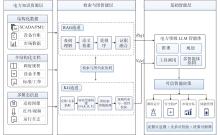
Fig.4
Technical framework for retrieval-augmented generation integrated with knowledge graphs in power systems"
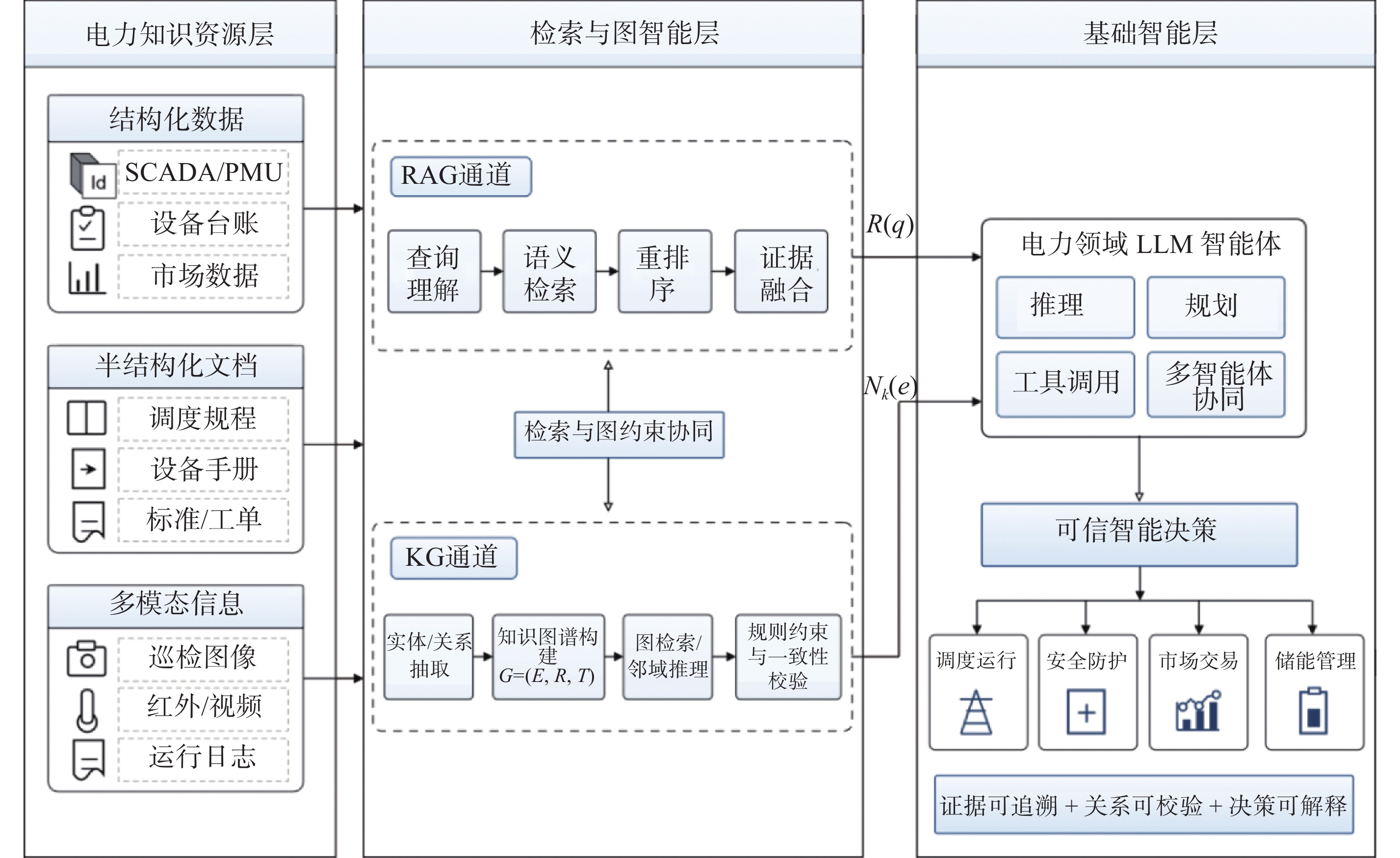
Fig.5
Coupling framework for typical applications across four domains"
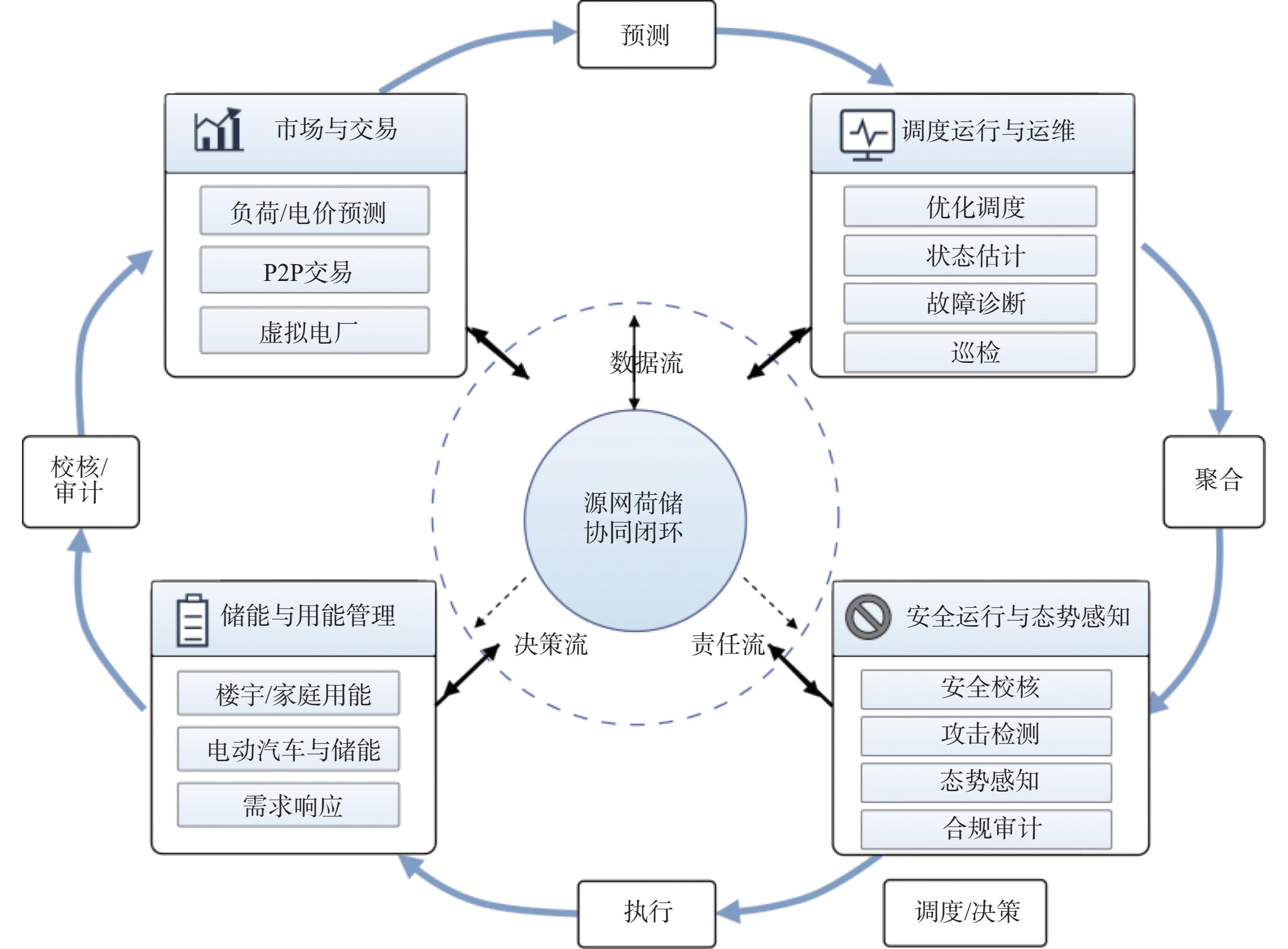
Table 2
Comparison of representative studies on typical applications (application layer) empowered by large language models and multi-agent systems for new-type power systems"
| 典型应用 | 技术路线 | 基座/架构 | 数据/算例 | 核心贡献与局限 | 参考文献 | 发表年份 |
| 市场与 交易 | 微调 LLM 多能负荷预测 | 自研 EnergyGPT | 多能负荷 | 多能负荷统一预测; 数据部分公开 | [ | 2025 |
| 时序嵌入与 LLM | BERT | ENTSO-E | 短期负荷预测融合时序嵌入; 模型偏轻 | [ | 2025 | |
| 提示微调 (零样本) | LLM | 风电场数据 | 数据缺失下零样本风电预测; 极端工况待验 | [ | 2026 | |
| 信息物理社会系统增强 | LLM | 负荷算例 | 引入社会信息增强负荷预测 | [ | 2026 | |
| LLM 辅助 P2P 交易 | LLM | P2P 算例 | 辅助撮合与决策; 机制设计初步 | [ | 2026 | |
| VPP 极端场景综述 | — | — (综述) | 提出电力大模型增强场景生成; 展望为主 | [ | 2026 | |
| RAG/LLM和随机优化 | RAG-VPP | ERCOT 风格七日压力测试 (含合成告警) | 文本风险转为有界参数后进入优化; 尚未现场验证 | [ | 2026 | |
| 自适应 MARL | MARL (非 LLM) | 多能建筑 | 代表性 VPP 资源管理; 非 LLM 基线 | [ | 2024 | |
| 单注意力 LLM | LLM (单注意力) | 多区域市场数据 | 多区域高效预测; 机理较弱 | [ | 2026 | |
| 调度运行与运维 | 微调 LLM 与工具 (多任务) | Llama2 | 调度算例 | 代表性先进电力调度研究; 闭环控制有限 | [ | 2025 |
| LLM 文本分类 | BERT | DER 用例 | DER 部分跳闸判定; 任务窄 | [ | 2025 | |
| 调度运行与运维 | LLM 自动优化建模 | LLM | 配网算例 | 主动配网调度自动建模; 求解器耦合 | [ | 2026 |
| LLM 增强 DRL 低碳调度 | LLM+DRL | 电氢 IES | 电氢 IES 低碳调度; 样本效率待优 | [ | 2026 | |
| 上下文学习增强 LLM | LLM | 配网算例 | 鲁棒配网状态估计; 量测缺失敏感 | [ | 2026 | |
| LLM 设备健康诊断 | LLM | 设备数据 | 设备健康关键技术; 会议综述性 | [ | 2026 | |
| 视觉–语言模型 (VLM) | LLaVA | 输电巡检图像 | 输电巡检 VLM 代表作; 场景受限 | [ | 2024 | |
| 工具增强 LLM | LLM | 自生成电网模型 | 电网模型生成; 正确性需人工校验 | [ | 2025 | |
| LLM 多智能体任务与 运动规划 | LLM | 巡检机器人 | 巡检机器人 TAMP 框架 | [ | 2026 | |
| 安全运行 | LLM 安全态势框架 | LLM | 真实运行数据 | GridSense 态势感知框架; 落地初步 | [ | 2025 |
| 生成式 LLM 态势与决策 | LLM | 运行场景 | 态势感知与决策支持; 可信待证 | [ | 2026 | |
| LLM 检测继电保护攻击 | LLM | 继电保护 | 面向保护继电器攻击检测; 数据私有 | [ | 2026 | |
| 储能与用能管理 | 建筑能源 LLM 机遇综述 | — | — (综述) | 代表性建筑能源 LLM 综述; 定性 | [ | 2025 |
| LLM 辅助安全 RL | LLM | 真实配网数据 | RL2 安全 RL 配网能量管理; 代表性案例 | [ | 2025 | |
| LLM 自然语言 HEMS 接口 | LLM | HEMS | 自然语言家庭能源管理; 规模小 | [ | 2025 | |
| LLM 辅助规划 (真实案例) | LLM | 真实案例 | EV 充电设施规划真实案例; 可复用性待证 | [ | 2025 | |
| 分层 MARL (平衡市场) | MARL | EV-VPP | EV 虚拟电厂平衡市场控制; 非 LLM | [ | 2026 |
Table 3
Correspondence between key challenges and future directions"
| 挑战 | 核心瓶颈 | 展望 | 主要抓手 |
| 数据质量、隐私与安全 | 多源异构、跨主体共享难、 数据与接口攻击面 | 可信数据基础设施 | 联邦协同、脱敏规程库、数据红队 |
| 数值精度与物理规律融合 | 约束无保证, LLM 自动建模与 最优潮流 (OPF) 求解的衔接差距 | 机理嵌入与世界模型 | 原生大模型、数字孪生Rollout、 求解器分工 |
| 幻觉、可解释性与可信度 | 术语正确但无据、跨任务可信难比 | 全生命周期可信闭环 | RAG+KG、红队评测、人在回路 |
| 算力、能耗与边缘部署 | 云边算力矛盾、算电协同约束 | 算电协同分层部署 | 量化/PEFT、大小模型协同、 降级策略 |
| 评测基准与标准化 | 单点基准、数据孤岛、披露缺失 | 跨任务评测与标准化 | 分层基准、披露模板、联盟数据集 |
| 智能体协同与人机责任边界 | 协同失效、责任边界不清 | 多智能体协议与人在回路机制 | 跨域协议、人在回路、审批留痕、源网荷储协同 |
| 1 | Vaswani A, Shazeer N, Parmar N, et al. Attention is all you need [C]//Advances in Neural Information Processing Systems. 2017, 30: 5998-6008. |
| 2 | Brown T, Mann B, Ryder N, et al. Language models are few-shot learners [C]//Advances in Neural Information Processing Systems. 2020, 33: 1877-1901. |
| 3 | Lewis P, Perez E, Piktus A, et al. Retrieval-augmented generation for knowledge-intensive NLP tasks [C]//Advances in Neural Information Processing Systems. 2020, 33: 9459-9474. |
| 4 | 赵俊华, 文福拴, 黄建伟, 等.. 基于大语言模型的电力系统通用人工智能展望: 理论与应用. 电力系统自动化, 2024, 48 (6): 13- 28. |
| 5 | Zhou X Y, Xu Y, Zhao J H, et al.. Large language model applications in power systems: a comprehensive review and outlook. Journal of Modern Power Systems and Clean Energy, 2026, 14 (3): 773- 790. |
| 6 | Chandana N, Rao S N, Kumaraswamy M, et al.. Large language models in renewable energy systems: a comprehensive review of forecasting, control, policy, and fault diagnosis. Next Energy, 2026, 11, 100586. |
| 7 | 严新荣, 高翔, 林达, 等.. 大模型在电力行业的应用与挑战. 发电技术, 2025, 46 (4): 637- 650. |
| 8 | 张祖菡, 刘敦楠, 凡航, 等.. 基于大语言模型的电力系统预测技术研究综述. 发电技术, 2025, 46 (3): 438- 453. |
| 9 | Radford A, Wu J, Child R, et al. Language models are unsupervised multitask learners [R]. OpenAI, 2019. |
| 10 | Hu E J, Shen Y L, Wallis P, et al. LoRA: low-rank adaptation of large language models [C]//International Conference on Learning Representations (ICLR). 2022. |
| 11 | Li Y, Gao P, Li X Y.. Parameter-efficient fine-tuning of time-series foundation models for electric vehicle charging load forecasting. IEEE Access, 2026, 14, 83852- 83868. |
| 12 | Zheng Z Q, Dong Z Y, Tao Y C, et al.. PEFT-based large language model for wind power forecasting and risk-tunable energy scheduling in microgrids. Renewable Energy, 2026, 261, 125297. |
| 13 | Li K, Guo J, Chen Z, et al. Renewable energy absorption capacity assessment method of power system based on fine-tuning LLM [C]//Energy Internet and Power Systems (ICEIPS). 2025. DOI:10.1109/ICEIPS67524.2025.11380906. |
| 14 | Hosseinalipour S, Li S M, Inaolaji A, et al.. Synergies between federated foundation models and smart power grids: a dual paradigm. IEEE Electrification Magazine, 2026, 14 (1): 57- 65. |
| 15 | Tu S H, Zhang Y P, Zhang J, et al. PowerPM: foundation model for power systems [C]//Advances in Neural Information Processing Systems. 2024, 37: 115233-115260. |
| 16 | Liu X, Fu Q M, Chen J P, et al.. Building-MoE: a closed-loop routing sparse mixture-of-experts time-series foundation model for building short-term load forecasting. Building Simulation, 2026, 19 (4): 1007- 1030. |
| 17 | Wang J H, Li M X, Luo H C, et al. Power-LLaVa: large language and vision assistant for power transmission line inspection [C]//2024 IEEE International Conference on Image Processing (ICIP). IEEE, 2024: 963-969. |
| 18 | Carvalho J D, Kenji H T, Saber A M, et al. Multimodal large language model framework for safe and interpretable grid-integrated EVs [C]//2025 IEEE PES Conference on Innovative Smart Grid Technologies - Middle East (ISGT Middle East). IEEE, 2025: 1-5. |
| 19 | Zhou X F, Shi J Y, Dong L, et al. Construction of a multimodal knowledge graph for power grid construction safety based on large language models [C]//2024 International Conference on New Power System and Power Electronics (NPSPE). 2024: 21-28. |
| 20 | Shen Z J, Cai X L, Ni B Y, et al.. HG-RAG: hierarchical graph-enhanced retrieval-augmented generation for power systems. Electronics, 2026, 15 (7): 1445. |
| 21 | Guo Q, Jiang L Z, Dong K, et al.. KG-anchored RAG: retrieval-augmented generation for power system professional documents integrating topic modeling and knowledge graphs. Electronics, 2026, 15 (11): 2362. |
| 22 | Zhang Q, Zhang Z. A large language model question answering system for power system equipment fault diagnosis based on RAGFlow [C]//2025 International Conference on Mechatronics, Robotics, and Artificial Intelligence (MRAI). IEEE, 2025: 359-362. |
| 23 | 闫玮丹, 齐冬莲, 闫云凤, 等.. 面向电力领域的知识图谱与大模型融合关键技术及其典型应用. 高电压技术, 2025, 51 (4): 1747- 1762. |
| 24 | Meng Z J, Cai X L, Ni B Y, et al. Research on intelligent dispatching method of power system based on chain of thought and knowledge graph of large language model [C]//2025 IEEE 3rd International Conference on Power Science and Technology (ICPST). IEEE, 2025: 2080-2086. |
| 25 | Wu D Q, Liu Q.. Temporal knowledge graph-based spatiotemporal reasoning for fault diagnosis in smart grids. Electric Power Systems Research, 2026, 260, 113299. |
| 26 | Chen Z X, Qiu Y F, Yang L L, et al.. Automatic generation of monitoring report based on large language model and knowledge graph inference. Results in Engineering, 2025, 26, 104795. |
| 27 | Ni B Y, Cai X L, Shen Z J, et al.. Intelli-Dispatch-SQL: an LLM-based agent for reliable Text-to-SQL in power dispatching. Energy and AI, 2025, 22, 100591. |
| 28 | Feng J K, Cui C G, Zhang C L, et al. Large language model based agent framework for electric vehicle charging behavior simulation [C]//2025 10th Asia Conference on Power and Electrical Engineering (ACPEE). IEEE, 2025: 2683-2687. |
| 29 | Ji X, Zhang L, Zhang W Y, et al.. LEMAD: LLM-empowered multi-agent system for anomaly detection in power grid services. Electronics, 2025, 14 (15): 3008. |
| 30 | Lou C W, Jin Z K, Tang W, et al.. LLM-enhanced multi-agent reinforcement learning with expert workflow for real-time P2P energy trading. IEEE Transactions on Smart Grid, 2026, 17 (5): 4538- 4553. |
| 31 | Xia C Y, Gou T, Xu Y L, et al.. Low carbon scheduling of integrated energy system based on large language model-embedded multi-agent reinforcement learning. IEEE Transactions on Smart Grid, 2026, 17 (5): 3924- 3940. |
| 32 | Wang B R, Zhou Y, Wang S X, et al. Large language model-based smart agents for attack-defense game on cyber-physical power systems [J]. IEEE Transactions on Smart Grid, 2026, 17(5): 4644-4657. |
| 33 | Hinov N.. Agentic and generative AI for autonomous energy systems: Reference architecture, open challenges, and research agenda. AI, 2026, 7 (5): 176. |
| 34 | 郑南宁, 杨勐, 姜维周, 等.. 具身智能发展趋势与展望. 中国工程科学, 2026, 28 (2): 1- 13. |
| 35 | Wang Z Y, Zhou X, Mao J L, et al.. LLM-MTMP: a large language model-based multi-agent task and motion planning framework for power inspection robots. Journal of Industrial Information Integration, 2026, 49, 101014. |
| 36 | Zhang C L, Zhang C, Cui H L, et al. Embodied intelligence-driven framework for UAV power inspection systems: federated reinforcement learning for multi-agent collaborative optimization [C]//Huang D S, Zhang Q H, Zhang C L, et al. Advanced Intelligent Computing Technology and Applications. Singapore: Springer, 2025: 292-301. |
| 37 | Deng K H, Zhou Y Z, Zeng H T, et al.. Power grid model generation based on the tool-augmented large language model. IEEE Transactions on Power Systems, 2025, 40 (6): 5487- 5490. |
| 38 | Zhang L, Ford V, Chen Z L, et al.. Automatic building energy model development and debugging using large language models agentic workflow. Energy and Buildings, 2025, 327, 115116. |
| 39 | Sutton R S.. Dyna, an integrated architecture for learning, planning, and reacting. ACM SIGART Bulletin, 1991, 2 (4): 160- 163. |
| 40 | Moerland T M, Broekens J, Plaat A, et al.. Model-based reinforcement learning: a survey. Foundations and Trends in Machine Learning, 2023, 16 (1): 1- 118. |
| 41 | Ha D, Schmidhuber J. Recurrent world models facilitate policy evolution [C]//Advances in Neural Information Processing Systems 31 (NeurIPS 2018). 2018: 2450-2462. |
| 42 | Hafner D, Lillicrap T, Fischer I, et al. Learning latent dynamics for planning from pixels [C]//Proceedings of the 36th International Conference on Machine Learning. 2019, 97: 2555-2565. |
| 43 | He X, Bu Y K, Yuan G Q, et al.. A world model framework with digital twin for scheduling demand-side resources under systemic complexity. Energy and AI, 2026, 23, 100660. |
| 44 | Köhler C, Kersten R, Schöpf M.. Cloud-based digital twin for distribution grids: what is already available today. IEEE Power and Energy Magazine, 2024, 22 (1): 72- 80. |
| 45 | Liang M, Hu Y L, Weng H E, et al.. EnergyGPT: fine-tuning large language model for multi-energy load forecasting. Renewable Energy, 2025, 251, 123313. |
| 46 | Hasan M M, El-Tazi N, Moawad R, et al.. TSB-forecast: a short-term load forecasting model in smart cities for integrating time series embeddings and large language models. IEEE Access, 2025, 13, 141694- 141716. |
| 47 | Duan Z Y, Bian C, Yang S K.. Zero-shot forecasting of volatile wind power against data missing with large language model through attentive residual prompt tuning. Renewable Energy, 2026, 257, 124808. |
| 48 | Zhu C, Yang Y K, Chen H P, et al.. An enhanced, lightweight large language model-driven time series forecasting approach for air conditioning system cooling load forecasting. Mathematics, 2025, 13 (23): 3887. |
| 49 | Meng X R, Liao H X, Liu G L, et al.. Enhancing information sensing of load forecasting in cyber-physical-social systems: an approach with large language model. CSEE Journal of Power and Energy Systems, 2026, 12 (2): 599- 608. |
| 50 | Zulfiqar M, Gamage K A A, Rasheed M B.. Single-attention large language model for efficient multi-regional electricity demand and generation forecasting. Energies, 2026, 19 (6): 1522. |
| 51 | Shen Y X, Zhang C, Liu X, et al.. Large language model assisted peer-to-peer energy trading system. Journal of Energy Engineering, 2026, 152 (4): 04026031. |
| 52 | Wu H C, Qiu D W, Zhang L Y, et al.. Adaptive multi-agent reinforcement learning for flexible resource management in a virtual power plant with dynamic participating multi-energy buildings. Applied Energy, 2024, 374 (C): 123998. |
| 53 | Hayashi K, Xue S H, Kodaira D.. Hierarchical multi-agent reinforcement learning control for electric-vehicle virtual power plants in balancing markets. IEEE Access, 2026, 14, 89505- 89517. |
| 54 | Niazi M A, Kumar V, Aslam U, et al.. A semantic risk-aware optimization framework for virtual power plant dispatch using large language models. Energies, 2026, 19 (12): 2820. |
| 55 | 宋家冯, 杨之乐, 梁睿, 等.. 耦合多源不确定性的虚拟电厂极端场景: 分类框架、生成机制与影响评估综述. 集成技术, 2026, 15 (2): 50- 75. |
| 56 | Cheng Y H, Zhao H, Zhou X Y, et al.. A large language model for advanced power dispatch. Scientific Reports, 2025, 15, 8925. |
| 57 | Yang X, Lin C H, Yang Y, et al.. Large language model powered automated modeling and optimization of active distribution network dispatch problems. IEEE Transactions on Smart Grid, 2026, 17 (2): 952- 965. |
| 58 | Zhao T Q, Yogarathnam A, Yue M.. A large language model for determining partial tripping of distributed energy resources. IEEE Transactions on Smart Grid, 2025, 16 (1): 437- 440. |
| 59 | Lin M D, Wu T, Xie K G. Low-carbon scheduling for power-hydrogen integrated energy system using large language model enhanced deep reinforcement learning [J]. IEEE Transactions on Sustainable Energy, 2026. DOI:10.1109/TSTE.2026.3677475. |
| 60 | Li Y, Cheng G, Zhao J B, et al.. In-context learning enhanced large language model for robust distribution system state estimation. Applied Energy, 2026, 407, 127344. |
| 61 | Li H, Zhang W, Wang S, et al.. Key technologies for power equipment health diagnosis based on large language model. IET Conference Proceedings, 2026, 2025 (39): 399- 405. |
| 62 | Shen B Y, Li Q M, Chen B, et al.. Large language model-based security situation awareness for smart grid: framework and approaches. IEEE Access, 2025, 13, 173600- 173613. |
| 63 | Shen Y Y, Cui G K, Weng R Y, et al. A generative large language model-based system for power system operational situation awareness and decision support [C]//2026 11th Asia Conference on Power and Electrical Engineering (ACPEE). IEEE, 2026: 1064-1068. |
| 64 | Mohammad Saber A, Jafari S, Ouyang Z M, et al.. Large language models for detecting cyberattacks on smart grid protective relays. IEEE Open Access Journal of Power and Energy, 2026, 13, 135- 144. |
| 65 | Zhang L, Chen Z L.. Opportunities of applying Large Language Models in building energy sector. Renewable and Sustainable Energy Reviews, 2025, 214, 115558. |
| 66 | Yang X, Lin C H, Liu H T, et al.. RL2: reinforce large language model to assist safe reinforcement learning for energy management of active distribution networks. IEEE Transactions on Smart Grid, 2025, 16 (4): 3419- 3431. |
| 67 | Michelon F, Zhou Y H, Morstyn T. Large language model interface for home energy management systems [C]//Proceedings of the 16th ACM International Conference on Future and Sustainable Energy Systems. ACM, 2025: 590-602. |
| 68 | Zheng X D, Jiang C C, Wang H.. Large language model-assisted planning of electric vehicle charging infrastructure with real-world case study. Sustainable Energy Technologies and Assessments, 2025, 84, 104723. |
| [1] | Yiming MA, Xin LIN, Qin NI, Yangze YU, Ciping DENG, Liang HE. Social cognition evaluation framework and question-answering benchmark for large language model [J]. J* E* C* N* U* N* S*, 2026, 2026(4): 102-111. |
| [2] | Zhi XU, Jun CHEN, Zhiyong ZHANG, Junling WAN, Peisen YUAN. Network security assessment based on hidden Markov and artificial immunization in new power systems [J]. Journal of East China Normal University(Natural Science), 2023, 2023(5): 182-192. |
| Viewed | ||||||
|
Full text |
|
|||||
|
Abstract |
|
|||||
