
 中文核心期刊
J* E* C* N* U* N* S* ›› 2026, Vol. 2026 ›› Issue (3): 185-202.doi: 10.3969/j.issn.1000-5641.2026.03.015
• Estuarine Dynamic Processes and Material Transport • Previous Articles
Qianqiang ZHOU, Jianrong ZHU*( ), Rui MA
Received:2025-01-16
Accepted:2025-11-04
Online:2026-05-25
Published:2026-05-27
Contact:
Jianrong ZHU
E-mail:jrzhu@sklec.ecnu.edu.cn
CLC Number:
Qianqiang ZHOU, Jianrong ZHU, Rui MA. Impact of strong northerly winds on saltwater intrusion in the Changjiang Estuary under different tidal patterns[J]. J* E* C* N* U* N* S*, 2026, 2026(3): 185-202.
Fig.1
The situation map and longitudinal/transverse section distribution of the Changjiang Estuary"
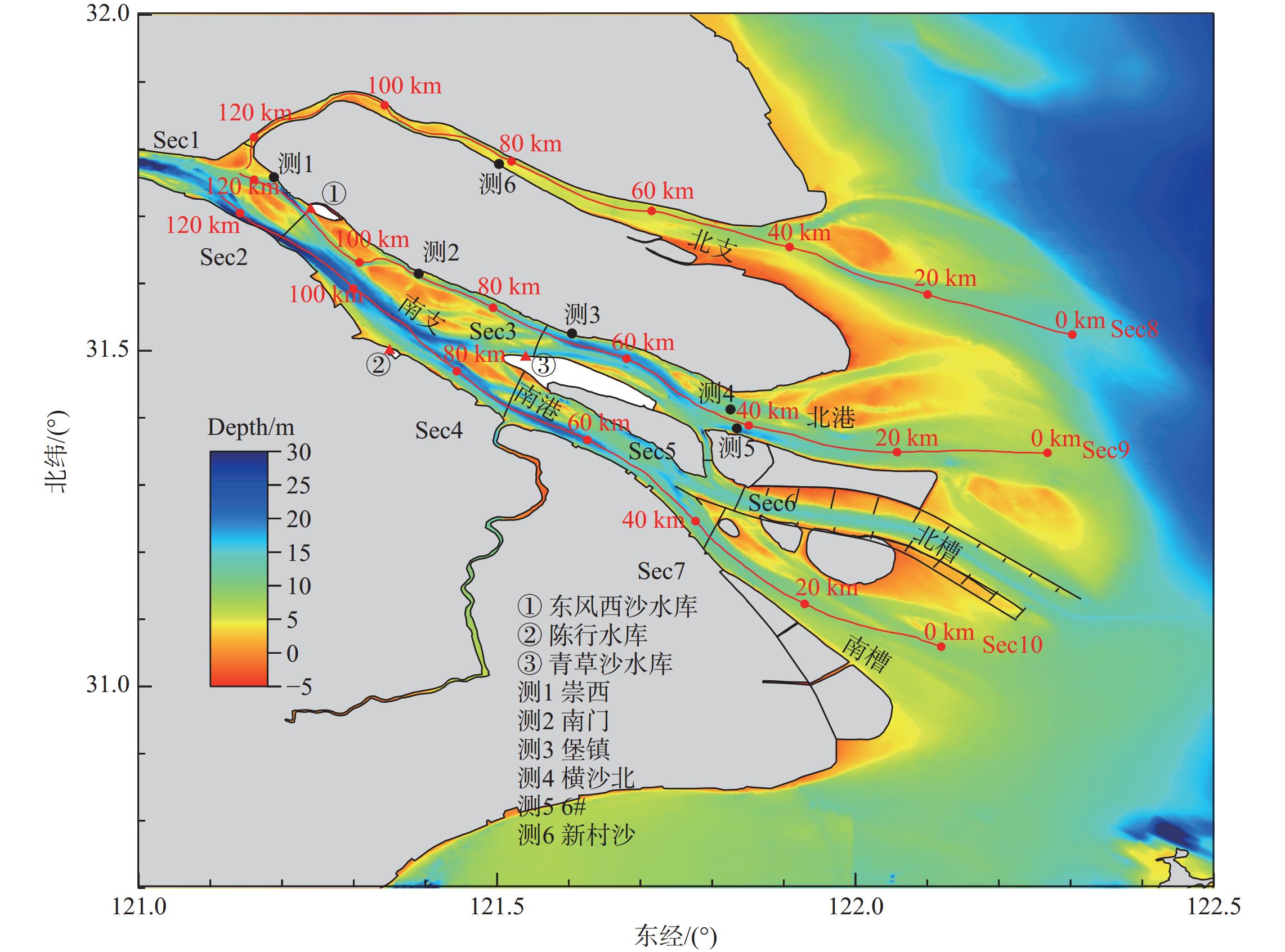
Fig.2
Timeseries of observed wind speeds and wind vectors at the weather station at Chongming eastern shoal, elevation at Buzhen, surface salinity at Qingcaosha reservoir in November 2023 (left) and February 2024 (right)"
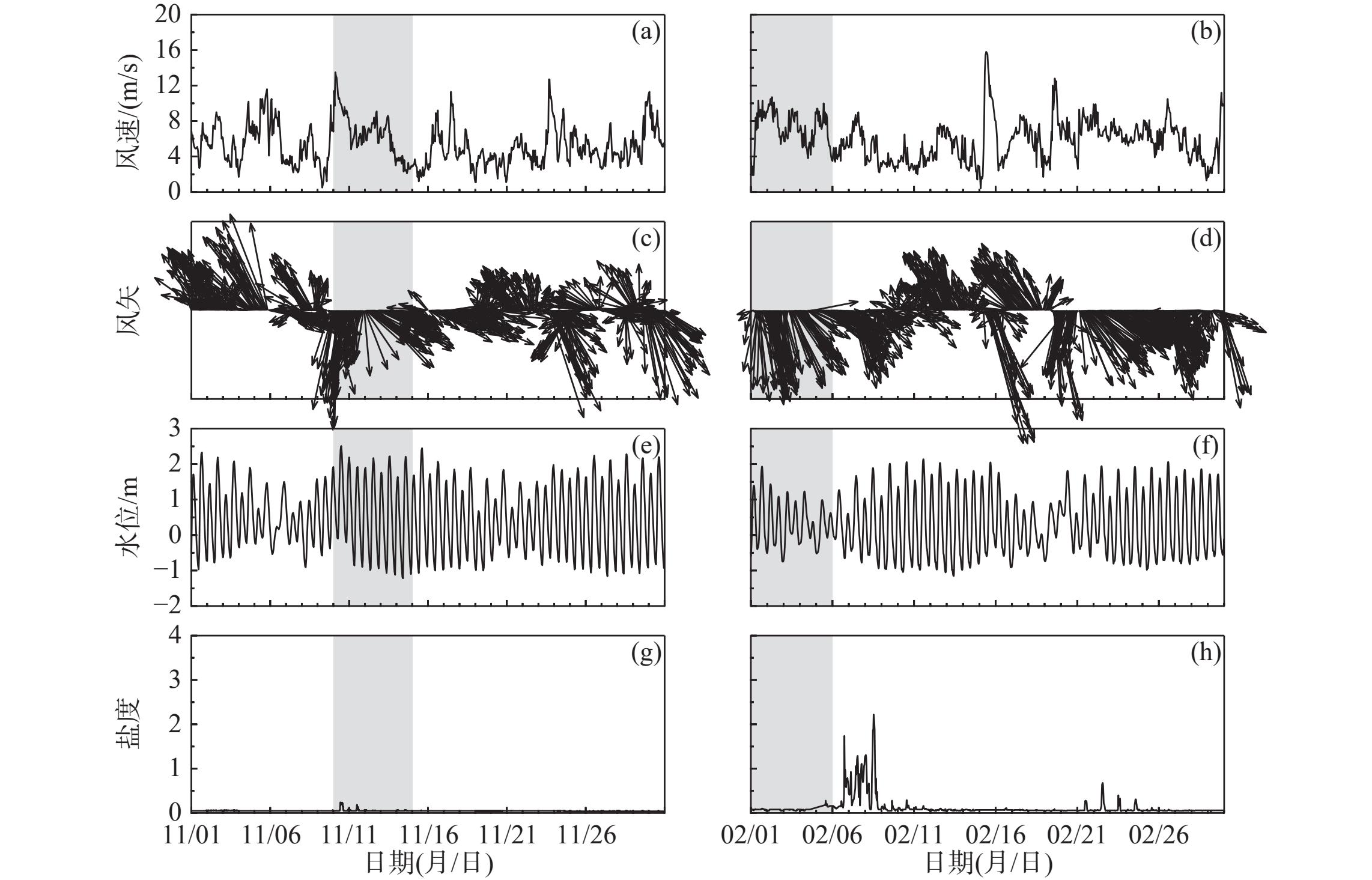
Fig.3
Model domain and grids (a), and locally refined grid in the Changjiang Estuary (b)"
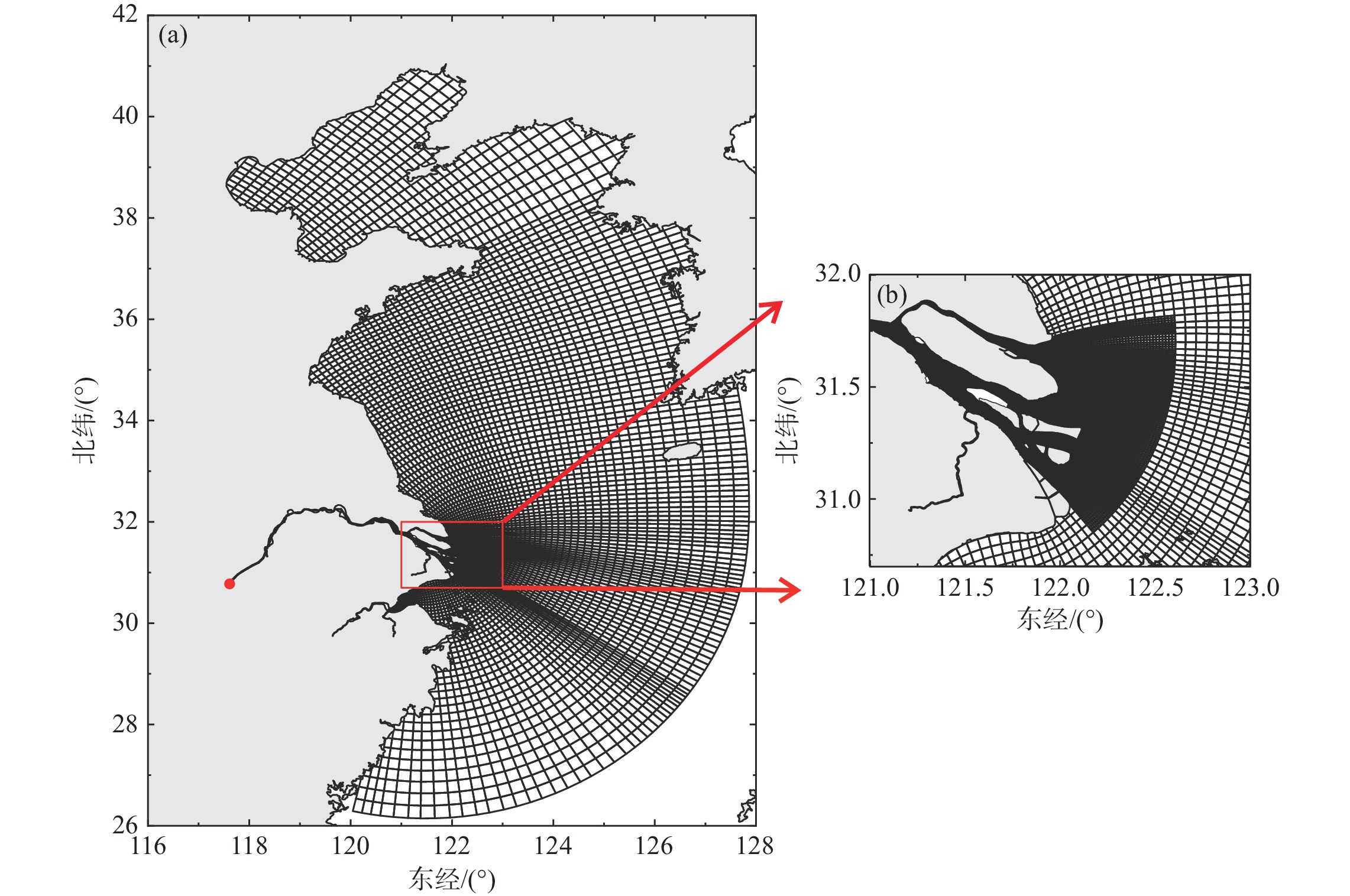
Fig.4
Time series of observed and modeled surface, middle, bottom current velocity and direction at buoy 6#;elevations at Xincunsha (g), Chongxi (h), and Buzhen (i); surface salinity at Nanmen (j), Buzhen (k) and Hengshabei (l)"
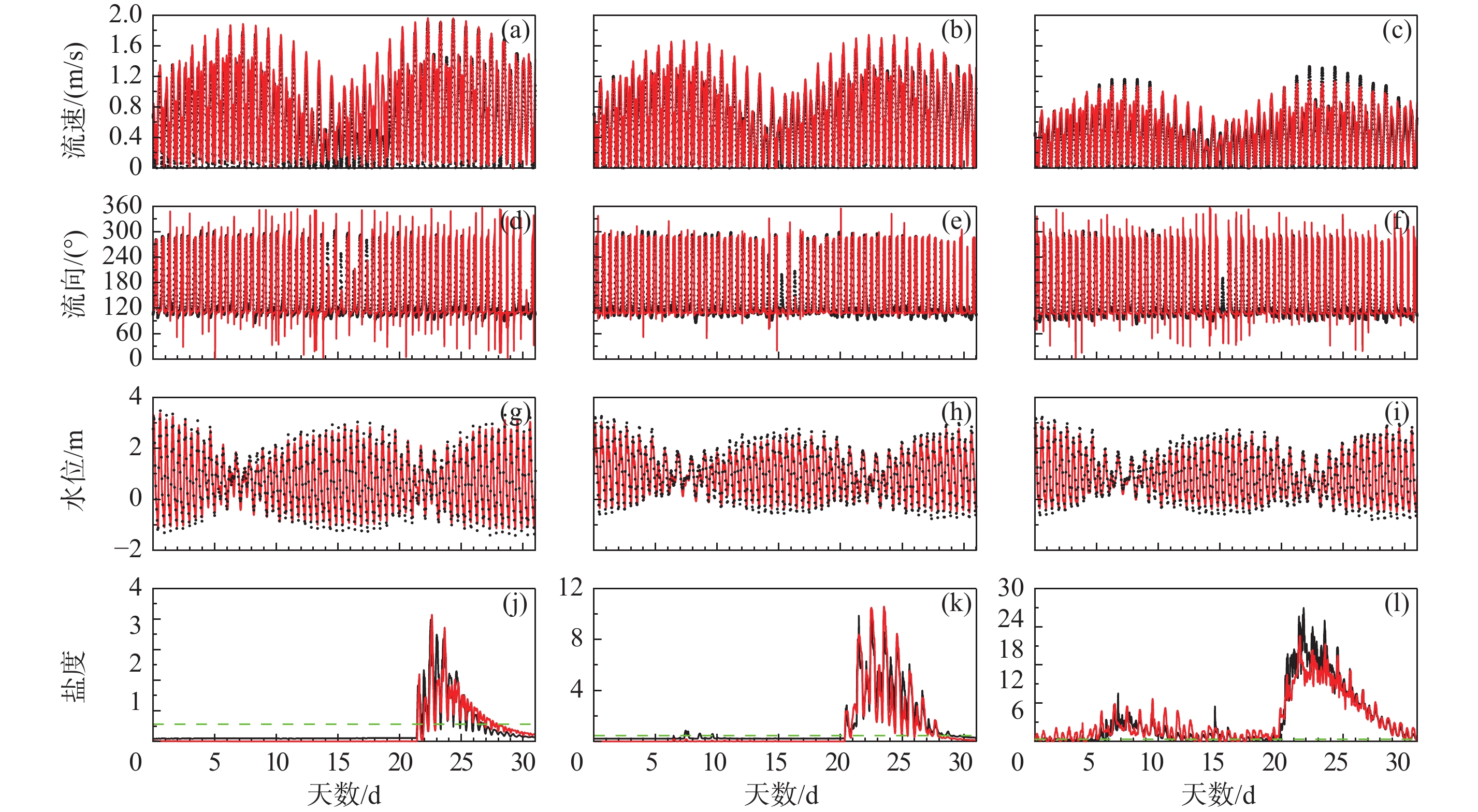
Table 1
Evaluation indicators of model validation of elevation, current velocity and surface salinity"
| 验证参数 | 测站 | CC | RMSE | SS |
| 水位 | 新村沙 | 0.98 | 0.23 m | 0.99 |
| 崇西 | 0.94 | 0.34 m | 0.96 | |
| 堡镇 | 0.95 | 0.33 m | 0.97 | |
| 流速 | 表层 | 0.91 | 0.25 m/s | 0.93 |
| 中层 | 0.93 | 0.19 m/s | 0.95 | |
| 底层 | 0.92 | 0.13 m/s | 0.95 | |
| 盐度 | 南门 | 0.91 | 0.22 | 0.95 |
| 堡镇 | 0.95 | 0.67 | 0.97 | |
| 横沙北 | 0.95 | 1.86 | 0.97 |
Table 2
Setup of the numerical experiment"
| 试验 | 风场 | 说明 |
| Exp0 | 北风 5 m/s | 气候态北风对照试验 |
| Exp1 | 小潮期间施加北风 10 m/s, 持续 5 d, 其余时间采用北风 5 m/s | 强北风小潮汛试验 |
| Exp2 | 小潮后中潮期间施加北风 10 m/s, 持续 5 d, 其余时间采用北风 5 m/s | 强北风小潮后中潮汛试验 |
| Exp3 | 大潮期间施加北风 10 m/s, 持续 5 d, 其余时间采用北风 5 m/s | 强北风大潮汛试验 |
| Exp4 | 大潮后中潮期间施加北风 10 m/s, 持续 5 d, 其余时间采用北风 5 m/s | 强北风大潮后中潮汛试验 |
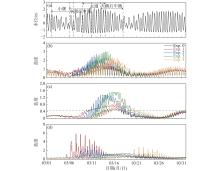
Fig.5
Temporal variation of the simulated elevation at Buzhen in Exp0 (a); temporal variation of salinity at Dongfengxisha (b), Chenhang (c) and Qingcaosha reservoir (d) under different experiments in March"
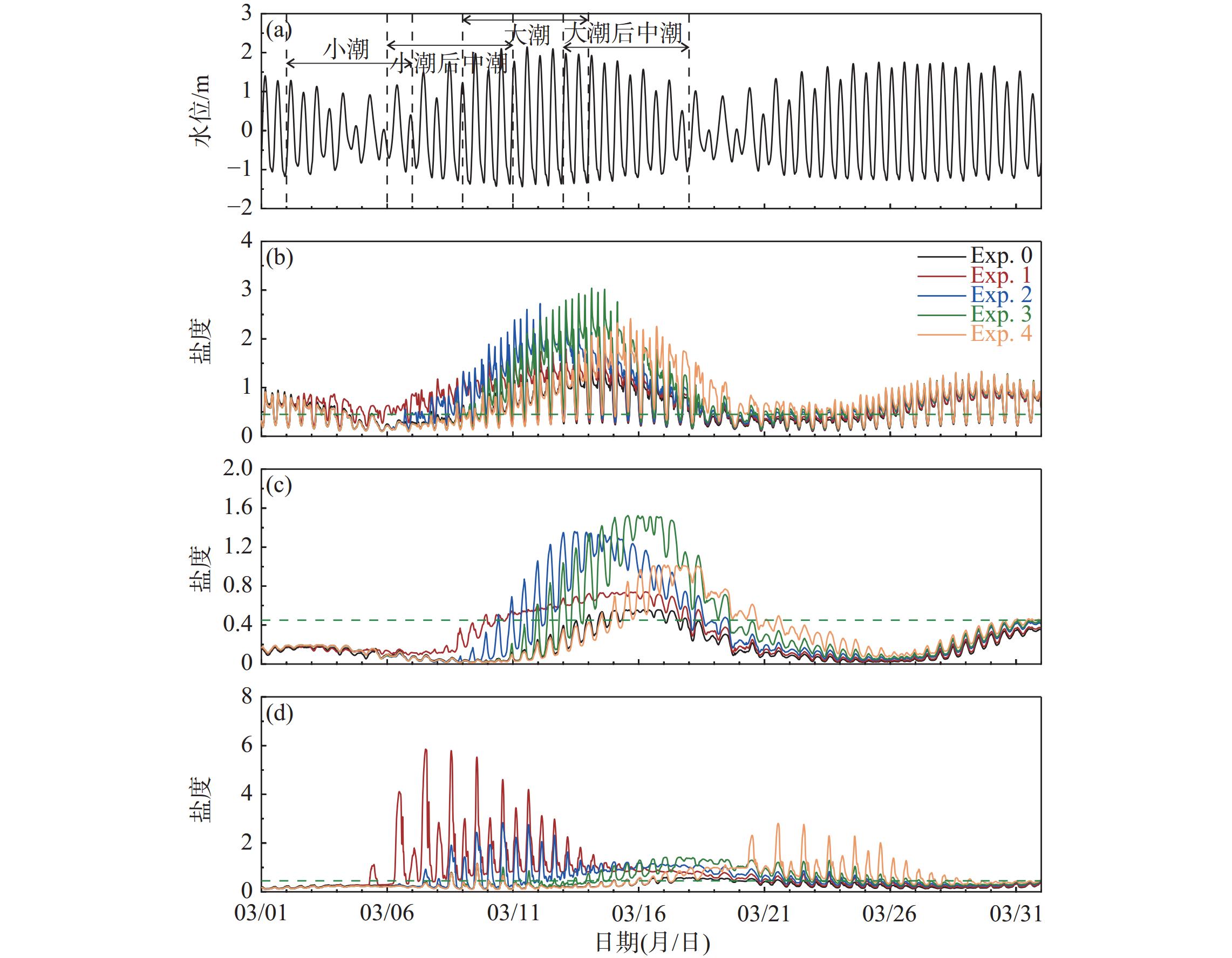
Table 3
Unsuitable water intake days for three reservoirs under different wind conditions in March 单位: d"
| 水库 | Exp0 | Exp1 | Exp2 | Exp3 | Exp4 |
| 东风西沙 | 14.76 | 19.52 | 19.22 | 19.01 | 20.12 |
| 陈行 | 3.47 | 7.95 | 7.14 | 6.80 | 6.46 |
| 青草沙 | 4.24 | 15.87 | 13.30 | 11.62 | 11.41 |
Fig.6
Temporal variations in net water fluxes (a)-(g) and net salt fluxes (h)-(n) across Sec1-Sec7 in March"
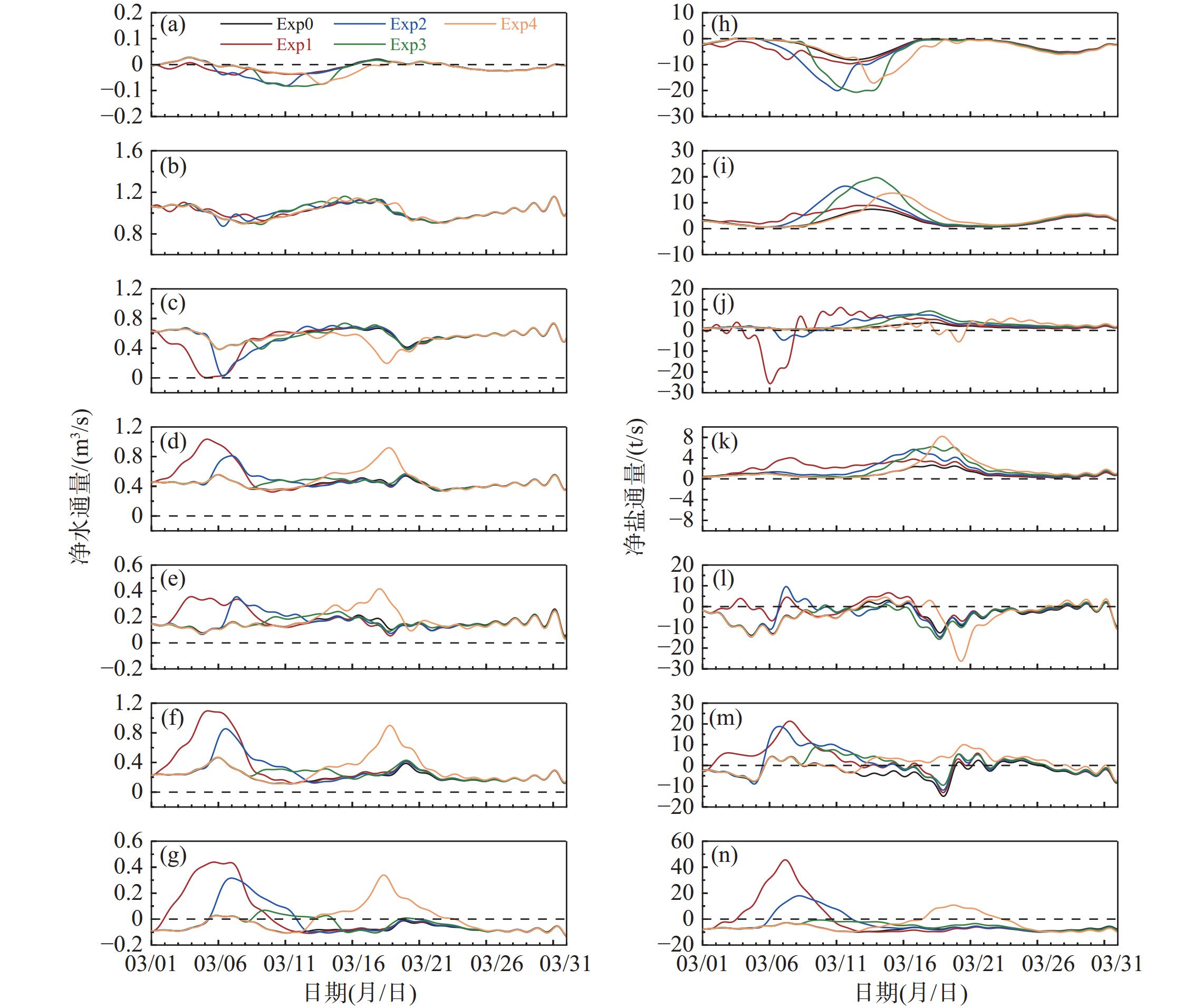
Table 4
The net water fluxes, net salt fluxes and water diversion ratio for different tidal types"
| 横断面 | 潮汛 | 试验 | 净水通量/(m3/s) | 净盐通量/(t/s) | 分流比/% |
| NB (Sec1) | 小潮 | Exp0 | 25 | –0.43 | 0.30 |
| Exp1 | –210 | –2.78 | –2.50 | ||
| 小潮后中潮 | Exp0 | –128 | –2.54 | –1.18 | |
| Exp2 | –472 | –10.03 | –4.31 | ||
| 大潮 | Exp0 | –332 | –7.45 | –3.45 | |
| Exp3 | –799 | –18.90 | –8.24 | ||
| 大潮后中潮 | Exp0 | –129 | –4.95 | –1.29 | |
| Exp4 | –548 | –13.58 | –5.51 | ||
| SB (Sec2) | 小潮 | Exp0 | 0.74 | 99.70 | |
| Exp1 | 1.95 | 102.50 | |||
| 小潮后中潮 | Exp0 | 2.50 | 101.18 | ||
| Exp2 | 9.42 | 104.31 | |||
| 大潮 | Exp0 | 7.06 | 103.45 | ||
| Exp3 | 17.69 | 108.24 | |||
| 大潮后中潮 | Exp0 | 5.37 | 101.29 | ||
| Exp4 | 12.93 | 105.51 | |||
| NC (Sec3) | 小潮 | Exp0 | 1.18 | 53.39 | |
| Exp1 | 25 | –14.90 | 0.31 | ||
| 小潮后中潮 | Exp0 | 1.16 | 57.61 | ||
| Exp2 | 0.91 | 44.03 | |||
| 大潮 | Exp0 | 1.04 | 61.22 | ||
| Exp3 | 1.02 | 54.66 | |||
| 大潮后中潮 | Exp0 | 2.38 | 59.18 | ||
| Exp4 | 2.09 | 51.48 | |||
| SC (Sec4) | 小潮 | Exp0 | 0.85 | 46.61 | |
| Exp1 | 1.59 | 99.69 | |||
| 小潮后中潮 | Exp0 | 0.53 | 42.39 | ||
| Exp2 | 0.90 | 55.97 | |||
| 大潮 | Exp0 | 0.29 | 38.78 | ||
| Exp3 | 0.47 | 45.34 | |||
| 大潮后中潮 | Exp0 | 1.38 | 40.82 | ||
| Exp4 | 1.40 | 48.52 | |||
| HS (Sec5) | 小潮 | Exp0 | –391 | –6.75 | / |
| Exp1 | 13.14 | / | |||
| 小潮后中潮 | Exp0 | –470 | –4.84 | / | |
| Exp2 | 15.04 | / | |||
| 大潮 | Exp0 | –981 | –9.55 | / | |
| Exp3 | 187 | –2.16 | / | ||
| 大潮后中潮 | Exp0 | –800 | –8.31 | / | |
| Exp4 | 547 | –4.18 | / | ||
| NP (Sec6) | 小潮 | Exp0 | 379 | –16.24 | 11.42 |
| Exp1 | –7.73 | 22.63 | |||
| 小潮后中潮 | Exp0 | –1.09 | 45.43 | ||
| Exp2 | 4.17 | 38.62 | |||
| 大潮 | Exp0 | –1.24 | 54.08 | ||
| Exp3 | –0.19 | 41.56 | |||
| 大潮后中潮 | Exp0 | 3.40 | 50.22 | ||
| Exp4 | 5.07 | 44.56 | |||
| SP (Sec7) | 小潮 | Exp0 | –7.10 | 88.58 | |
| Exp1 | 5.37 | 77.37 | |||
| 小潮后中潮 | Exp0 | 1946 | 2.70 | 54.57 | |
| Exp2 | 10.29 | 61.38 | |||
| 大潮 | Exp0 | –2.39 | 45.92 | ||
| Exp3 | 6.02 | 58.44 | |||
| 大潮后中潮 | Exp0 | –3.32 | 49.78 | ||
| Exp4 | 4.23 | 55.44 |
Fig.7
Distribution of tidally averaged surface (a)-(c) and bottom (d)-(f) salinity and difference between Exp1 and Exp0 during neap tide"
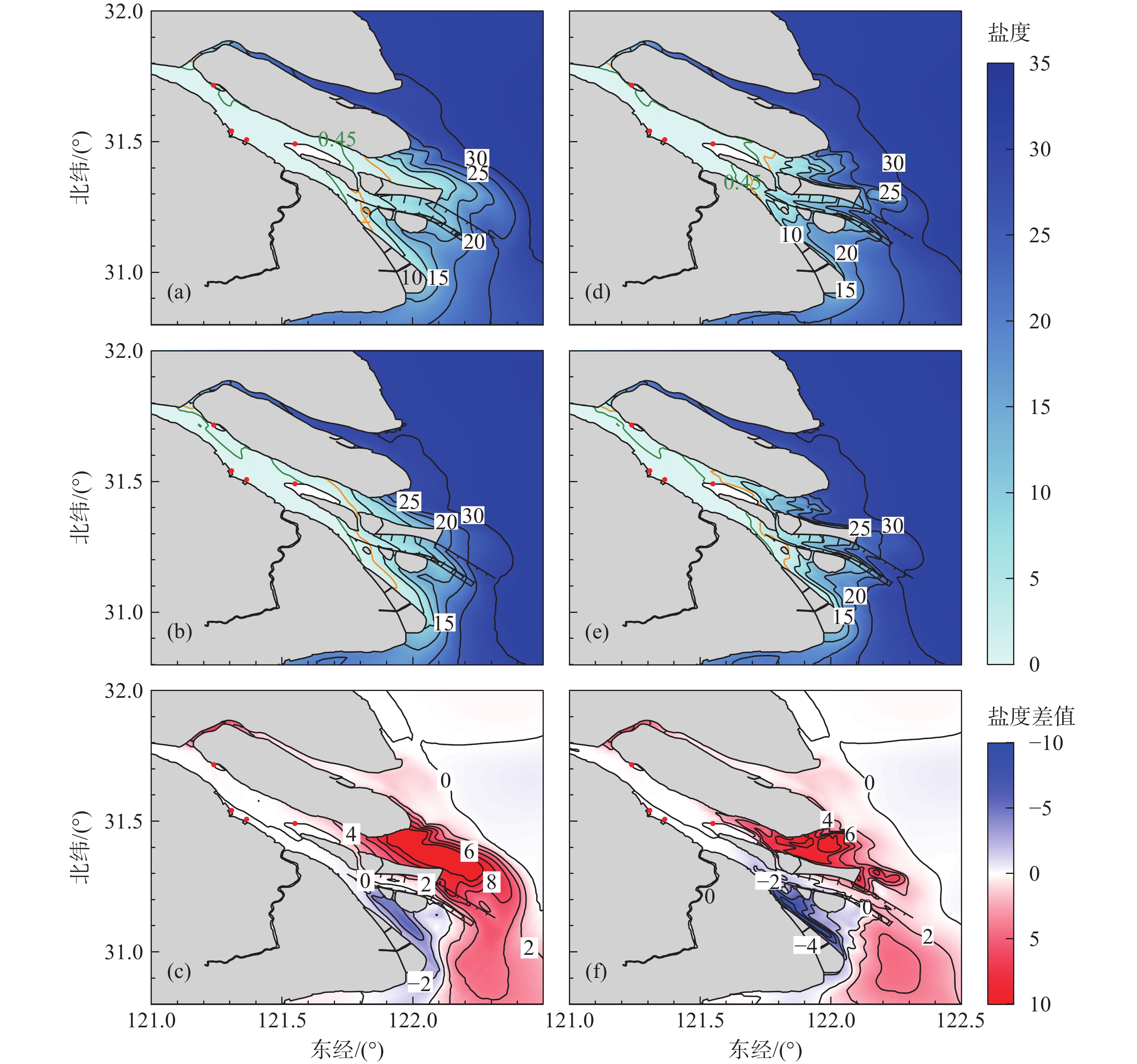
Fig.8
Distribution of tidally averaged surface (a)-(c) and bottom (d)-(f) salinity and difference between Exp2 and Exp0 during medium tide after neap tide"
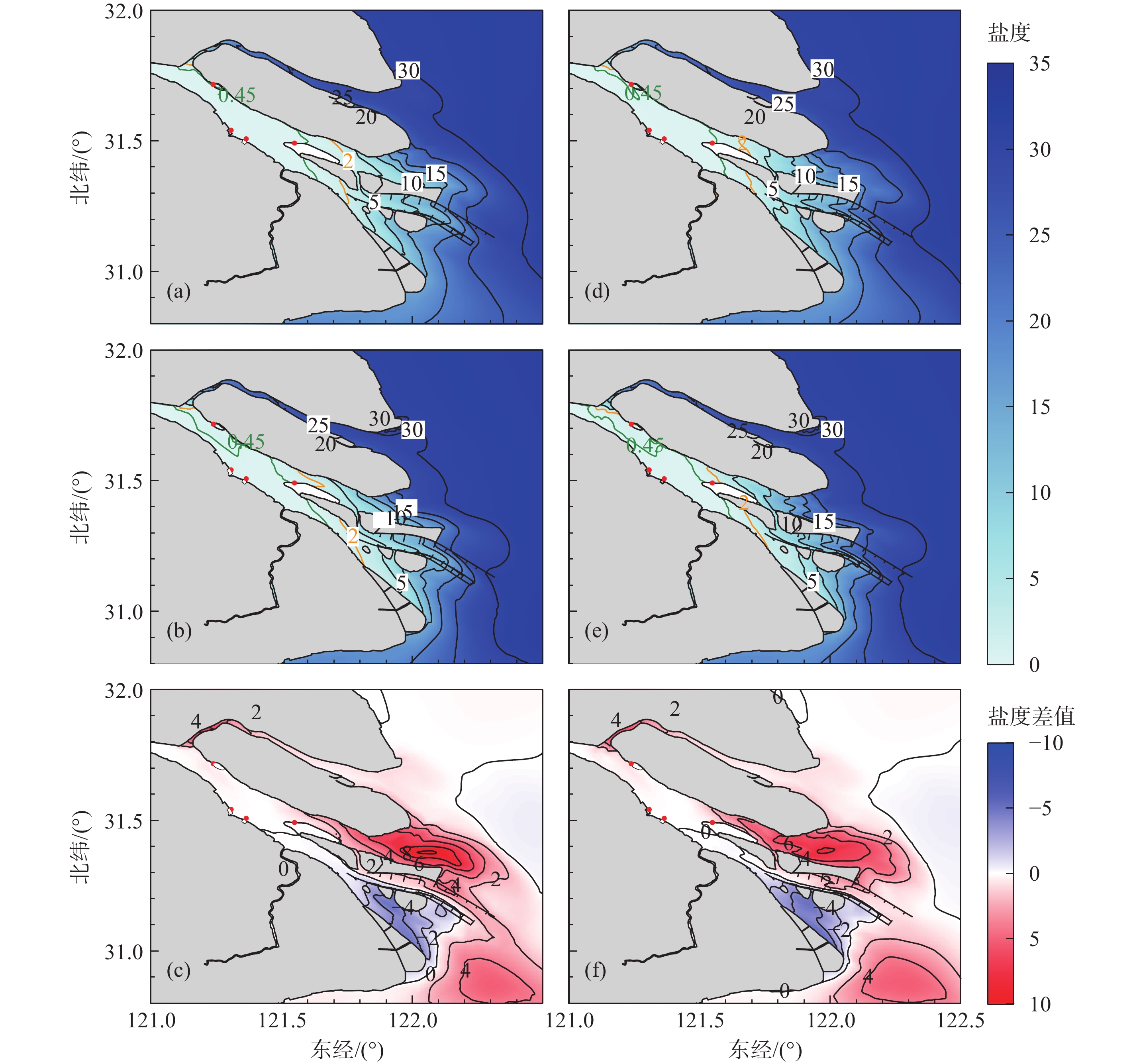
Fig.9
Distribution of tidally averaged surface (a)-(c) and bottom (d)-(f) salinity and difference between Exp3 and Exp0 during spring tide"
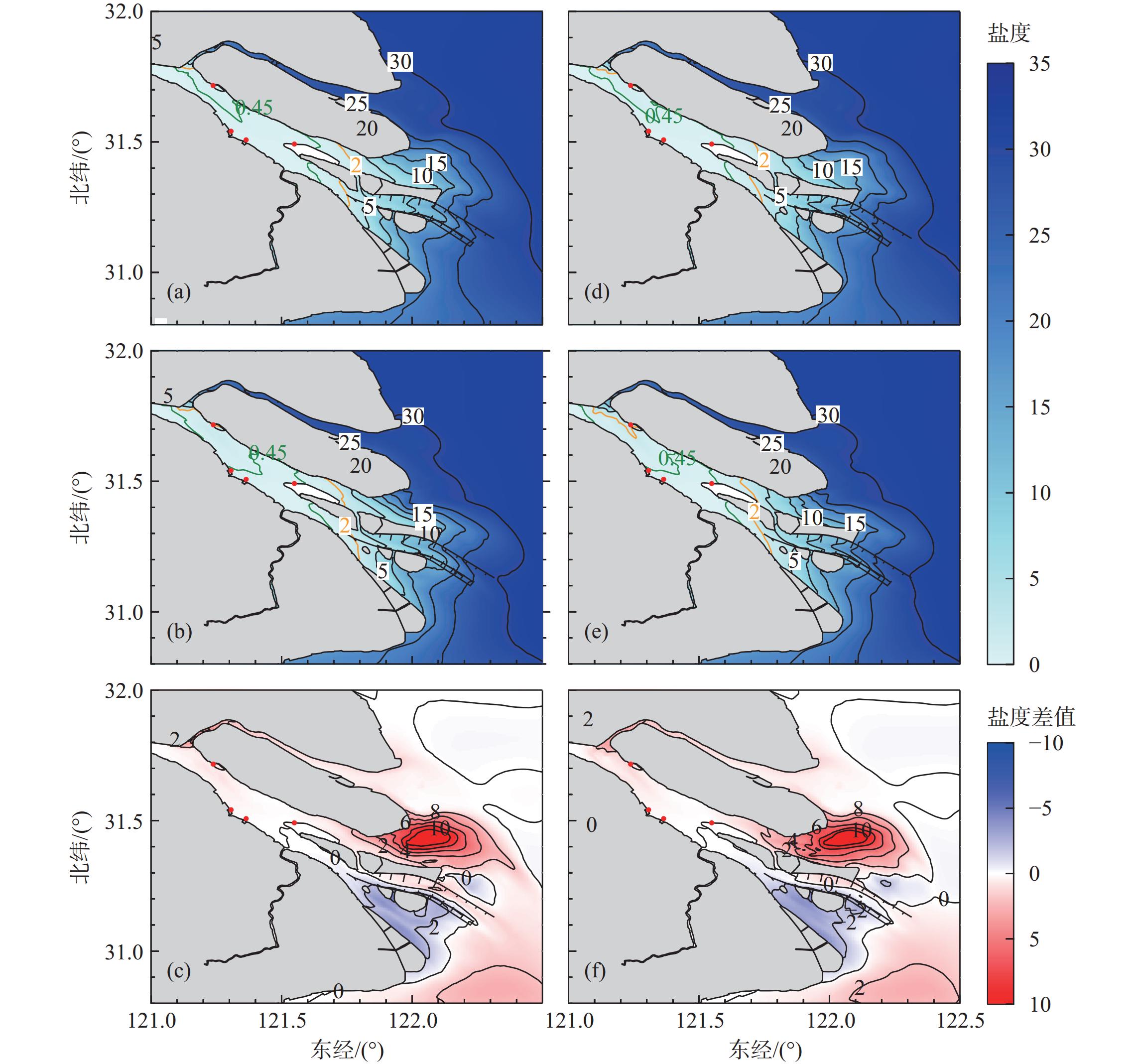
Fig.10
Distribution of tidally averaged surface (a)-(c) and bottom (d)-(f) salinity and difference between Exp4 and Exp0 during medium tide after spring tide"
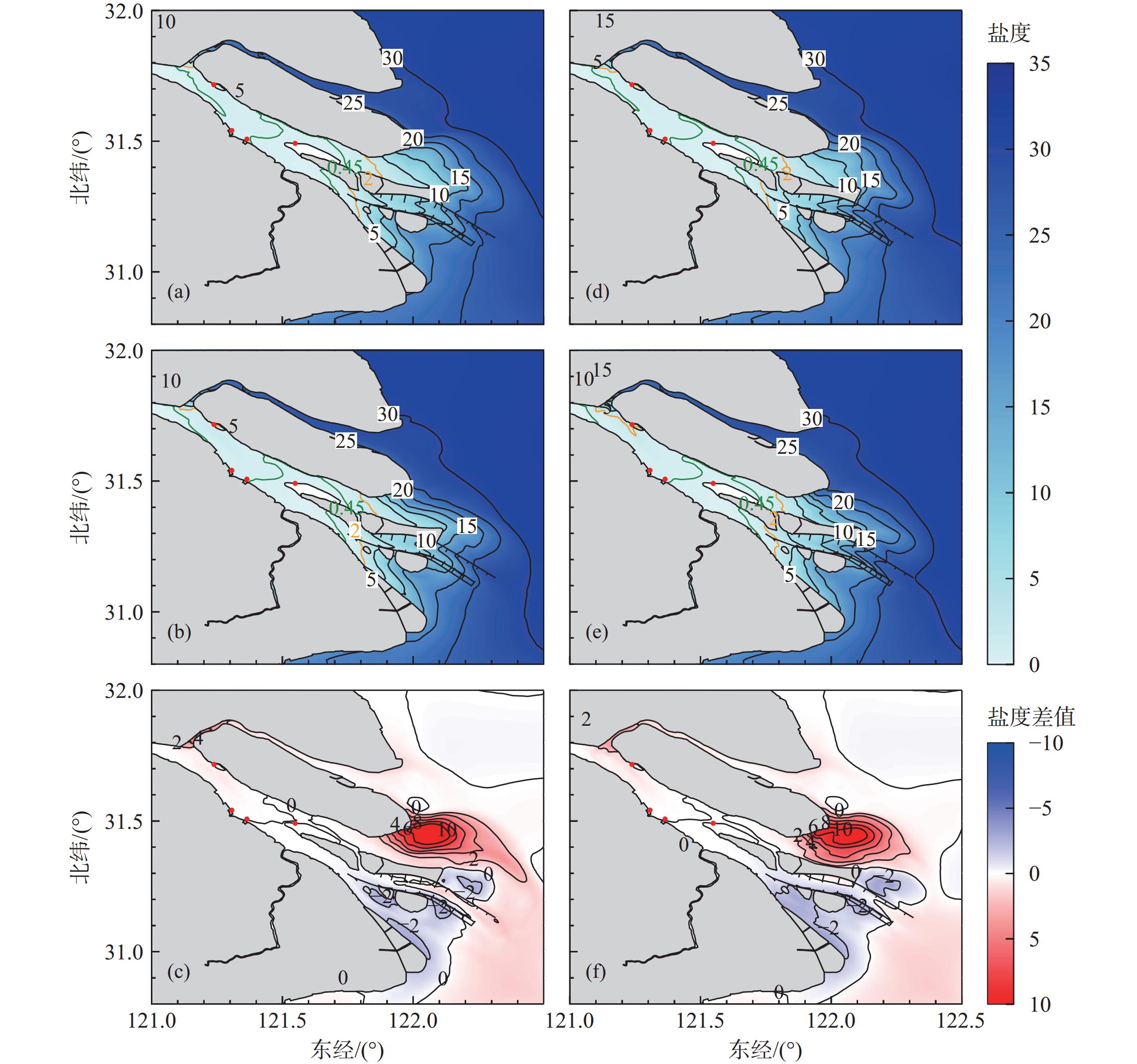
Fig.11
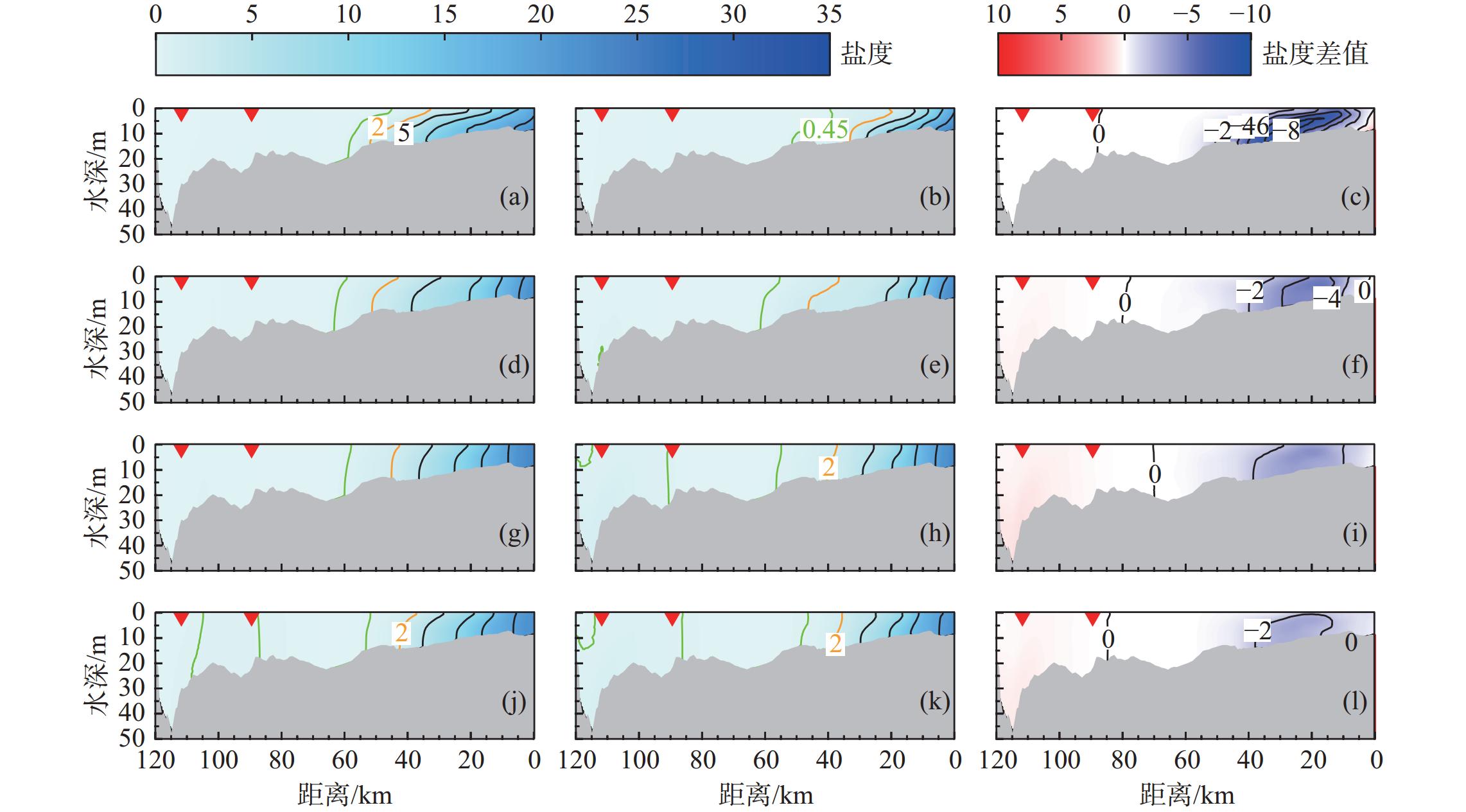
Distribution of the tidally averaged salinity and difference of salinity along Sec8 during the neap tide, medium tide after neap tide, spring tide, and medium tide after spring tide"
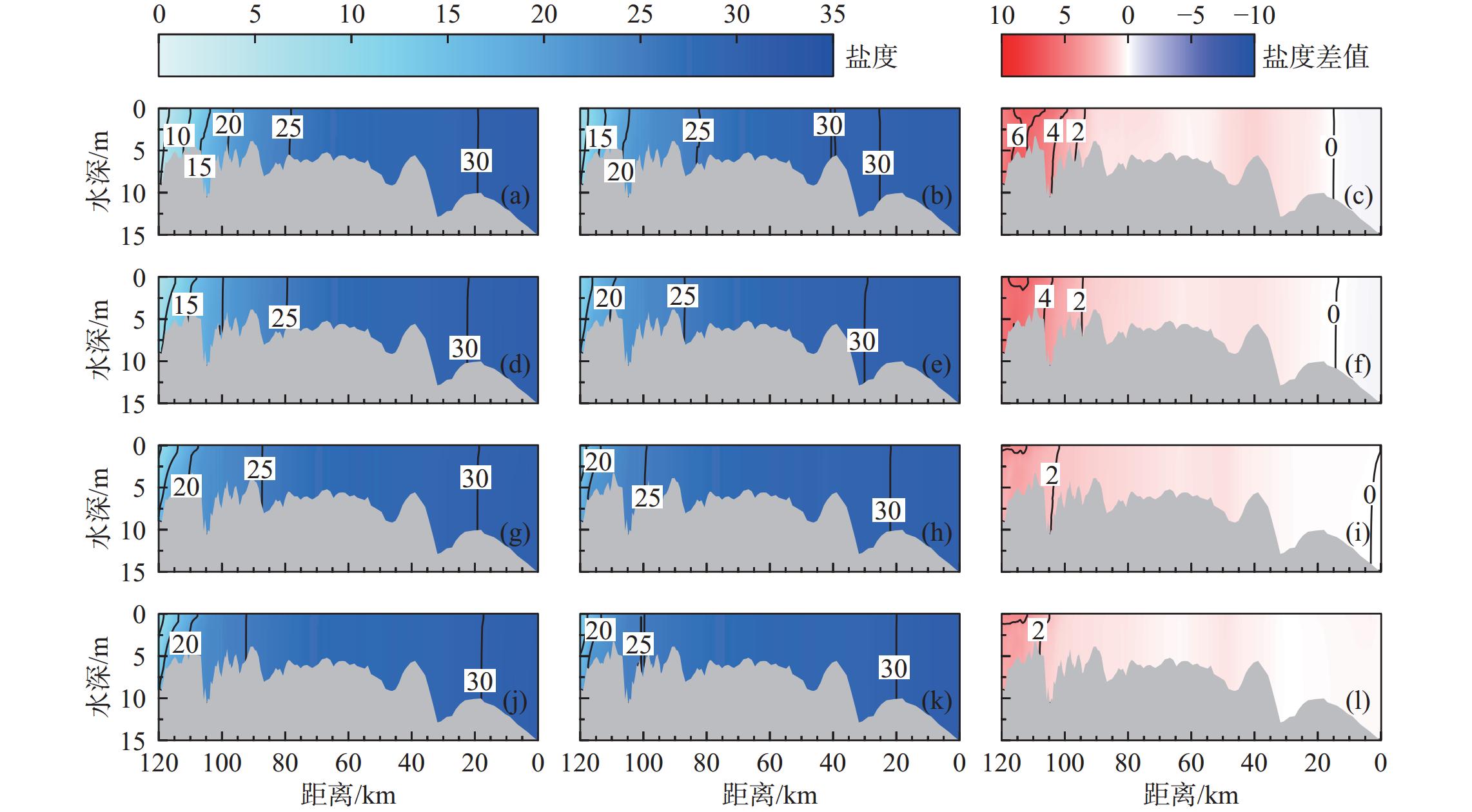
Fig.12
Distribution of the tidally averaged salinity and difference of salinity along Sec9 during the neap tide, medium tide after neap tide, spring tide, and medium tide after spring tide"
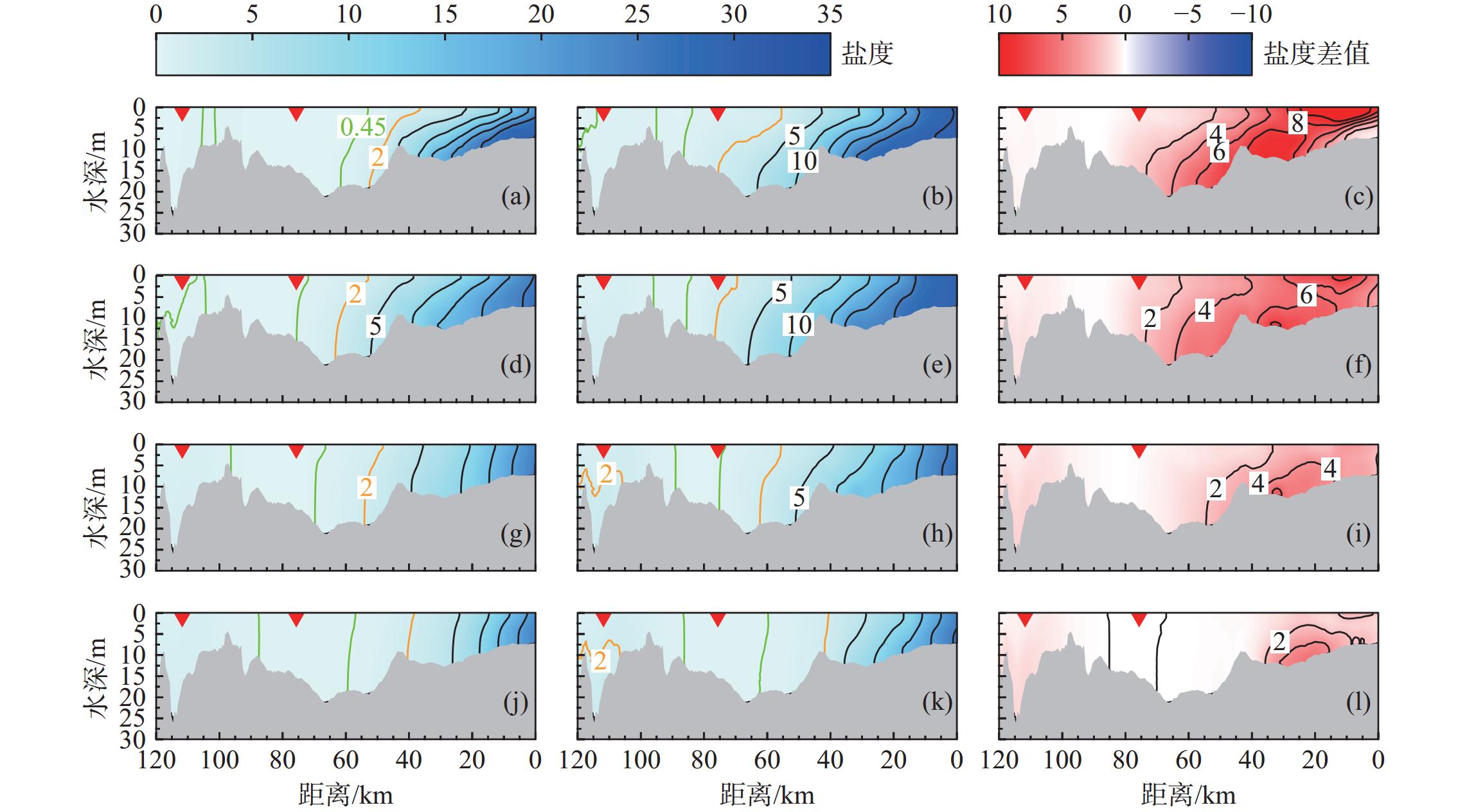
Fig.13
Distribution of the tidally averaged salinity and difference of salinity along Sec10 during the neap tide, medium tide after neap tide, spring tide, and medium tide after spring tide"
| 1 | 陈泾, 朱建荣.. 长江河口北支新村沙围垦工程对盐水入侵的影响. 华东师范大学学报(自然科学版), 2014 (4): 163- 172. |
| 2 | 韩乃斌.. 南水北调对长江口盐水入侵影响的预测. 地理研究, 1983, 2 (2): 99- 107. |
| 3 | 罗小峰, 陈志昌.. 径流和潮汐对长江口盐水入侵影响数值模拟研究. 海岸工程, 2005, 24 (3): 1- 6. |
| 4 | 茅志昌, 沈焕庭, 姚运达.. 长江口南支南岸水域盐水入侵来源分析. 海洋通报, 1993, 12 (3): 17- 25. |
| 5 | DING Z L, ZHU J R, LYU H H.. Impacts of the Qingcaosha Reservoir on saltwater intrusion in the Changjiang Estuary. Anthropocene Coasts, 2021, 4 (1): 17- 35. |
| 6 | TIAN R.. Factors controlling saltwater intrusion across multi-time scales in estuaries, Chester River, Chesapeake Bay. Estuarine, Coastal and Shelf Science, 2019, 223, 61- 73. |
| 7 | 戴苒, 朱建荣.. 长江口崇明东滩风况统计分析. 华东师范大学学报(自然科学版), 2015 (4): 17- 25. |
| 8 | 吴辉. 长江河口盐水入侵研究——北支倒灌、深水航道工程和冬季季风的影响 [D]. 上海: 华东师范大学, 2006. |
| 9 | LI L, ZHU J R, WU H.. Impacts of wind stress on saltwater intrusion in the Yangtze Estuary. Science China Earth Sciences, 2012, 55 (7): 1178- 1192. |
| 10 | 王绍祥, 朱建荣.. 不同潮型和风况下青草沙水库取水口盐水入侵来源. 华东师范大学学报(自然科学版), 2015 (4): 65- 76. |
| 11 | 李林江. 持续强北风作用下长江河口盐水入侵研究 [D]. 上海: 华东师范大学, 2020. |
| 12 | ZHU J R, CHENG X Y, LI L J, et al.. Dynamic mechanism of an extremely severe saltwater intrusion in the Changjiang estuary in February 2014. Hydrology and Earth System Sciences, 2020, 24 (10): 5043- 5056. |
| 13 | 马瑞. 低径流量和台风联合作用对长江口盐水入侵和淡水资源影响 [D]. 上海: 华东师范大学, 2024. |
| 14 | 丁章亮. 非结构四边形网格有限差分河口海岸三维数值模式的研发 [D]. 上海: 华东师范大学, 2021. |
| 15 | 海洋图集编委会. 渤海黄海东海海洋图集: 水文 [M]. 北京: 海洋出版社, 1993. |
| 16 | MURPHY A H.. Skill scores based on the mean square error and their relationships to the correlation coefficient. Monthly Weather Review, 1988, 116 (12): 2417- 2424. |
| 17 | 陈立, 朱建荣, 王彪.. 长江河口陈行水库盐水入侵统计模型研究. 给水排水, 2013, 49 (7): 162- 165. |
| 18 | GU J H, ZHU J R, LYU H H.. Observation and analysis of water and salt transports in the north branch of the Changjiang estuary. Journal of Coastal Research, 2021, 37 (3): 518- 527. |
| 19 | ZHANG E F, GAO S, SAVENIJE H H G, et al.. Saline water intrusion in relation to strong winds during winter cold outbreaks: North Branch of the Yangtze Estuary. Journal of Hydrology, 2019, 574, 1099- 1109. |
| 20 | 李林江, 朱建荣.. 冬季北风风速对长江河口盐水入侵的影响. 海洋学报, 2021, 43 (10): 10- 22. |
| 21 | MA R, ZHU J R.. Water and salt transports in the Hengsha channel of Changjiang Estuary. Journal of Marine Science and Engineering, 2022, 10 (1): 72. |
| 22 | 吴宇帆, 朱建荣, 顾靖华.. 长江口强盐水入侵后期盐度分布规律分析. 上海水务, 2018 (3): 1- 5. |
| 23 | 仇威. UnFECOM模式在长江河口盐水入侵数值模拟中的应用 [D]. 上海: 华东师范大学, 2023. |
| Viewed | ||||||
|
Full text |
|
|||||
|
Abstract |
|
|||||
