
 中文核心期刊
J* E* C* N* U* N* S* ›› 2026, Vol. 2026 ›› Issue (1): 43-53.doi: 10.3969/j.issn.1000-5641.2026.01.004
• Distribution and Ecological Risk of Emerging Pollutants in Watersheds • Previous Articles Next Articles
Yutong ZHANG1, Huanran ZHOU1, Lingling WU1,2,*( )
)
Received:2025-09-24
Online:2026-01-25
Published:2026-01-29
Contact:
Lingling WU
E-mail:wulingling@tongji.edu.cn
CLC Number:
Yutong ZHANG, Huanran ZHOU, Lingling WU. Research progress on pollution characteristics and ecotoxicity of SSRIs in aquatic environments[J]. J* E* C* N* U* N* S*, 2026, 2026(1): 43-53.
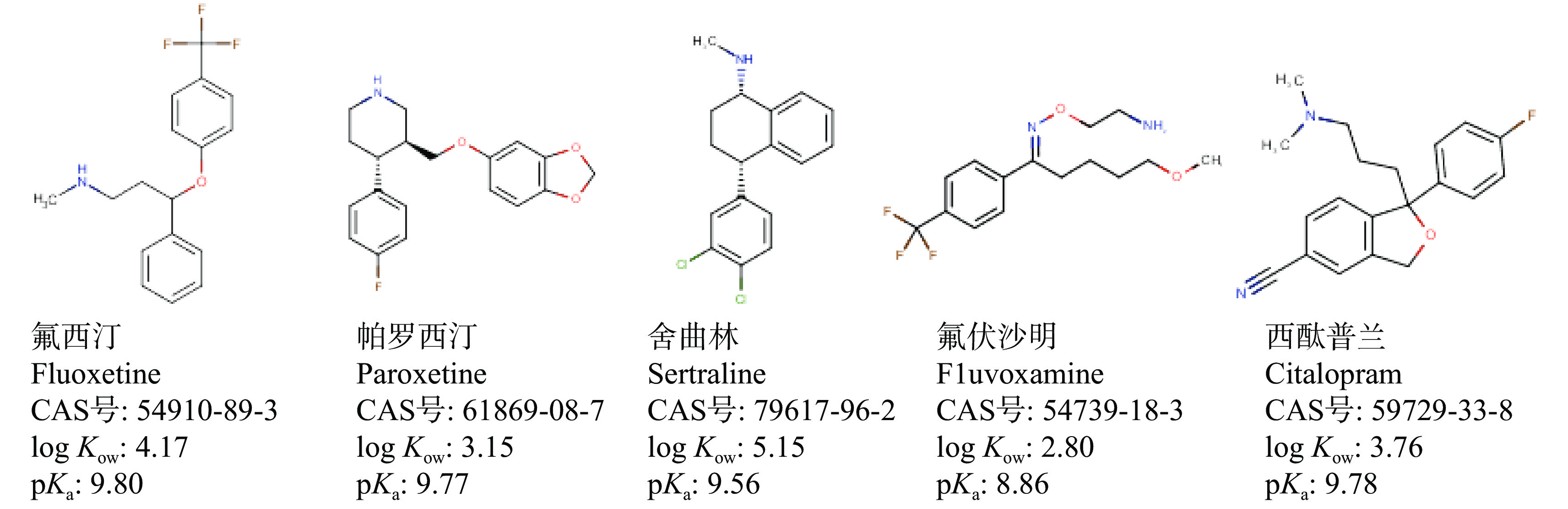
Fig.1
Fundamental physicochemical properties of SSRIs"
Table 1
Concentrations of SSRIs in various aquatic environments"
| SSRIs | 浓度/(ng·L−1) | 样品来源 | 采样地 | 参考文献 |
| 氟西汀 | 31.0 (最高) | 污水处理厂出水 | 美国 | [ |
| 24.8 (最高) | 地表水 | 美国 | [ | |
| 19.2 (最高) | 饮用水 | 美国 | [ | |
| 9.0~26.0 / 6.6~20.0 | 污水处理厂进/出水 | 加拿大 | [ | |
| 93.4 (最高) | 地表水 | 加拿大 | [ | |
| 1.9~13.5 / 3.7~17.0 | 污水处理厂进/出水 | 瑞典 | [ | |
| 36.0~436.5 / 33.0~66.5 | 污水处理厂进/出水 | 英国 | [ | |
| 0.3 (平均) | 饮用水 | 英国 | [ | |
| 77.0~207.0 / 63.0~72.0 | 污水处理厂进/出水 | 西班牙 | [ | |
| 0.6~17.3 | 地表水 | 西班牙 | [ | |
| 49.0~92.0 / ND~79.0 | 污水处理厂进/出水 | 葡萄牙 | [ | |
| 6.7~28.9 | 地表水 | 葡萄牙 | [ | |
| 51.1 / 16.2 (平均) | 污水处理厂进/出水 | 澳大利亚 | [ | |
| 25.0~173.0 / 25.0~160.0 | 污水处理厂进/出水 | 巴西 | [ | |
| 5.9~36.4 / 5.1~29.4 | 污水处理厂进/出水 | 中国香港 | [ | |
| 氟西汀 | 2.3~42.9 | 地表水 | 中国上海 | [ |
| 2.0~9.4 | 地表水 | 中国南京 | [ | |
| 2.1 (平均) | 饮用水 | 中国 | [ | |
| ND~1.0 / ND~0.4 | 污水处理厂进/出水 | 中国青海 | [ | |
| ND~1.0 | 地表水 | 中国重庆 | [ | |
| 0.7 / 0.8 (平均) | 污水处理厂进/出水 | 中国广州 | [ | |
| 帕罗西汀 | 1.8~16.0 / 1.3~12.0 | 污水处理厂进/出水 | 加拿大 | [ |
| 48.8 (最高) | 地表水 | 加拿大 | [ | |
| 1.4~2.8 / 1.6~2.6 | 污水处理厂进/出水 | 瑞典 | [ | |
| 0.3~3.4 | 地表水 | 西班牙 | [ | |
| 1.5~6.6 | 饮用水 | 荷兰 | [ | |
| ND~2.1 | 地表水 | 中国上海 | [ | |
| ND~69.9 / ND~0.3 | 污水处理厂进/出水 | 中国青海 | [ | |
| ND~12.8 | 地表水 | 中国重庆 | [ | |
| 0.6 / ND (平均) | 污水处理厂进/出水 | 中国广州 | [ | |
| 舍曲林 | 31.6~114.0 / 15.7~88.3 | 污水处理厂进/出水 | 美国 | [ |
| 19.0 (最高) | 地表水 | 美国 | [ | |
| 7.6~34.0 / 5.7~21.0 | 污水处理厂进/出水 | 加拿大 | [ | |
| 136.1 (最高) | 地表水 | 加拿大 | [ | |
| 8.5~40.0 / 15.0~62.0 | 污水处理厂进/出水 | 瑞典 | [ | |
| 35.5~104.0 / 13.5~44.5 | 污水处理厂进/出水 | 英国 | [ | |
| 1.1~144.9 | 地表水 | 西班牙 | [ | |
| ND~5.4 | 地表水 | 葡萄牙 | [ | |
| 241.0 / 36.7 (平均) | 污水处理厂进/出水 | 澳大利亚 | [ | |
| ND~417.0 / ND~25.0 | 污水处理厂进/出水 | 巴西 | [ | |
| 12.9~103.0 / 7.0~96.7 | 污水处理厂进/出水 | 中国香港 | [ | |
| ND~5.0 | 地表水 | 中国上海 | [ | |
| 1.1~2.6 | 地表水 | 中国南京 | [ | |
| 0.2~3.4 / ND~1.6 | 污水处理厂进/出水 | 中国青海 | [ | |
| ND~25.7 | 地表水 | 中国重庆 | [ | |
| 4.6 / 2.6 (平均) | 污水处理厂进/出水 | 中国广州 | [ | |
| 氟伏沙明 | ND~5.3 / ND~3.9 | 污水处理厂进/出水 | 加拿大 | [ |
| 24.2 (最高) | 地表水 | 加拿大 | [ | |
| 1.0~1.4 | 地表水 | 中国南京 | [ | |
| 氟伏沙明 | ND~2.3 / ND~0.3 | 污水处理厂进/出水 | 中国青海 | [ |
| ND~14.0 | 地表水 | 中国重庆 | [ | |
| 1.6 / ND (平均) | 污水处理厂进/出水 | 中国广州 | [ | |
| 西酞普兰 | 35.1~170.0 / 104.0~414.0 | 污水处理厂进/出水 | 美国 | [ |
| 136.0~326.0 / 86.0~223.0 | 污水处理厂进/出水 | 加拿大 | [ | |
| 249.2 (最高) | 地表水 | 加拿大 | [ | |
| 51.0~220.0 / 120.0~340.0 | 污水处理厂进/出水 | 瑞典 | [ | |
| 239.0~509.5 / 189.0~270.5 | 污水处理厂进/出水 | 英国 | [ | |
| 2.3~2.8 | 饮用水 | 英国 | [ | |
| ND~31.8 | 地表水 | 西班牙 | [ | |
| ND~200.0 / ND~173.0 | 污水处理厂进/出水 | 葡萄牙 | [ | |
| ND~67.9 | 地表水 | 葡萄牙 | [ | |
| 183.0~293.0 / 165.0~303.0 | 污水处理厂进/出水 | 德国 | [ | |
| 1.5 (最高) | 饮用水 | 波兰 | [ | |
| 30.8~98.5 / 19.3~97.6 | 污水处理厂进/出水 | 中国香港 | [ | |
| ND~5.1 | 地表水 | 中国上海 | [ | |
| 0.9~7.7 | 地表水 | 中国南京 | [ | |
| 0.4~10.6 / 0.2~9.8 | 污水处理厂进/出水 | 中国青海 | [ | |
| ND~26.8 | 地表水 | 中国重庆 | [ | |
| 6.6 / 3.7 (平均) | 污水处理厂进/出水 | 中国广州 | [ |
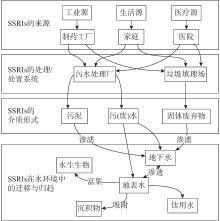
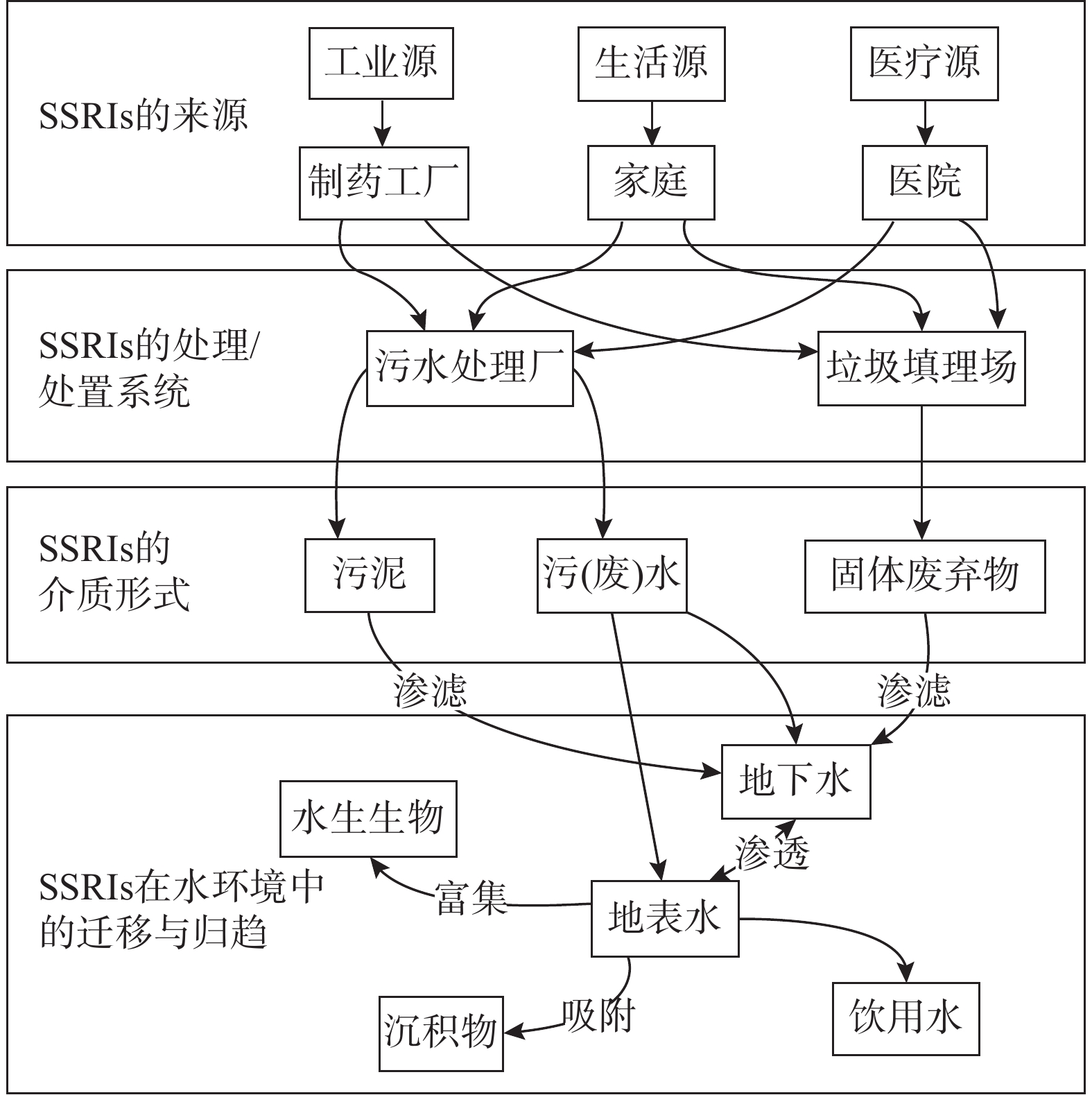
Fig.2
Potential contamination pathways of SSRIs in aquatic environments"
| 1 | LI Y, ZHANG L Y, LIU X S, et al.. Ranking and prioritizing pharmaceuticals in the aquatic environment of China. Science of the Total Environment, 2019, 658, 333- 342. |
| 2 | FATTA-KASSINOS D, MERIC S, NIKOLAOU A.. Pharmaceutical residues in environmental waters and wastewater: Current state of knowledge and future research. Analytical and Bioanalytical Chemistry, 2011, 399 (1): 251- 275. |
| 3 | HAWASH H B, MONEER A A, GALHOUM A A, et al.. Occurrence and spatial distribution of pharmaceuticals and personal care products (PPCPs) in the aquatic environment, their characteristics, and adopted legislations. Journal of Water Process Engineering, 2023, 52, 103490. |
| 4 | STAHL S M.. Mechanism of action of serotonin selective reuptake inhibitors. Serotonin receptors and pathways mediate therapeutic effects and side effects. Journal of Affective Disorders, 1998, 51 (3): 215- 235. |
| 5 | LILLESAAR C.. The serotonergic system in fish. Journal of Chemical Neuroanatomy, 2011, 41 (4): 294- 308. |
| 6 | 杨慧婷, 李霞, 陈辉辉, 等.. 典型SSRIs类抗抑郁药对鱼类的毒性效应研究进展. 生态毒理学报, 2021, 16 (3): 28- 39. |
| 7 | GHORBANI M, MOHAMMADI P, KESHAVARZI M, et al.. Developments of microextraction (extraction) procedures for sample preparation of antidepressants in biological and water samples, a review. Critical Reviews in Analytical Chemistry, 2023, 53 (6): 1285- 1312. |
| 8 | SINGH A, SAIDULU D, GUPTA A K, et al.. Occurrence and fate of antidepressants in the aquatic environment: Insights into toxicological effects on the aquatic life, analytical methods, and removal techniques. Journal of Environmental Chemical Engineering, 2022, 10 (6): 109012. |
| 9 | SCHULTZ M M, FURLONG E T.. Trace analysis of antidepressant pharmaceuticals and their select degradates in aquatic matrixes by LC/ESI/MS/MS. Analytical Chemistry, 2008, 80 (5): 1756- 1762. |
| 10 | BLETSOU A A, JEON J, HOLLENDER J, et al.. Targeted and non-targeted liquid chromatography-mass spectrometric workflows for identification of transformation products of emerging pollutants in the aquatic environment. TrAC Trends in Analytical Chemistry, 2015, 66, 32- 44. |
| 11 | WU G, WANG X B, ZHANG X X, et al.. Nontarget screening based on molecular networking strategy to identify transformation products of citalopram and sertraline in wastewater. Water Research, 2023, 232, 119509. |
| 12 | FICK J, SÖDERSTRÖM H, LINDBERG R H, et al.. Contamination of surface, ground, and drinking water from pharmaceutical production. Environmental Toxicology and Chemistry, 2009, 28 (12): 2522- 2527. |
| 13 | KOSTICH M S, BATT A L, LAZORCHAK J M.. Concentrations of prioritized pharmaceuticals in effluents from 50 large wastewater treatment plants in the US and implications for risk estimation. Environmental Pollution, 2014, 184, 354- 359. |
| 14 | BATT A L, KINCAID T M, KOSTICH M S, et al.. Evaluating the extent of pharmaceuticals in surface waters of the United States using a National-scale Rivers and Streams Assessment survey. Environmental Toxicology and Chemistry, 2016, 35 (4): 874- 881. |
| 15 | PADHYE L P, YAO H, KUNG’U F T, et al.. Year-long evaluation on the occurrence and fate of pharmaceuticals, personal care products, and endocrine disrupting chemicals in an urban drinking water treatment plant. Water Research, 2014, 51, 266- 276. |
| 16 | LAJEUNESSE A, SMYTH S A, BARCLAY K, et al.. Distribution of antidepressant residues in wastewater and biosolids following different treatment processes by municipal wastewater treatment plants in Canada. Water Research, 2012, 46 (17): 5600- 5612. |
| 17 | PAPPAS J J, DESROCHERS N, TUTEJA B, et al.. Ecotoxicological implications of increased antidepressant concentrations in the Laurentian Great Lakes Basin, 2018–2023. Science of the Total Environment, 2025, 981, 179331. |
| 18 | GOLOVKO O, STEFAN Ö, SÖRENGÅRD M, et al.. Occurrence and removal of chemicals of emerging concern in wastewater treatment plants and their impact on receiving water systems. Science of the Total Environment, 2021, 754, 142122. |
| 19 | PETRIE B, PROCTOR K, YOUDAN J, et al.. Critical evaluation of monitoring strategy for the multi-residue determination of 90 chiral and achiral micropollutants in effluent wastewater. Science of the Total Environment, 2017, 579, 569- 578. |
| 20 | PENG Y, GAUTAM L, HALL S W.. The detection of drugs of abuse and pharmaceuticals in drinking water using solid-phase extraction and liquid chromatography-mass spectrometry. Chemosphere, 2019, 223, 438- 447. |
| 21 | AFONSO-OLIVARES C, SOSA-FERRERA Z, SANTANA-RODRÍGUEZ J J.. Occurrence and environmental impact of pharmaceutical residues from conventional and natural wastewater treatment plants in Gran Canaria (Spain). Science of the Total Environment, 2017, 599, 934- 943. |
| 22 | OSORIO V, LARRAÑAGA A, ACEÑA J, et al.. Concentration and risk of pharmaceuticals in freshwater systems are related to the population density and the livestock units in Iberian Rivers. Science of the Total Environment, 2016, 540, 267- 277. |
| 23 | PAÍGA P, CORREIA M, FERNANDES M J, et al.. Assessment of 83 pharmaceuticals in WWTP influent and effluent samples by UHPLC-MS/MS: Hourly variation. Science of the Total Environment, 2019, 648, 582- 600. |
| 24 | FERNANDES M J, PAÍGA P, SILVA A, et al.. Antibiotics and antidepressants occurrence in surface waters and sediments collected in the north of Portugal. Chemosphere, 2020, 239, 124729. |
| 25 | ROBERTS J, KUMAR A, DU J, et al.. Pharmaceuticals and personal care products (PPCPs) in Australia's largest inland sewage treatment plant, and its contribution to a major Australian river during high and low flow. Science of the Total Environment, 2016, 541, 1625- 1637. |
| 26 | PIVETTA R C, RODRIGUES-SILVA C, RIBEIRO A R, et al.. Tracking the occurrence of psychotropic pharmaceuticals in Brazilian wastewater treatment plants and surface water, with assessment of environmental risks. Science of the Total Environment, 2020, 727, 138661. |
| 27 | WU R B, RUAN Y F, LIN H J, et al.. Occurrence and fate of psychiatric pharmaceuticals in wastewater treatment plants in Hong Kong: Enantiomeric profiling and preliminary risk assessment. ACS ES&T Water, 2021, 1 (3): 542- 552. |
| 28 | WU M H, XIANG J J, CHEN F F, et al.. Occurrence and risk assessment of antidepressants in Huangpu River of Shanghai, China. Environmental Science and Pollution Research International, 2017, 24 (25): 20291- 20299. |
| 29 | 朱培元, 于雪晴, 何新辰, 等.. 南京水体中抗抑郁类药物的赋存及风险评估. 环境监测管理与技术, 2019, 31 (6): 37- 41. |
| 30 | LV J, ZHANG L, CHEN Y Y, et al.. Occurrence and distribution of pharmaceuticals in raw, finished, and drinking water from seven large river basins in China. Journal of Water and Health, 2019, 17 (3): 477- 489. |
| 31 | LU H J, FAN J P, GUO C S, et al.. Estimating the prevalence of depression using wastewater-based epidemiology: A case study in Qinghai Province, West China. Science of the Total Environment, 2023, 882, 163303. |
| 32 | ZHAO J L, GUO C S, YANG Q P, et al.. Comprehensive monitoring and prioritizing for contaminants of emerging concern in the Upper Yangtze River, China: An integrated approach. Journal of Hazardous Materials, 2024, 480, 135835. |
| 33 | WANG A G, ZHANG J N, HU L X, et al.. Fate and transformation of psychotropic drugs in urban wastewater systems and receiving rivers via the integration of targeted and suspect screening analysis. Water Research, 2025, 276, 123292. |
| 34 | HOUTMAN C J, KROESBERGEN J, LEKKERKERKER-TEUNISSEN K, et al.. Human health risk assessment of the mixture of pharmaceuticals in Dutch drinking water and its sources based on frequent monitoring data. Science of the Total Environment, 2014, 496, 54- 62. |
| 35 | SUBEDI B, KANNAN K.. Occurrence and fate of select psychoactive pharmaceuticals and antihypertensives in two wastewater treatment plants in New York State, USA. Science of the Total Environment, 2015, 514, 273- 280. |
| 36 | GURKE R, RÖßLER M, MARX C, et al.. Occurrence and removal of frequently prescribed pharmaceuticals and corresponding metabolites in wastewater of a sewage treatment plant. Science of the Total Environment, 2015, 532, 762- 770. |
| 37 | GIEBUŁTOWICZ J, NAŁĘCZ-JAWECKI G.. Occurrence of antidepressant residues in the sewage-impacted Vistula and Utrata rivers and in tap water in Warsaw (Poland). Ecotoxicology and Environmental Safety, 2014, 104, 103- 109. |
| 38 | JONES O A H, VOULVOULIS N, LESTER J N.. Human pharmaceuticals in wastewater treatment processes. Critical Reviews in Environmental Science and Technology, 2005, 35 (4): 401- 427. |
| 39 | LIU Y Y, LV J P, GUO C S, et al. Environmental behavior, risks, and management of antidepressants in the aquatic environment [J]. Environmental Science: Processes & Impacts, 2025, 27(5): 1196-1228. |
| 40 | JOHNSON D J, SANDERSON H, BRAIN R A, et al.. Toxicity and hazard of selective serotonin reuptake inhibitor antidepressants fluoxetine, fluvoxamine, and sertraline to algae. Ecotoxicology and Environmental Safety, 2007, 67 (1): 128- 139. |
| 41 | ANTONOPOULOU M, DORMOUSOGLOU M, SPYROU A, et al.. An overall assessment of the effects of antidepressant paroxetine on aquatic organisms and human cells. Science of the Total Environment, 2022, 852, 158393. |
| 42 | XIE Z X, NIE Y F, DONG M Y, et al.. Integrated physio-biochemical and transcriptomic analysis reveals the joint toxicity mechanisms of two typical antidepressants fluoxetine and sertraline on Microcystis aeruginosa. Science of the Total Environment, 2024, 926, 171802. |
| 43 | FEIJÃO E, CRUZ DE CARVALHO R, DUARTE I A, et al.. Fluoxetine arrests growth of the model diatom Phaeodactylum tricornutum by increasing oxidative stress and altering energetic and lipid metabolism. Frontiers in Microbiology, 2020, 11, 1803. |
| 44 | GOULD G G, BROOKS B W, FRAZER A.. (3)H] citalopram binding to serotonin transporter sites in minnow brains. Basic & Clinical Pharmacology & Toxicology, 2007, 101 (3): 203- 210. |
| 45 | BROOKS B W.. Fish on Prozac (and zoloft): Ten years later. Aquatic Toxicology, 2014, 151, 61- 67. |
| 46 | NOWAKOWSKA K, GIEBUŁTOWICZ J, KAMASZEWSKI M, et al. Acute exposure of zebrafish (Danio rerio) larvae to environmental concentrations of selected antidepressants: Bioaccumulation, physiological and histological changes [J]. Comparative Biochemistry and Physiology Part C: Toxicology & Pharmacology, 2020, 229: 108670. |
| 47 | MOHANTHI S, SUTHA J, GAYATHRI M, et al.. Evaluation of the citalopram toxicity on early development of zebrafish: Morphological, physiological and biochemical responses. Environmental Pollution, 2024, 357, 124399. |
| 48 | HUANG I J, SIROTKIN H I, MCELROY A E.. Varying the exposure period and duration of neuroactive pharmaceuticals and their metabolites modulates effects on the visual motor response in zebrafish (Danio rerio) larvae. Neurotoxicology and Teratology, 2019, 72, 39- 48. |
| 49 | FARIA M, BELLOT M, SOTO O, et al.. Developmental exposure to sertraline impaired zebrafish behavioral and neurochemical profiles. Frontiers in Physiology, 2022, 13, 1040598. |
| 50 | MARTIN J M, SAARISTO M, BERTRAM M G, et al.. The psychoactive pollutant fluoxetine compromises antipredator behaviour in fish. Environmental Pollution, 2017, 222, 592- 599. |
| 51 | MARTIN J M, BERTRAM M G, SAARISTO M, et al.. Antidepressants in surface waters: Fluoxetine influences mosquitofish anxiety-related behavior at environmentally relevant levels. Environmental Science & Technology, 2019, 53 (10): 6035- 6043. |
| 52 | CHEN H H, LIANG X F, GU X H, et al.. Environmentally relevant concentrations of sertraline disrupts behavior and the brain and liver transcriptome of juvenile yellow catfish (Tachysurus fulvidraco): Implications for the feeding and growth axis. Journal of Hazardous Materials, 2021, 409, 124974. |
| 53 | ZIEGLER M, KNOLL S, KÖHLER H R, et al.. Impact of the antidepressant citalopram on the behaviour of two different life stages of brown trout. PeerJ, 2020, 8, e8765. |
| 54 | PRASAD P, OGAWA S, PARHAR I S.. Role of serotonin in fish reproduction. Frontiers in Neuroscience, 2015, 9, 195. |
| 55 | THORÉ E S J, PHILIPPE C, BRENDONCK L, et al.. Antidepressant exposure reduces body size, increases fecundity and alters social behavior in the short-lived killifish Nothobranchius furzeri. Environmental Pollution, 2020, 265, 115068. |
| 56 | MARTIN J M, BERTRAM M G, SAARISTO M, et al. Impact of the widespread pharmaceutical pollutant fluoxetine on behaviour and sperm traits in a freshwater fish [J]. Science of the Total Environment, 2019, 650(Pt 2): 1771-1778. |
| 57 | HONG X S, CHEN R, ZHANG L, et al.. Low doses and lifecycle exposure of waterborne antidepressants in zebrafish model: A survey on sperm traits, reproductive behaviours, and transcriptome responses. Science of the Total Environment, 2022, 832, 155017. |
| 58 | OROZCO-HERNÁNDEZ J M, ELIZALDE-VELÁZQUEZ G A, GÓMEZ-OLIVÁN L M, et al.. Acute exposure to fluoxetine leads to oxidative stress and hematological disorder in Danio rerio adults. Science of the Total Environment, 2023, 905, 167391. |
| 59 | VACLAVIK J, SEHONOVA P, BLAHOVA J, et al.. Foodborne fluoxetine impacts the immune response in rainbow trout (Oncorhynchus mykkis). Environmental Toxicology and Pharmacology, 2022, 90, 103818. |
| 60 | YAN Z H, ZHANG X D, BAO X H, et al.. Influence of dissolved organic matter on the accumulation, metabolite production and multi-biological effects of environmentally relevant fluoxetine in crucian carp (Carassius auratus). Aquatic Toxicology, 2020, 226, 105581. |
| 61 | YAN Z H, ZHAO H Z, ZHU P Y, et al.. Polystyrene microplastics alter the trophic transfer and biotoxicity of fluoxetine in an aquatic food chain. Journal of Hazardous Materials, 2024, 470, 134179. |
| 62 | PORSERYD T, KELLNER M, REYHANIAN CASPILLO N, et al.. Combinatory effects of low concentrations of 17α-etinylestradiol and citalopram on non-reproductive behavior in adult zebrafish (Danio rerio). Aquatic Toxicology, 2017, 193, 9- 17. |
| [1] | Yongle ZHAO, Yan ZHANG. Research progress on the interaction mechanisms and combined toxicity of microplastics and antibiotics in aquatic environments [J]. J* E* C* N* U* N* S*, 2026, 2026(1): 25-42. |
| [2] | Xiujuan MA, Yujie WANG, Xiaoran FAN. Research on the construction of an environmental emergency response system for sudden water pollution incidents in the Tang River Basin of Datong City in Shanxi Province [J]. J* E* C* N* U* N* S*, 2026, 2026(1): 147-155. |
| [3] | Xiujuan MA, Yujie WANG, Cheng ZHANG, Dan LIU, Xiaoran FAN, Zhiyuan ZHANG. Problem diagnosis and countermeasure research of water ecological environmental protection in the Yellow River Basin of Shanxi Province [J]. J* E* C* N* U* N* S*, 2026, 2026(1): 140-146. |
| [4] | Zhuolan ZHANG, Qiqing CHEN, Yuye CHEN, Xiaoyun YAN, Yan YANG, Huahong SHI. Release and risk of UV absorbers from plastics entering rivers [J]. Journal of East China Normal University(Natural Science), 2024, 2024(6): 188-199. |
| [5] | Hongshuo ZOU, Min FU, Mengdie XIAO, Shiwen SHENG, Ping XU, Xuechu CHEN. Study on ecological purification system of tidal-flow paddy wetland based on multifunctional coupling [J]. Journal of East China Normal University(Natural Science), 2024, 2024(1): 58-67. |
| [6] | Chunyi YANG, Guangxiang MA, Junjie GU, Jiayan GU, Guofu HE, Weixin KONG, Gensen YANG. Study on ecological environmental effects of sediment dredging: A case study on river regulation in Shandong Province [J]. Journal of East China Normal University(Natural Science), 2022, 2022(3): 61-70. |
| [7] | Yuxin YUAN, Jiamin LIU, Ling PAN, Lihong WANG, Xueli ZHANG, Minsheng HUANG. A review of applications and research progress on the use of nanoparticles for the inhibition of harmful algal bloom [J]. Journal of East China Normal University(Natural Science), 2021, 2021(4): 90-98. |
| [8] | Tida CHEN, Dan CUI, Yuxin YUAN, Jiamin LIU, Minsheng HUANG, Ying Li. Changes in water quality and land use structure in the green-belt area around Shanghai [J]. Journal of East China Normal University(Natural Science), 2021, 2021(4): 81-89. |
| [9] | Dan LI, Binghui ZHENG, Zhaosheng CHU, Xing WANG, Minsheng HUANG. Comprehensive evaluation of engineering applications for multi-pond constructed wetlands in Erhai Lake Basin [J]. Journal of East China Normal University(Natural Science), 2021, 2021(4): 8-16. |
| [10] | Zheng WEI, Yanmei YANG, Rui WENG, Yan HE, Minsheng HUANG. A review of the upgrading technology for the A2/O process of municipal wastewater treatment plants under high discharge standards in China [J]. Journal of East China Normal University(Natural Science), 2021, 2021(4): 55-63. |
| [11] | Rui WENG, Zheng WEI, Yanmei YANG, Jing HAN, Yan HE, Minsheng HUANG. Characteristics of dissolved organic matter and its effects on denitrification in urban river sediments [J]. Journal of East China Normal University(Natural Science), 2021, 2021(4): 46-54. |
| [12] | Meiyin QIAN, Kai YANG, Sheng XIE, Lei DING, Lu XU, Ying CHEN. Discussion on LID index model construction framework and its graphical application [J]. Journal of East China Normal University(Natural Science), 2021, 2021(4): 17-25. |
| [13] | Chao YIN, Ying LI, Tingyue ZHANG, Jiamin LIU, Tida CHEN, Dan CUI, Minsheng HUANG. Immobilization and efficacy of an aerobic denitrifier [J]. Journal of East China Normal University(Natural Science), 2021, 2021(4): 1-7. |
| [14] | HUANG Min-sheng, YANG Yin-chuan, CUI He, YANG Le, HE Yan, CAO Cheng-jin. Experimental study on a new type of suspended filler for enhanced nitrification [J]. Journal of East China Normal University(Natural Sc, 2019, 2019(6): 115-122. |
| [15] | YANG Yin-chuan, CHANG Yue-ya, CUI He, HUANG Min-sheng, HE Yan. Experimental investigation of advanced purification of tail water in a rural sewage treatment plant of an ecological riparian zone [J]. Journal of East China Normal University(Natural Sc, 2019, 2019(4): 133-143. |
| Viewed | ||||||
|
Full text |
|
|||||
|
Abstract |
|
|||||
