华东师范大学学报(自然科学版) ›› 2026, Vol. 2026 ›› Issue (3): 185-202.doi: 10.3969/j.issn.1000-5641.2026.03.015

• 河口动力过程与物质输运 • 上一篇    

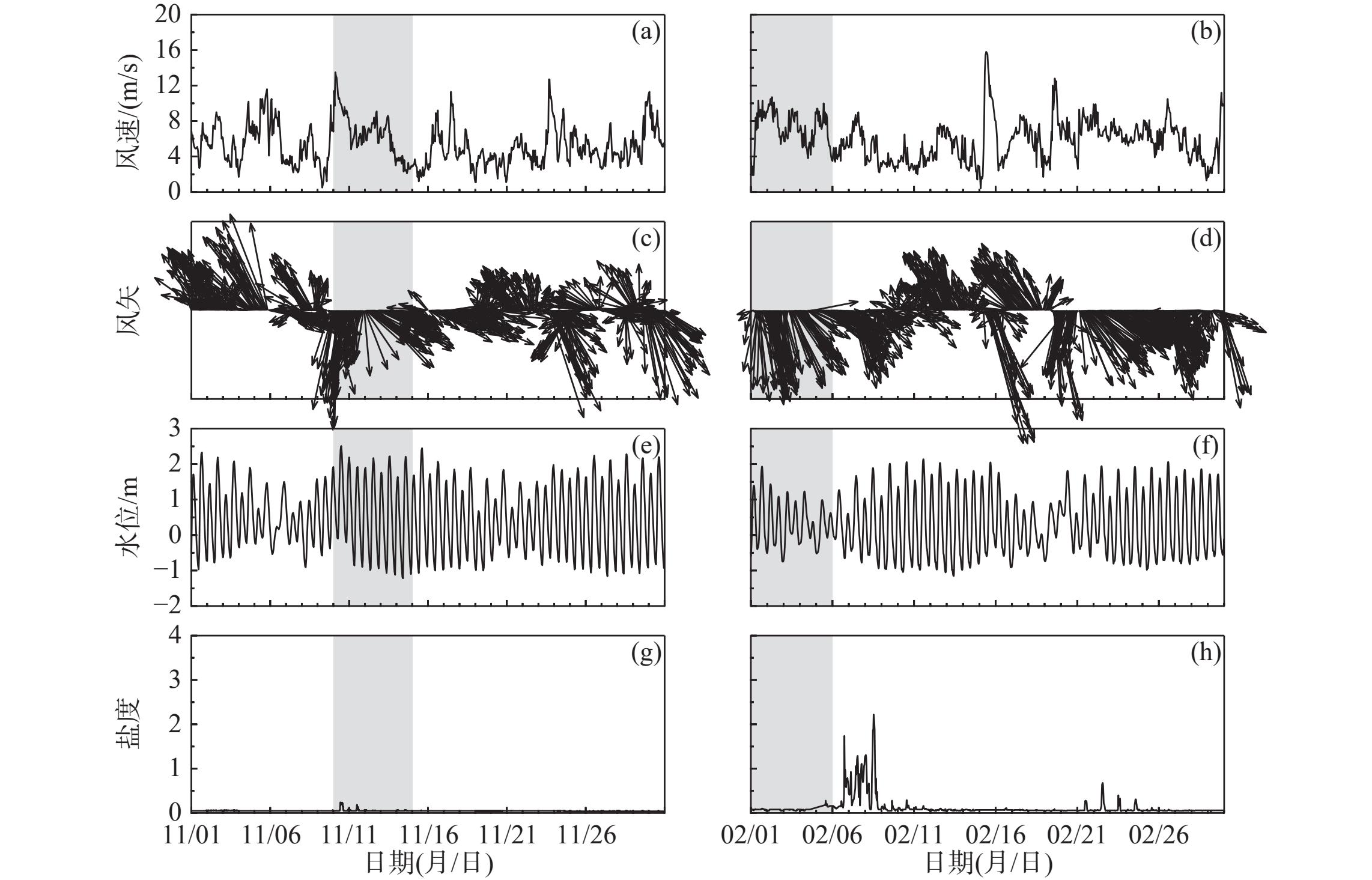
不同潮汛下强北风对长江口盐水入侵的影响

周钱强, 朱建荣*(), 马瑞   

  1. 华东师范大学 河口海岸全国重点实验室, 上海 200241
  • 收稿日期:2025-01-16 接受日期:2025-11-04 出版日期:2026-05-25 发布日期:2026-05-27
  • 通讯作者: 朱建荣 E-mail:jrzhu@sklec.ecnu.edu.cn
  • 基金资助:
    国家自然科学基金 (42276174); 国家自然科学联合基金重点项目 (U2340225); 上海城投科技创新计划 (CTKY-ZDZX-2023-004)

Impact of strong northerly winds on saltwater intrusion in the Changjiang Estuary under different tidal patterns

Qianqiang ZHOU, Jianrong ZHU*(), Rui MA   

  1. State Key Laboratory of Estuarine and Coastal Research, East China Normal University, Shanghai 200241, China
  • Received:2025-01-16 Accepted:2025-11-04 Online:2026-05-25 Published:2026-05-27
  • Contact: Jianrong ZHU E-mail:jrzhu@sklec.ecnu.edu.cn

摘要:

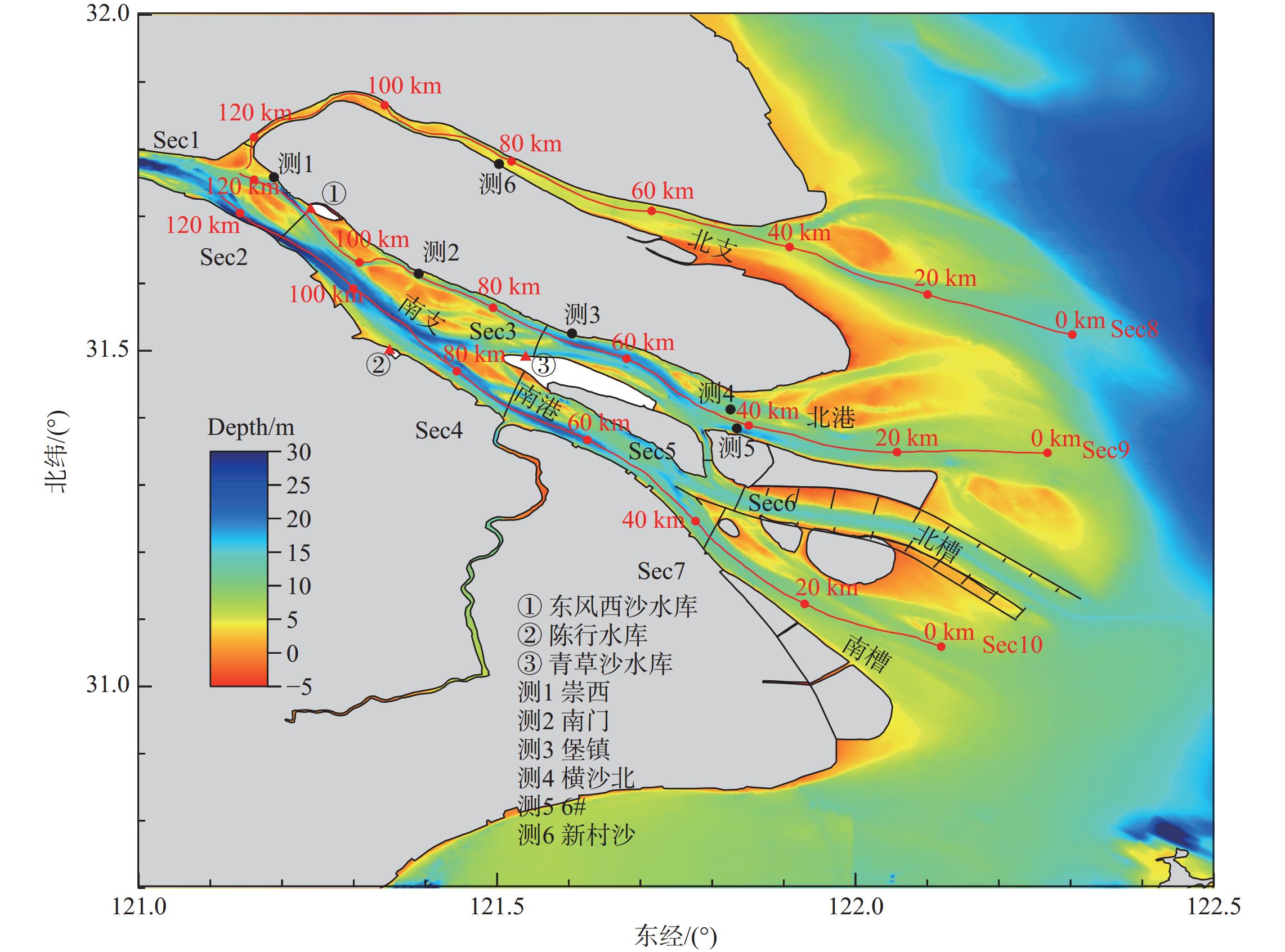
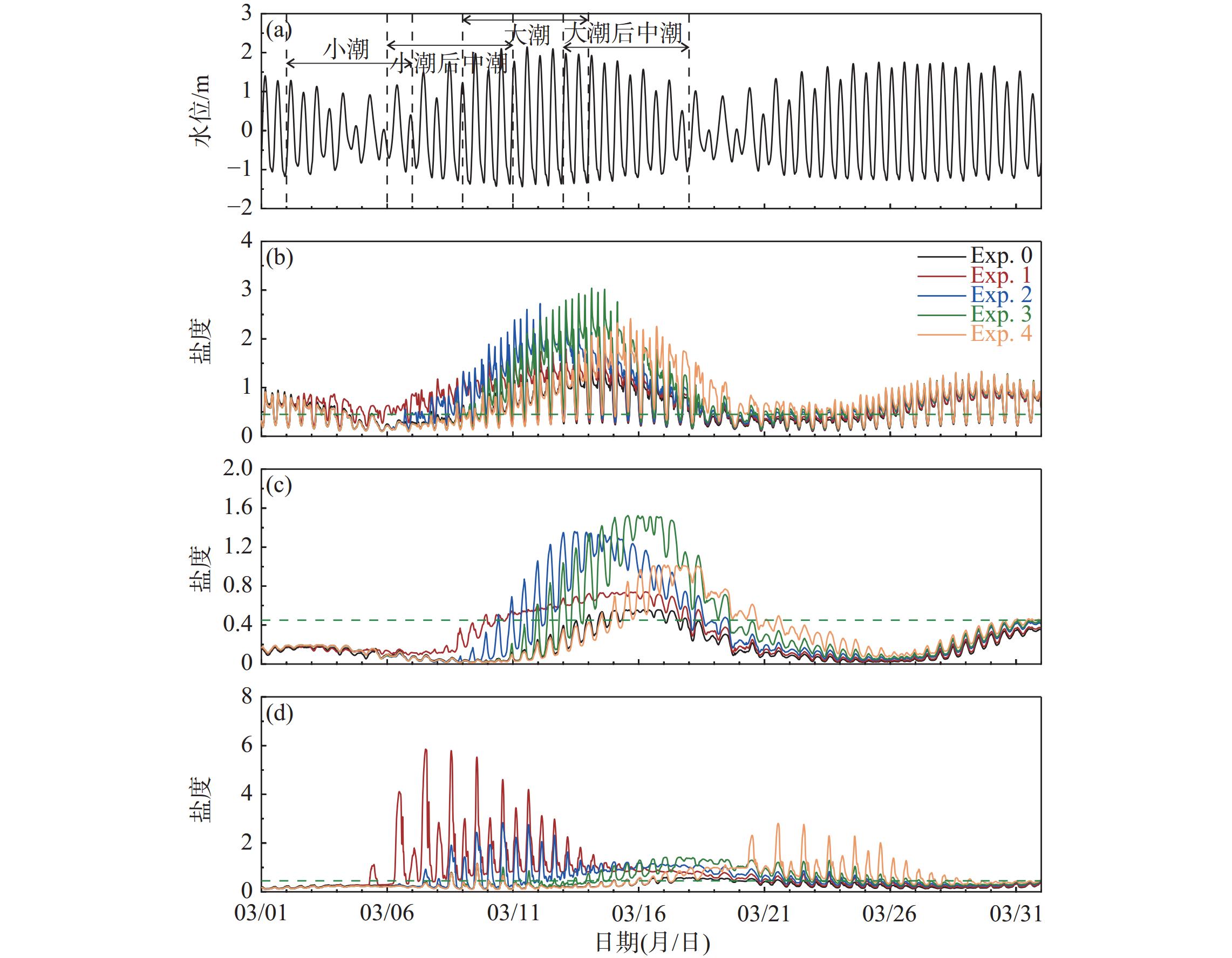
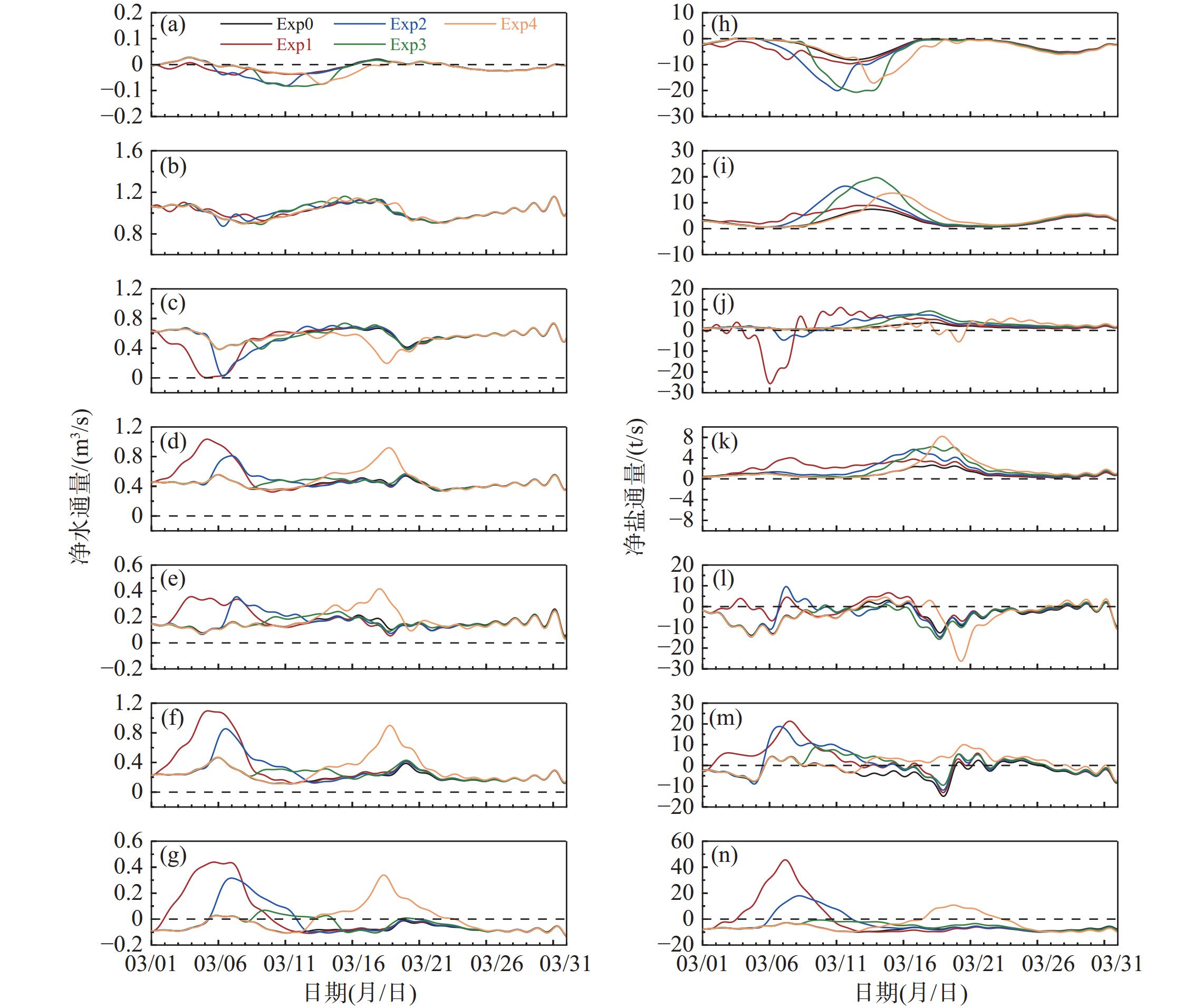
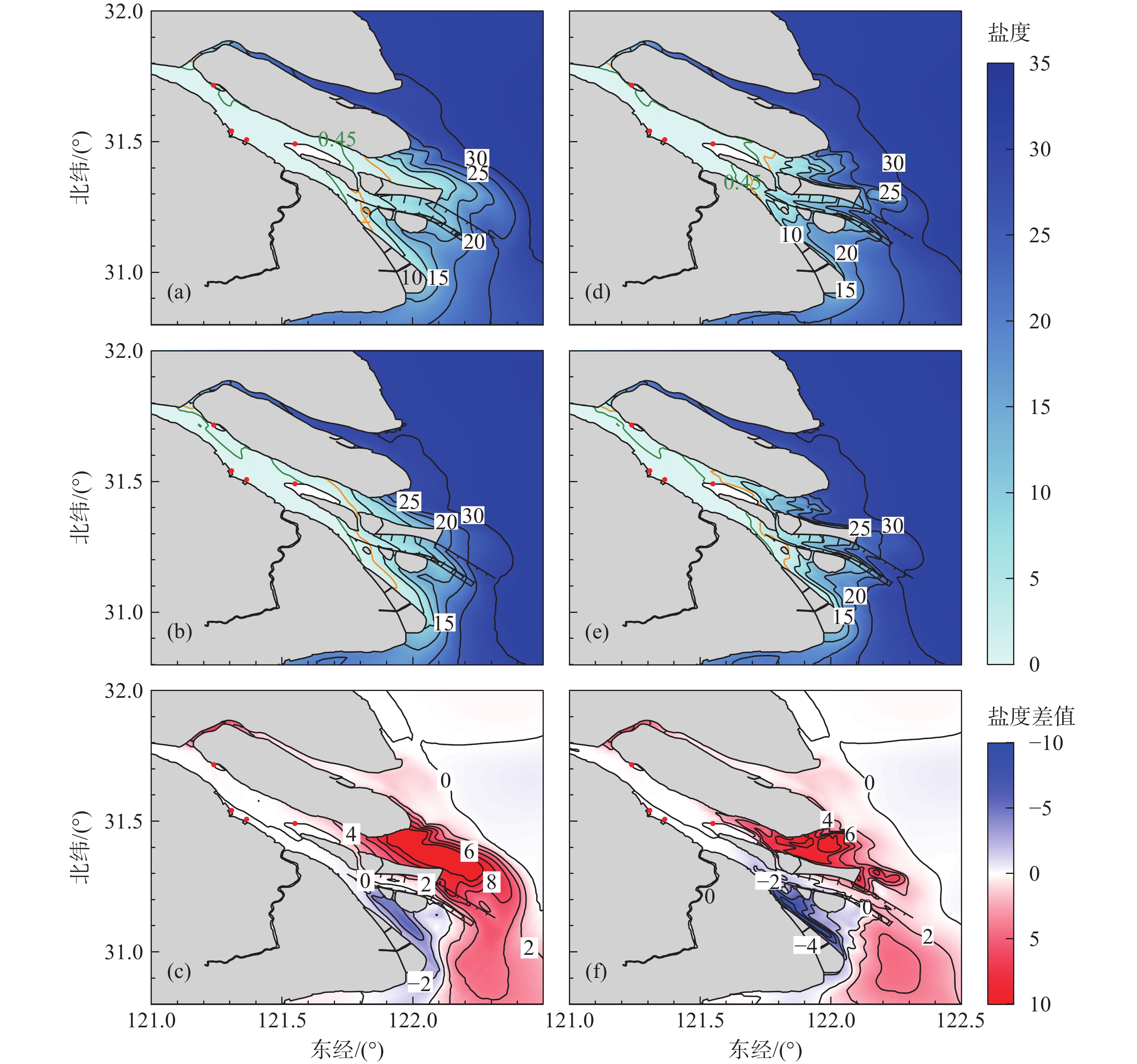
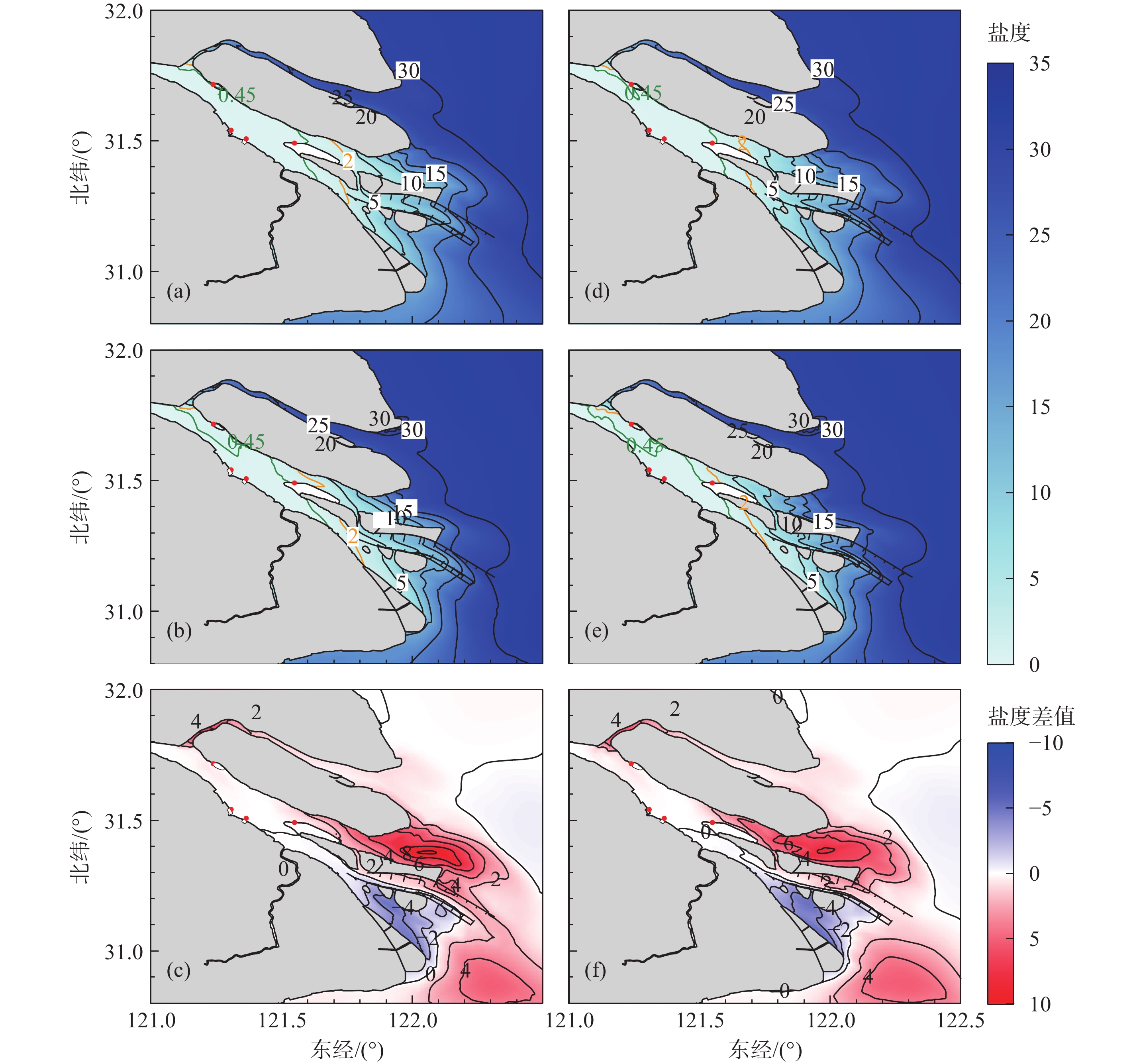
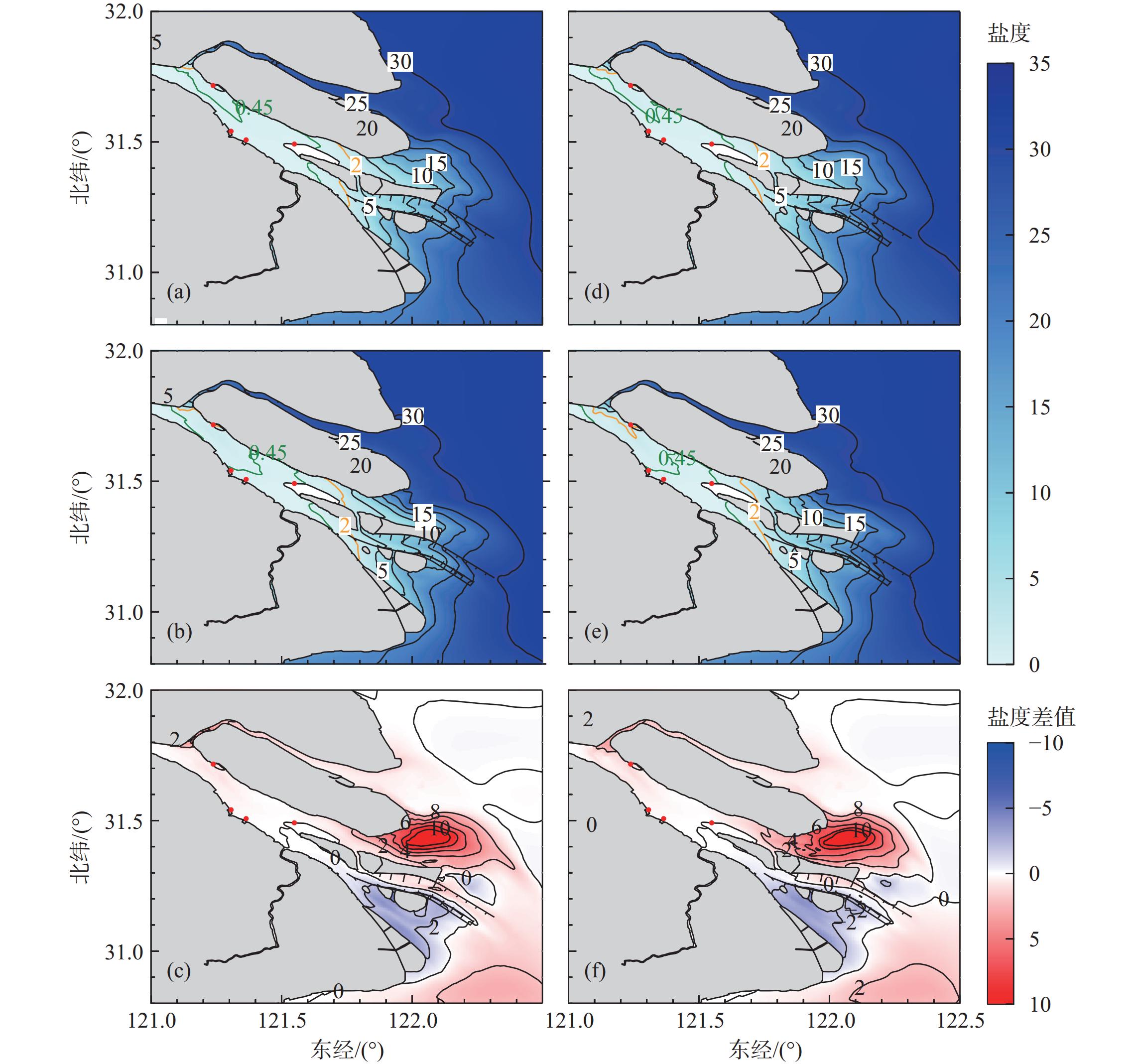
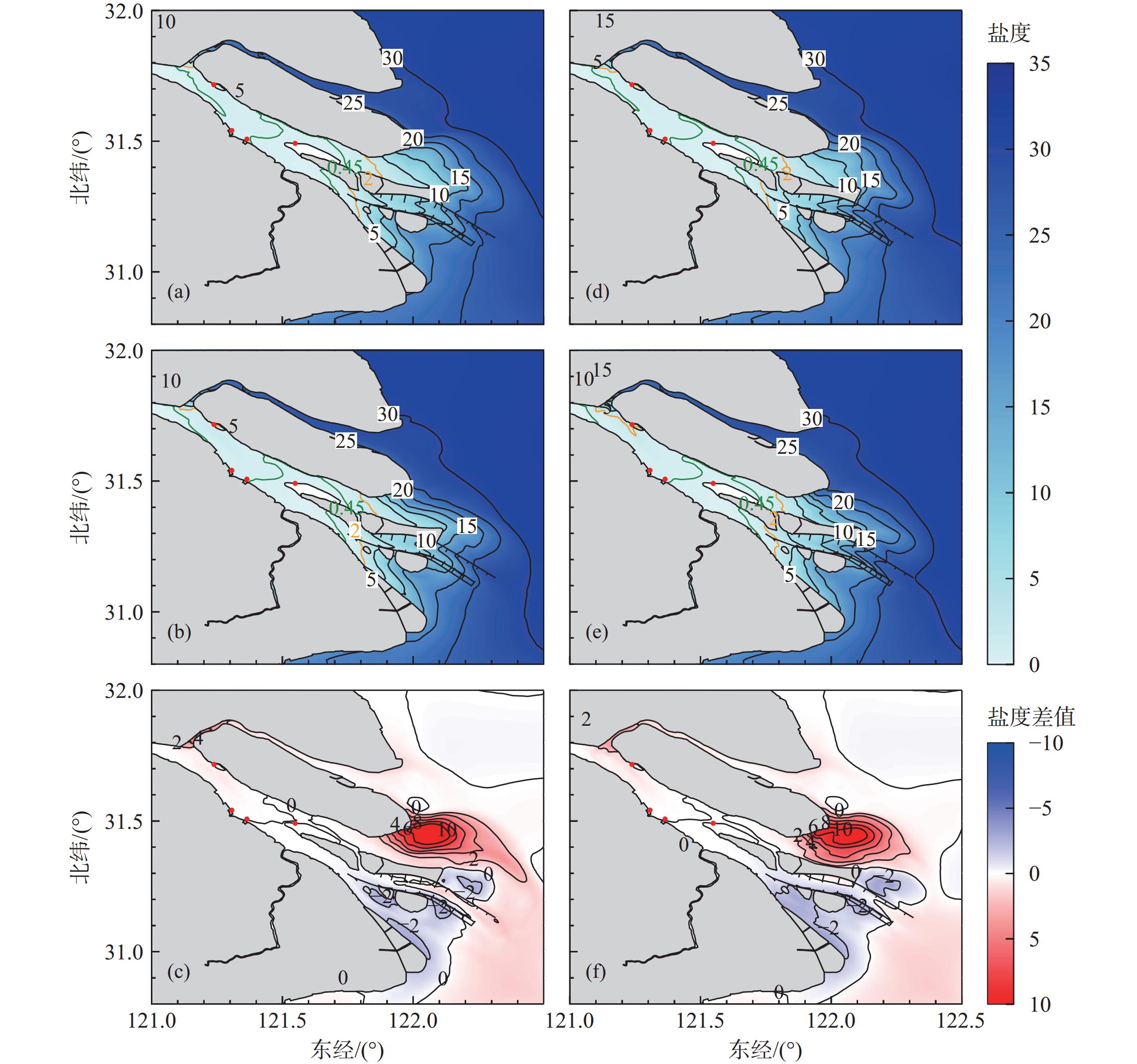
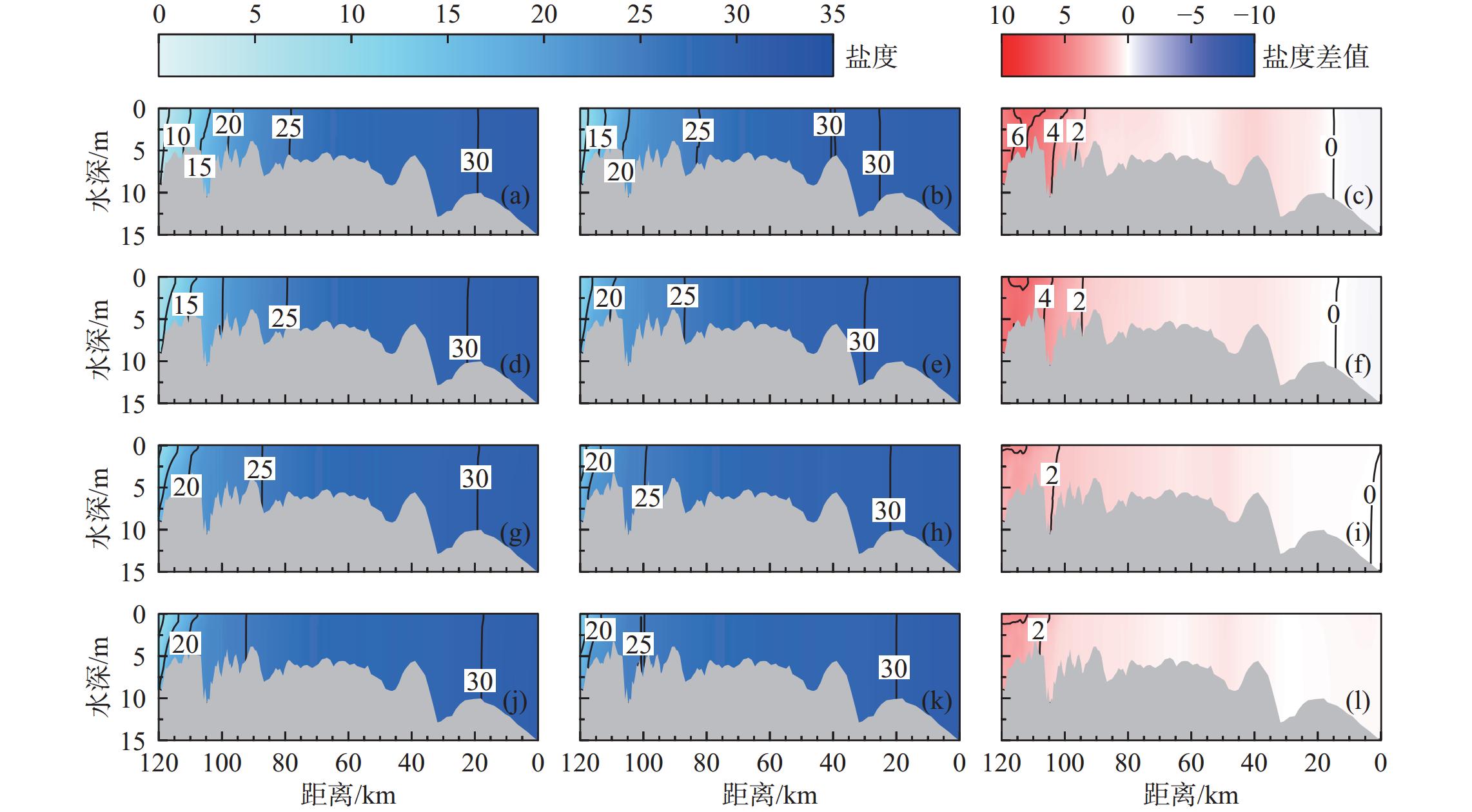
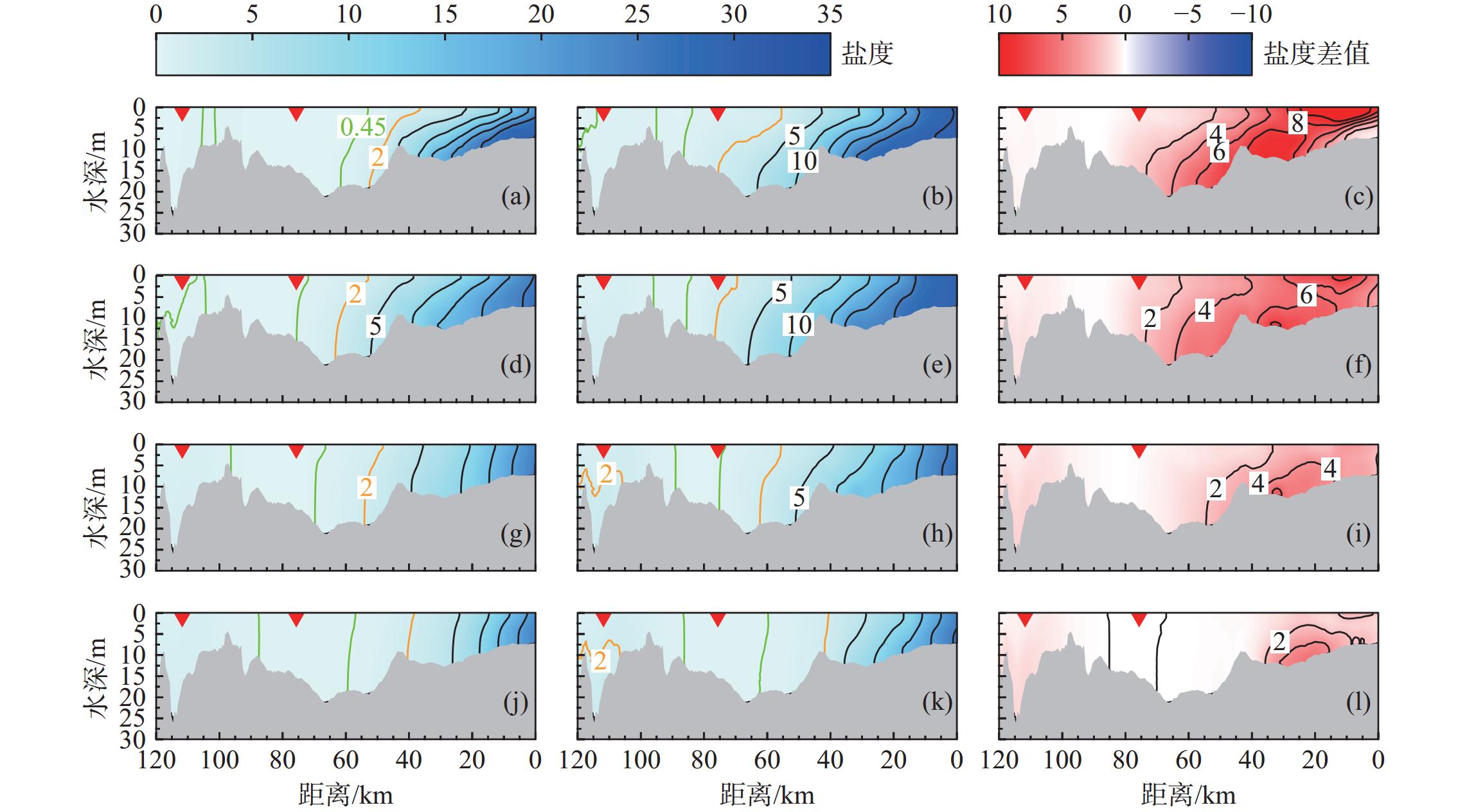
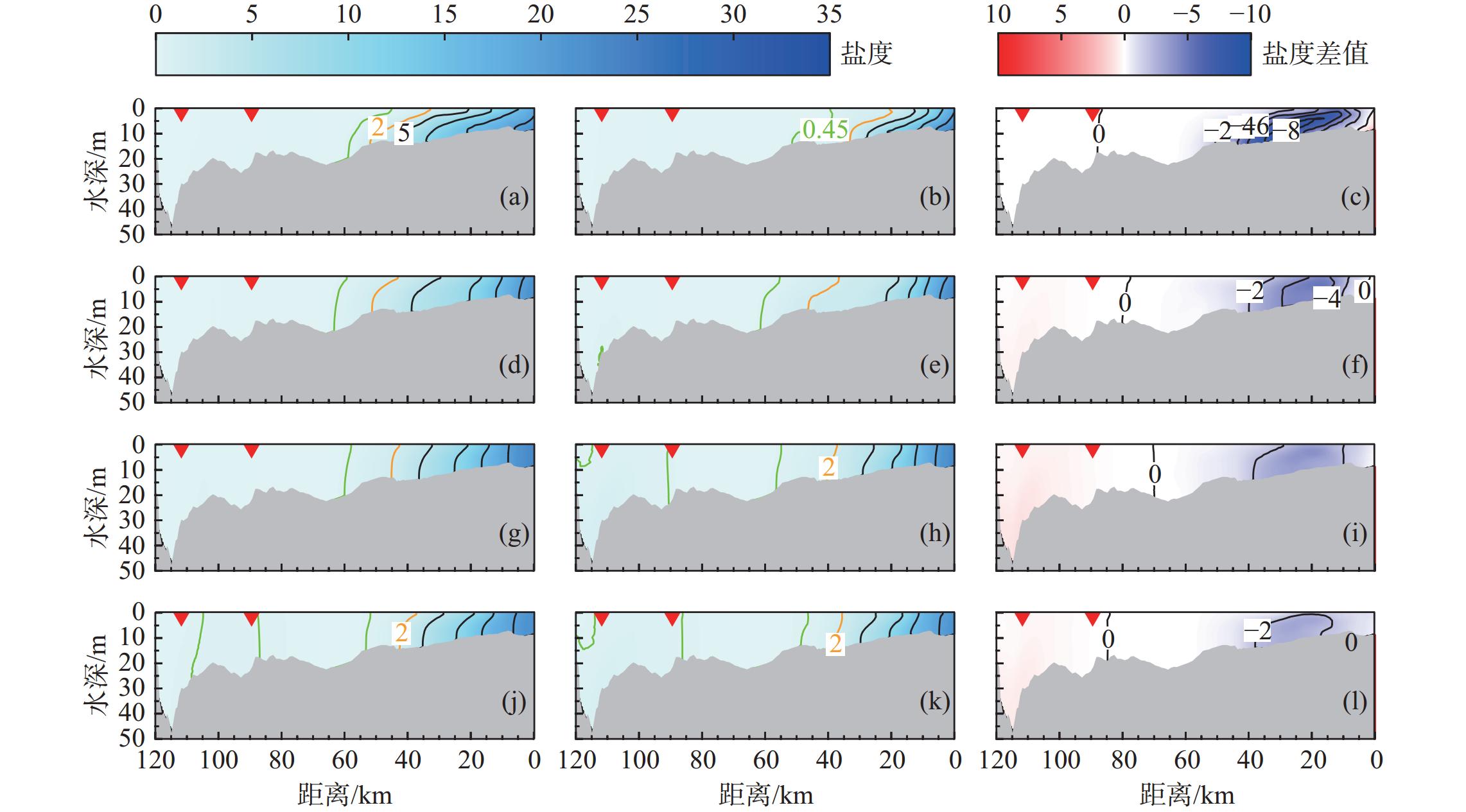
以往实测资料表明, 不同潮汛下强北风天气对于长江口水库盐度变化的影响存在差异. 利用长江口三维盐水入侵数值模式, 模拟在4种潮汛 (小潮、小潮后中潮、大潮和大潮后中潮) 期间气候态风况、风速10 m/s持续5 d的强北风对盐水入侵和水库不宜取水时间的影响. 数值试验结果表明, 青草沙水库不宜取水时间在强北风小潮汛试验中最长, 达15.87 d, 相较于气候态风况试验增加11.63 d; 东风西沙和陈行水库分别在强北风大潮后中潮汛试验和小潮汛试验中最长, 达20.12和7.95 d, 增幅为5.36和4.48 d. 在北支, 强北风造成陆向净水、盐通量增大, 强北风大潮汛试验最为显著; 北支上段盐度(psu)增幅明显, 强北风小潮汛试验最大增幅可达6. 在南支, 海向净盐通量增大, 强北风大潮汛试验峰值可达20 t/s; 分流比受北风影响也明显增加, 强北风大潮汛试验中相较于气候态风况增幅可达4.79%. 在北港, 强北风小潮汛试验净水通量降幅最大, 同时大量盐分通过北港向陆输运; 在强北风小潮后中潮汛试验中0.45 (饮用水盐度标准) 等盐度线越过青草沙水库取水口, 盐水入侵影响最为严重; 北风影响下北港中下段盐度增幅明显, 强北风小潮汛试验中最大增幅为8. 在南港, 强北风作用下海向净水、盐通量增加, 净水通量在强北风小潮汛试验中最大, 净盐通量在强北风大潮后中潮汛试验中最大; 在南港中下段因分流比增加导致盐度下降, 南槽最为显著. 在北槽, 受强北风影响不同潮汛期间净水、盐通量增加, 在强北风小潮汛试验中最为明显; 在强北风小潮汛和小潮后中潮汛试验中, 北槽下段盐度上升. 在南槽, 强北风小潮汛试验海向净盐、水通量增幅最大, 整体盐度在不同潮汛试验中均呈降低趋势, 在强北风小潮汛试验中最为显著.

关键词: 强北风, 潮汛, 长江口, 盐水入侵, 河口水库

Abstract:

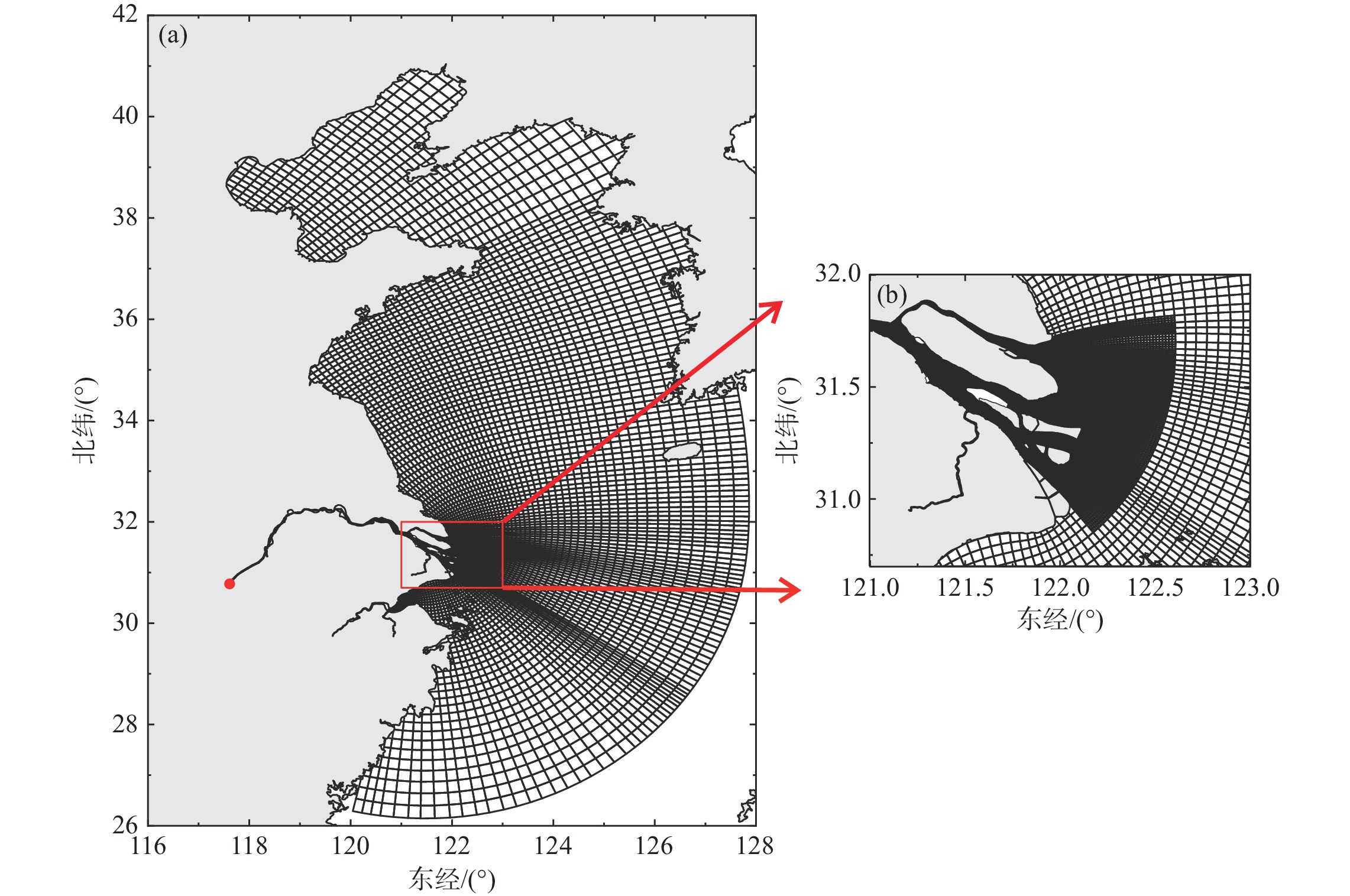
Previously measured data indicate differences in salinity variation at the water intake of reservoirs in the Changjiang Estuary during strong northerly winds and different tidal patterns. In this study, a three-dimensional numerical model of saltwater intrusion in the Changjiang Estuary was used to simulate the impacts of climatic winds and strong northerly winds at a speed of 10 m/s for 5 days during four tidal patterns (neap tide, middle tide after neap tide, spring tide, and middle tide after spring tide) on saltwater intrusion and the unsuitable water intake time of the reservoirs. Numerical experimental results showed that the maximum unsuitable water intake time at the water intake of the Qingcaosha Reservoir reached 15.87 days, an increase of 11.63 days compared to that under the climatic wind condition in the experiment of strong northerly wind in the neap tide. The maximum unsuitable water intake time in Dongfengxisha and Chenhang Reservoirs reached 20.12 and 7.95 days, with increases of 5.36 and 4.48 days in the experiments of strong northerly winds during the middle tide after spring tide and neap tide, respectively. Strong northerly winds amplified the landward net water and salt fluxes in the North Branch, with the effect being most pronounced during the spring tide experiment; the practical salinity units (psu) increased significantly in the upper reaches, with a maximum value of 6 in the neap tide experiment. In the South Branch, the seaward net salt flux increased and peaked at 20 t/s in the spring tide experiment. Furthermore, the water diversion ratio increased significantly under northerly winds, with an increase of 4.79% compared with that under the climatic wind condition. In the North Channel, the net water fluxes decreased the most, and a large amount of salt was transported landward in the neap tide experiment. Furthermore, the isohaline of 0.45 (the salinity standard for drinking water) crossed the water intake of the Qingcaosha Reservoir, and the impact of saltwater intrusion was the most serious in the middle tide after neap tide experiment. Additionally, the salinity in the middle-lower reaches increased significantly by up to 8 under the influence of the strong northerly wind in the neap tide experiment. The seaward net water and salt fluxes increased under strong northerly winds in the South Channel, with the maximum net water fluxes in the neap tide experiment and net salt fluxes in the middle tide after spring tide. In contrast, salinity in the middle-lower reaches decreased, particularly in the South Passage, due to the increased water diversion ratio. The net water and salt fluxes increased during different tidal patterns under strong northerly winds in the North Passage, with the most notable increase in the neap tide experiment. Moreover, salinity in the lower reaches increased in the neap tide experiment and middle tide after neap tide experiment. The seaward net water and salt fluxes increased in the neap tide experiment in the South Passage, and salinity decreased slightly in all experiments, with the most remarkable decrease observed in the neap tide experiment.

Key words: strong northerly wind, tidal pattern, Changjiang Estuary, saltwater intrusion, estuarine reservoir

中图分类号: