
 中文核心期刊
J* E* C* N* U* N* S* ›› 2026, Vol. 2026 ›› Issue (1): 14-24.doi: 10.3969/j.issn.1000-5641.2026.01.002
• Distribution and Ecological Risk of Emerging Pollutants in Watersheds • Previous Articles Next Articles
Yangyang HU1,2,3,4, Chang LIU1,3,4, Chengjin CAO1,2,3,4,*( ), Junhao LI1,2,3,4, Liuxing WU1,2,3,4, Ruiyun ZHU1,2,3,4, Minsheng HUANG1,2,3,4, Yan HE1,2,3,4, Haochen DU1,3,4, Lei WANG1,2,3,4, Xinlin YAN1,2,3,4
Received:2025-06-17
Accepted:2025-11-21
Online:2026-01-25
Published:2026-01-29
Contact:
Chengjin CAO
E-mail:cjcao@des.ecnu.edu.cn
CLC Number:
Yangyang HU, Chang LIU, Chengjin CAO, Junhao LI, Liuxing WU, Ruiyun ZHU, Minsheng HUANG, Yan HE, Haochen DU, Lei WANG, Xinlin YAN. Occurrence characteristics and risk assessment of microplastics in industrial wastewater from key industries in the Taihu Lake Basin[J]. J* E* C* N* U* N* S*, 2026, 2026(1): 14-24.
Table 1
Sampling points in the Taihu Lake Basin"
| 位点编号 | 废水类型 | 处理规模/(m3/d) | 经纬度 |
| Y1 | 印染废水 | ||
| Y2 | 印染废水 | ||
| Y3 | 印染废水 | ||
| Y4 | 印染废水 | ||
| Y5 | 印染废水 | ||
| Y6 | 印染废水 | 500 | |
| H1 | 化工废水 | 13.7 | |
| H2 | 化工废水 | 350 | |
| H3 | 化工废水 | 600 | |
| D1 | 电镀废水 | 100 | |
| D2 | 电镀废水 | 50 | |
| G1 | 混合废水 | ||
| G2 | 混合废水 | ||
| G3 | 混合废水 | ||
| G4 | 混合废水 | ||
| G5 | 混合废水 | ||
| G6 | 混合废水 |
Table 2
Microplastic polymer hazard scores"
| 名称 | 英文全称 | 缩写 | 危害分数 |
| 聚对苯二甲酸乙二醇酯 | Polyethylene Terephthalate | PET | 4 |
| 聚丙烯 | Polypropylene | PP | 1 |
| 聚乙烯 | Polyethylene | PE | 11 |
| 聚苯乙烯 | Polystyrene | PS | 30 |
| 聚氯乙烯 | Polyvinyl Chloride | PVC | |
| 聚酰胺 | Polyamide | PA | 47 |
| 聚氨酯 | Polyurethane | PUR | |
| 聚乙酸乙烯酯 | Polyvinyl Acetate | PVAC | 1 |
| 聚丙烯酸 | Polyacrylic Acid | PAA | 230 |
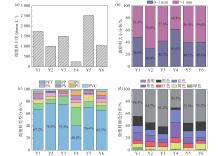
Fig.1
Occurrence characteristics of microplastics in wastewater from the printing and dyeing industry"
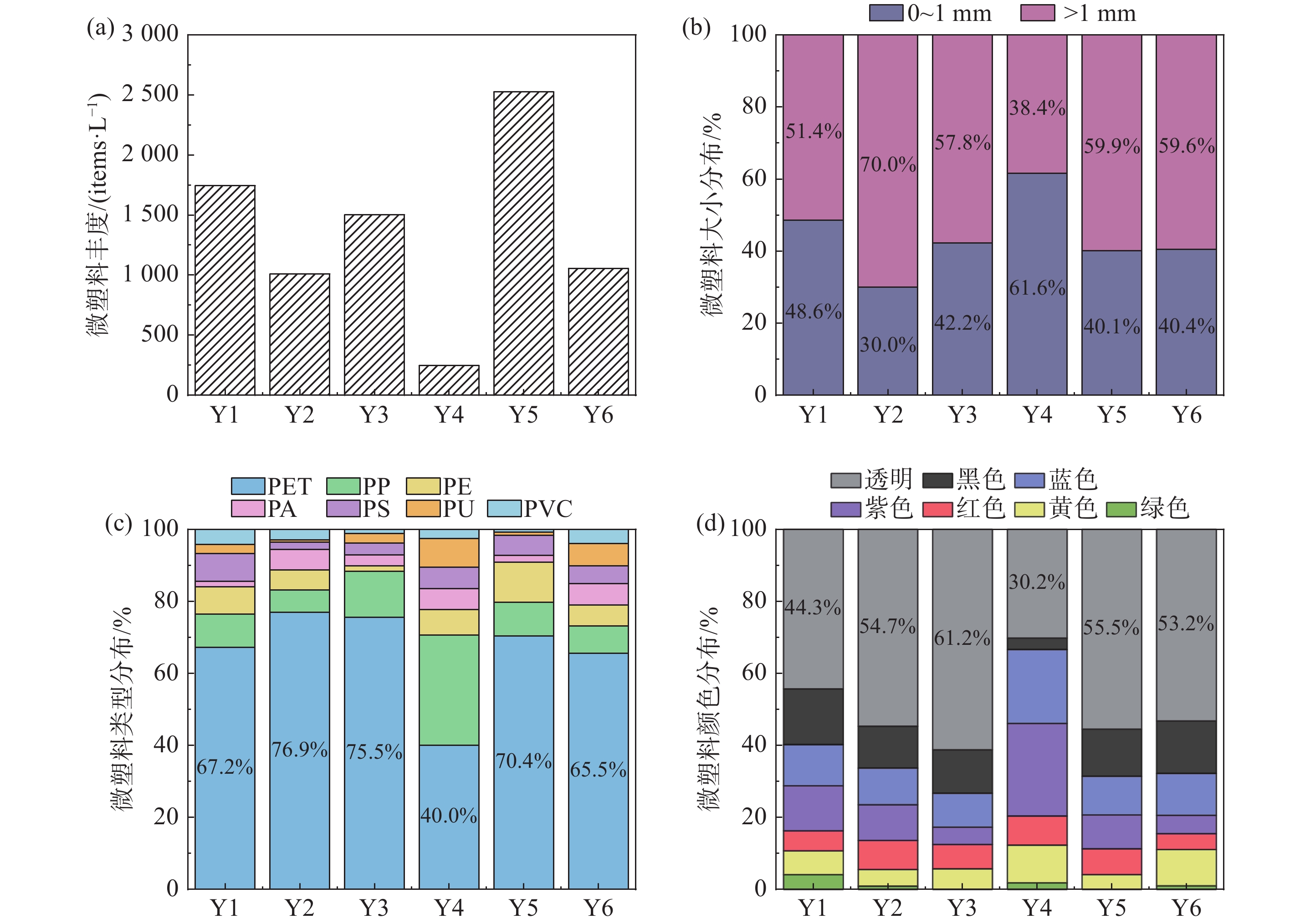
Fig.2
Occurrence characteristics of microplastics in wastewater inflow of the chemical industry"
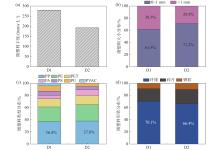
Fig.3
Occurrence characteristics of microplastics in wastewater inflow of the electroplating industry"
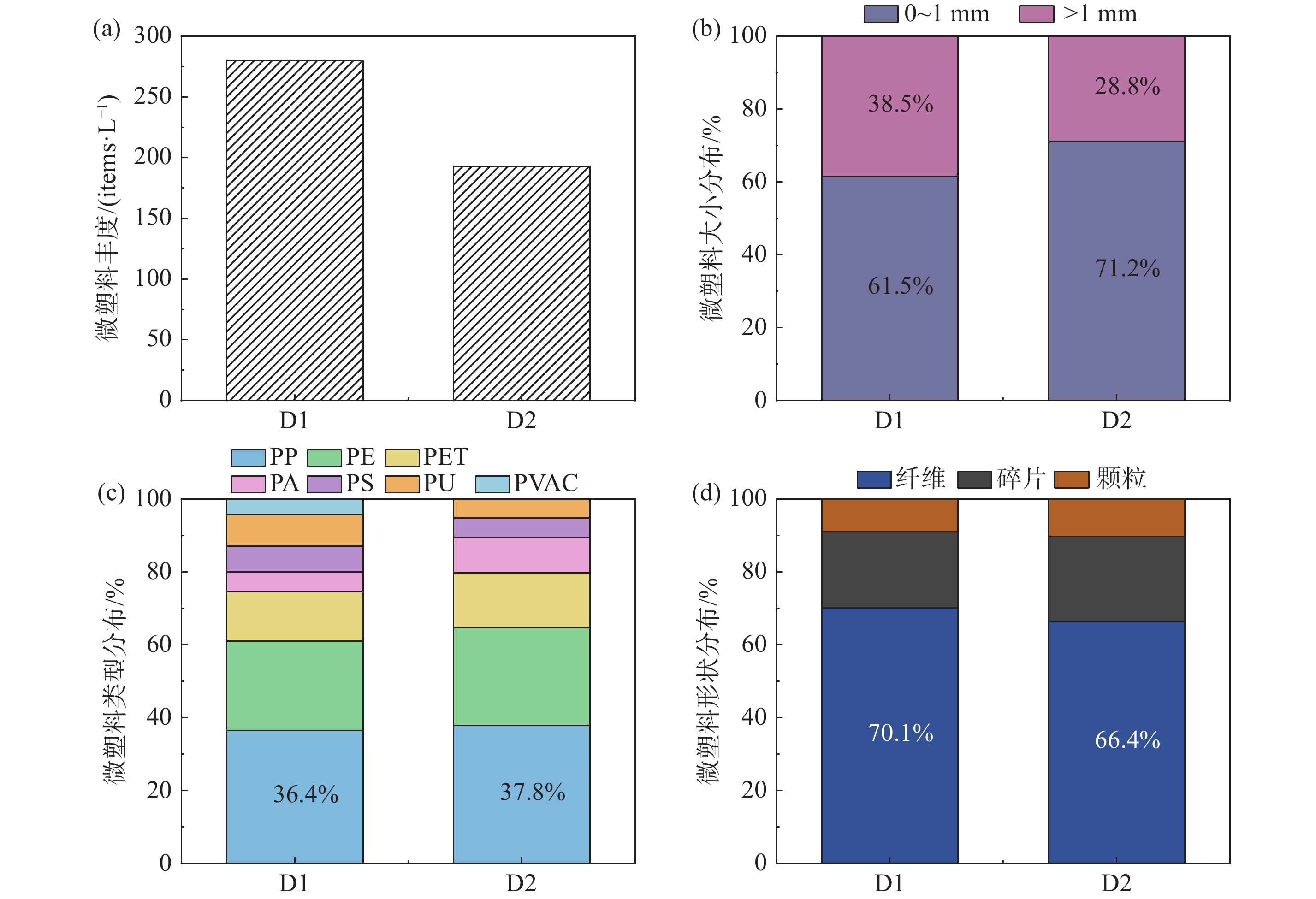
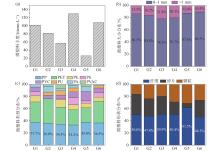
Fig.4
Occurrence characteristics of microplastics in wastewater inflow of the sewage treatment plants"
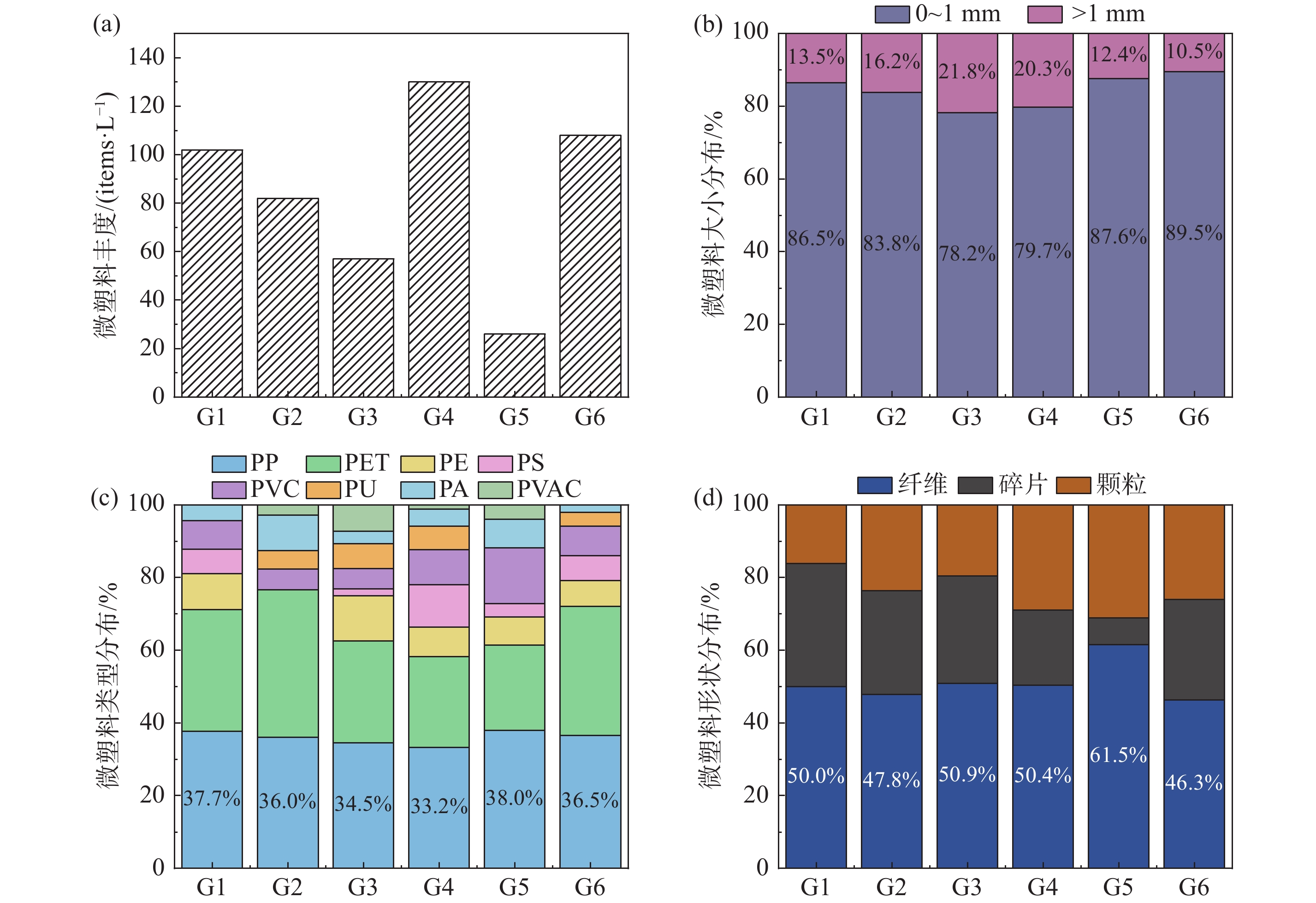
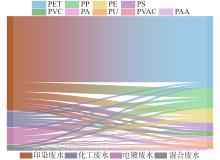
Fig.5
Polymer types of microplastics in wastewater"
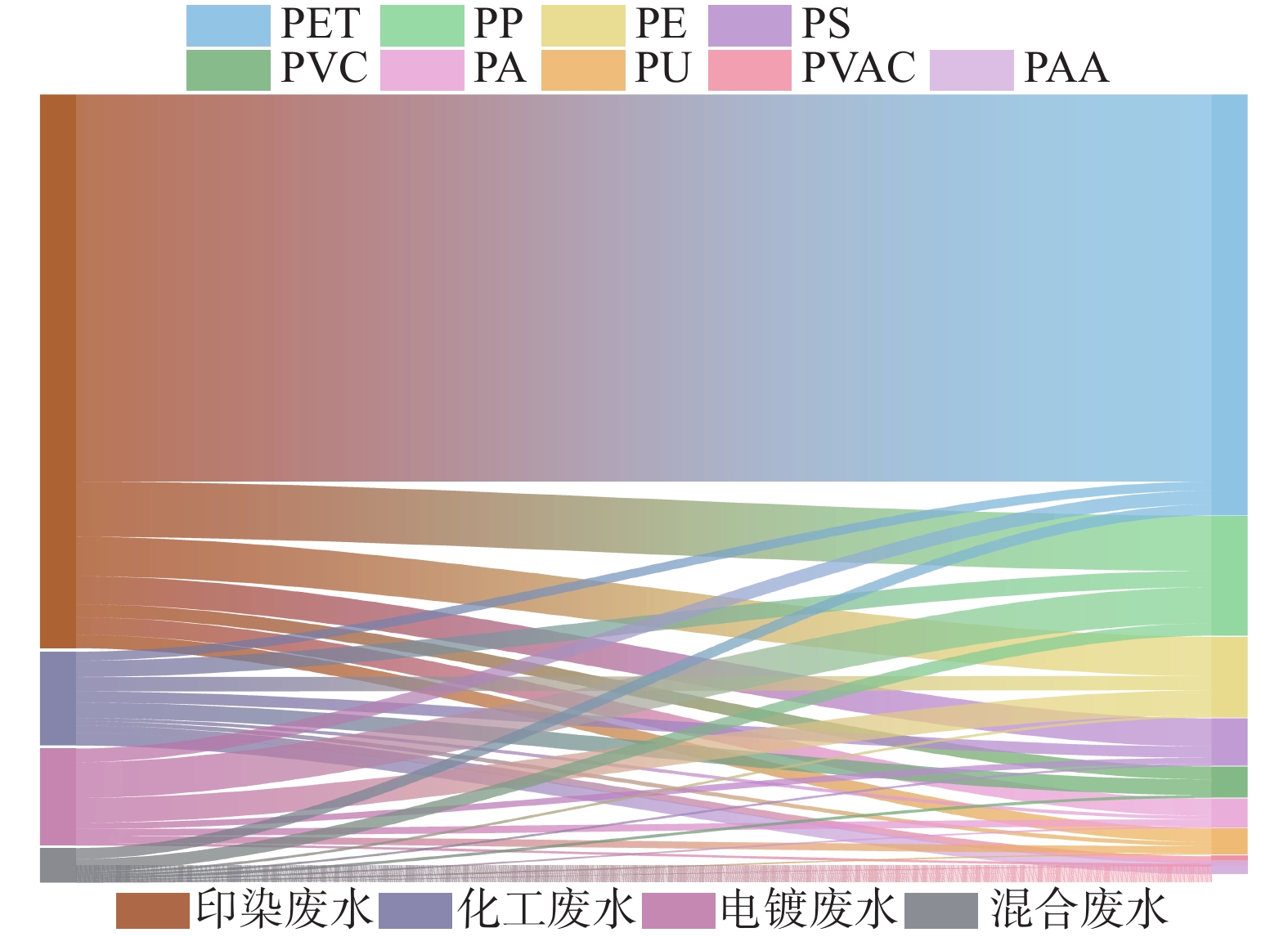
Table 3
Microplastic abundance in industrial wastewaters in China"
| 研究地点 | 废水类型 | 进水口微塑料丰度/(items/L) | 数据来源 |
| 广东省 | 电镀废水 | 文献[ | |
| 重庆市 | 工业废水 | 2.20~8.67 | 文献[ |
| 武汉市 | 工业废水 | 23.3~80.5 | 文献[ |
| 常州市 | 工业废水 | 129.33±285.39 | 文献[ |
| 太湖流域 | 印染废水 | 248~ | 本研究 |
| 化工废水 | 45~424 | ||
| 电镀废水 | 193~280 | ||
| 混合废水 | 26~130 |
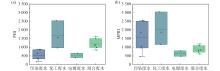
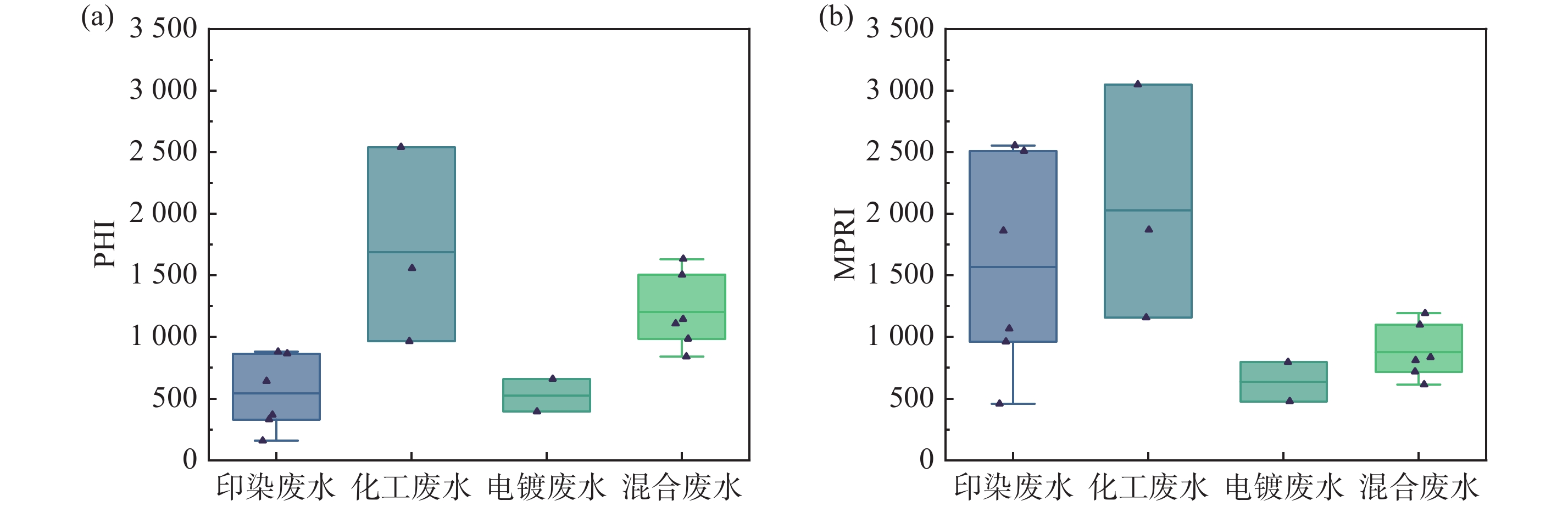
Fig.6
Risk index for microplastics in wastewater"
| 1 | SINGH N, WALKER T R.. Plastic recycling: A Panacea or environmental pollution problem. NPJ Materials Sustainability, 2024, 2 (1): 17. |
| 2 | BORRELLE S B, RINGMA J, LAW K L, et al.. Predicted growth in plastic waste exceeds efforts to mitigate plastic pollution. Science, 2020, 369 (6510): 1515- 1518. |
| 3 | 刘超, 张晓然, 刘俊峰, 等.. 塑料制品中微塑料的释放行为及在环境中的迁移规律研究进展. 环境工程, 2022, 40 (5): 205- 217. |
| 4 | THOMPSON R C, OLSEN Y, MITCHELL R P, et al.. Lost at sea: Where is all the plastic?. Science, 2004, 304 (5672): 838. |
| 5 | ZHANG Z Q, CHEN Y G.. Effects of microplastics on wastewater and sewage sludge treatment and their removal: A review. Chemical Engineering Journal, 2020, 382, 122955. |
| 6 | RAJU S, CARBERY M, KUTTYKATTIL A, et al.. Transport and fate of microplastics in wastewater treatment plants: Implications to environmental health. Reviews in Environmental Science and Bio/Technology, 2018, 17 (4): 637- 653. |
| 7 | 国家发展改革委. 一图读懂太湖流域水环境综合治理总体方案[EB/OL]. (2022-07-02)[2025-04-04]. https://www.ndrc.gov.cn/xxgk/jd/zctj/202207/t20220702_1329971.html. |
| 8 | 万荣荣, 杨桂山. 太湖流域土地利用与景观格局演变研究 [J]. 应用生态学报, 2005, 16(3): 475-480. |
| 9 | 秦伯强, 王小冬, 汤祥明, 等. 太湖富营养化与蓝藻水华引起的饮用水危机——原因与对策 [J]. 地球科学进展, 2007, 22(9): 896-906. |
| 10 | 朱喜, 李贵宝, 王圣瑞. 太湖蓝藻暴发的治理 [J]. 水资源保护, 2020, 36(6): 106-111. |
| 11 | 刘畅. 太湖流域工业污染治理技术评估及其微塑料污染赋存特征研究 [D]. 上海: 华东师范大学, 2022. |
| 12 | SU L, XUE Y G, LI L Y, et al.. Microplastics in Taihu Lake, China. Environmental Pollution, 2016, 216, 711- 719. |
| 13 | 赵思雅, 申珊齐, 李爱民. 太湖抗生素、抗性基因的时空分布特征及生态风险评估 [J]. 生态毒理学报, 2024, 19(3): 192-207. |
| 14 | 余符合, 王姝, 钱程远, 等. 太湖表层沉积物重金属的分布、来源与生态风险评价 [J]. 环境科学, 2023, 44(10): 5524-5535. |
| 15 | 汪星, 曹承进, 谢丽强, 等. 太湖富营养化控制与治理技术集成研究[R]. 北京: 国家重大水专项办, 2021. |
| 16 | CAO T Y, SUN F Q, HAN X Y, et al. Study on treatment effect assessment of heavy metal pollution in Taihu Lake Sediments Based on the rapid development of Yangtze River Delta Urban Agglomeration in China [J]. Global NEST: the International Journal, 2022: 141-150. |
| 17 | 李涵之, 陆莎, 杜欢政, 等. 纺织印染行业微塑料污染现状及防治策略 [J]. 纺织导报, 2023(1): 15-18. |
| 18 | 李晓亚, 刘娟, 郑珊, 等. 山东沿海不同工业废水源中微塑料的赋存特征 [J]. 海洋科学, 2023, 47(10): 43-51. |
| 19 | 王艺霖, 雷免涛, 吴泽璇, 等. 电镀园区废水微塑料赋存特征及生态风险评估 [J]. 环境科学研究, 2024, 37(7): 1604-1611. |
| 20 | 付宏煜, 李博闻, 卢琦园, 等. 不同污水处理厂微塑料排放特征及对受纳流域水体的生态风险 [J]. 环境化学, 2025, 44(5): 1565-1577. |
| 21 | HU Z H, SUN Y J, ZHOU J, et al. Microplastics in wastewater plants: A review of sources, characteristics, distribution and removal technologies [J]. Journal of Contaminant Hydrology, 2024, 267: 104448. |
| 22 | 汪嘉杨, 翟庆伟, 郭倩, 等. 太湖流域水环境承载力评价研究 [J]. 中国环境科学, 2017, 37(5): 1979-1987. |
| 23 | 施芊芸, 田爱军, 颜润润. 基于数据包络分析的太湖流域重点行业环境效率评价研究 [J]. 绿色科技, 2021, 23(24): 87-89. |
| 24 | 徐晨烨, 顾春节, 倪亦凡, 等. 纤维微塑料在印染废水产排污环节的赋存特征 [J]. 纺织学报, 2021, 42(6): 26-34. |
| 25 | 凌小芳, 谢天, 李铭, 等. 环境及化工产品中的微塑料及其防治策略 [J]. 应用与环境生物学报, 2021, 27(4): 1110-1118. |
| 26 | TORRES F G, DE-LA-TORRE G E.. Environmental pollution with antifouling paint particles: Distribution, ecotoxicology, and sustainable alternatives. Marine Pollution Bulletin, 2021, 169, 112529. |
| 27 | BASHIR S M, KIMIKO S, MAK C W, et al.. Personal care and cosmetic products as a potential source of environmental contamination by microplastics in a densely populated Asian city. Frontiers in Marine Science, 2021, 8, 683482. |
| 28 | CARR S A, LIU J, TESORO A G.. Transport and fate of microplastic particles in wastewater treatment plants. Water Research, 2016, 91, 174- 182. |
| 29 | 于文金, 邹欣庆. 基于产业调整的太湖流域生态环境优化探讨 [J]. 环境科学研究, 2008, 21(5): 124-128. |
| 30 | 朱玫. 太湖流域治理十年回顾与展望 [J]. 环境保护, 2017, 45(24): 34-38. |
| 31 | 刘惠滨, 刘京奉. 2023—2024年禁限用纺织化学品最新进展 [J]. 印染助剂, 2024, 41(3): 1-8. |
| 32 | 胡欣宇, 李卫明, 严康, 等. 喀斯特地貌区渔洋河微塑料污染空间分布及其生态风险评估[J]. 环境科学研究, 2025. DOI: 10.13198/j.issn.1001-6929.2025.09.08 |
| 33 | EVERAERT G, VAN CAUWENBERGHE L, DE RIJCKE M, et al.. Risk assessment of microplastics in the ocean: Modelling approach and first conclusions. Environmental Pollution, 2018, 242, 1930- 1938. |
| 34 | LITHNER D, LARSSON Å, DAVE G.. Environmental and health hazard ranking and assessment of plastic polymers based on chemical composition. Science of the Total Environment, 2011, 409 (18): 3309- 3324. |
| 35 | LIU W Y, ZHANG J L, LIU H, et al.. A review of the removal of microplastics in global wastewater treatment plants: Characteristics and mechanisms. Environment International, 2021, 146, 106277. |
| 36 | STARK M, 李娜. 微塑料和纺织纤维研究综述 [J]. 国际纺织导报, 2018, 46(2): 6-8. |
| 37 | 李家琛. 纺织工业印染加工环节过程中微塑料检测及其防治研究 [D]. 北京: 北京服装学院, 2022. |
| 38 | LI J C, LIU Y Y, GAO Y X, et al. Study on the extraction method of microplastic system in textile wastewater [J]. Polymers, 2023, 15(6): 1394. |
| 39 | ZHOU H J, ZHOU L, MA K K.. Microfiber from textile dyeing and printing wastewater of a typical industrial park in China: Occurrence, removal and release. Science of the Total Environment, 2020, 739, 140329. |
| 40 | YANG L B, LI K X, CUI S, et al.. Removal of microplastics in municipal sewage from China’s largest water reclamation plant. Water Research, 2019, 155, 175- 181. |
| 41 | 邢薇, 刘梦瑶, 李頔, 等. 污水处理厂中微塑料的去除效能与全流程分析——以北京某下沉式三级污水处理厂为例 [J]. 中国环境科学, 2021, 41(3): 1140-1147. |
| 42 | 许利, 何鹏, 张熠杰, 等. 化工园区污水处理厂排放标准管控指标探析 [J]. 环境保护与循环经济, 2024, 44(7): 101-106. |
| 43 | YANG F, LI D D, ZHANG Z X, et al.. Characteristics and the potential impact factors of microplastics in wastewater originated from different human activity. Process Safety and Environmental Protection, 2022, 166, 78- 85. |
| 44 | TANG N, LIU X N, XING W.. Microplastics in wastewater treatment plants of Wuhan, Central China: Abundance, removal, and potential source in household wastewater. Science of the Total Environment, 2020, 745, 141026. |
| 45 | WANG F, WANG B, DUAN L, et al.. Occurrence and distribution of microplastics in domestic, industrial, agricultural and aquacultural wastewater sources: A case study in Changzhou, China. Water Research, 2020, 182, 115956. |
| [1] | Yaoyi LIU, Lingge ZHAI, Peng ZENG, Yifan WANG, Tian TIAN, Yue CHE. Water quality evaluation and spatial-temporal variation characteristics of the Taihu Lake Basin based on PCA and CCME-WQI [J]. J* E* C* N* U* N* S*, 2025, 2025(2): 20-33. |
| [2] | Jing YANG, Yan WU, Yue LI, Xia LIU, Dingye YANG, Yuanyuan CHEN, Ruihe JIN, Ye LI, Min LIU. Occurrence characteristics and healthy risk assessment of hexabromocyclododecane in agricultural soils in Shanghai [J]. Journal of East China Normal University(Natural Science), 2024, 2024(6): 178-187. |
| [3] | Dingye YANG, Jing YANG, Ruihe JIN, Fangfang DING, Yuxin ZHANG, Min LIU. Occurrence characteristics and risk assessment of halogenated flame retardants in soils of Hefei City [J]. Journal of East China Normal University(Natural Science), 2024, 2024(6): 161-177. |
| [4] | Cuizhu MA, Wenjun ZHAO, Yufei CHEN, Huahong SHI. Advancements in bio-tracking and bio-imaging technologies for microplastics [J]. Journal of East China Normal University(Natural Science), 2024, 2024(6): 14-23. |
| [5] | Yan LIU, Rong QIU, Xiaomu CAO, Yuqing LIANG, Xuelong CAO, Defu HE. Microplastic pollution in soil mediated by organic fertilizers derived from kitchen waste treatment in Shanghai [J]. Journal of East China Normal University(Natural Science), 2024, 2024(6): 114-123. |
| [6] | Tiefeng CUI, Daoji LI. Progress and critical issues in research on micro- and nanoplastics in human body [J]. Journal of East China Normal University(Natural Science), 2024, 2024(6): 1-13. |
| [7] | Chenming GU, Jing YANG, Ye LI, Ye HUANG, Yan WU, Guoyu YIN, Ruihe JIN, Yi YANG, Min LIU. Advances in research on multimedia fate, risks, and simulation of contaminants of emerging concern in urban agglomerations [J]. Journal of East China Normal University(Natural Science), 2024, 2024(6): 24-38. |
| [8] | Chunhua JIANG, Jinxu YI, Lixin ZHU, Kai LIU, Changxing ZONG, Daoji LI. Comparative study of the vertical distribution characteristics of microplastics and sampling methods for microplastics in the water column: A case study in the Jiulong River estuary [J]. Journal of East China Normal University(Natural Science), 2024, 2024(1): 79-89. |
| [9] | Yong ZHANG, Can LI, Hualin ZHANG, Yu ZHAN, Hui WANG, Yifan XIAO, Lili YANG, Jiaqi LIU, Zhenglong KUAI. Evaluation of ecosystem health during ecological restoration of the shallow lakes along the shores of Taihu Lake [J]. Journal of East China Normal University(Natural Science), 2024, 2024(1): 17-28. |
| [10] | Zhifu LI, Yonghong WU, Xuemei LIU, Dan LI. Assessment of water quality and heavy metal contamination of sediments after rice harvesting in a rice-shrimp co-cropping system [J]. Journal of East China Normal University(Natural Science), 2024, 2024(1): 122-133. |
| [11] | Daoji LI, Xuri DONG. Research progress of microplastics and attached organisms in marine environment [J]. Journal of East China Normal University(Natural Science), 2022, 2022(3): 1-7. |
| [12] | Chang LIU, Bowen YU, Chengjin CAO, Minsheng HUANG, Xing WANG, Difang WANG, Yang ZHA, Mengzhuo LI, Haochen DU. Coastal structure and environmental resources of the Jinze water source area of Taipu River [J]. Journal of East China Normal University(Natural Science), 2021, 2021(4): 72-80. |
| [13] | Yang ZHA, Difang WANG, Chengjin CAO, Minsheng HUANG, Xing WANG, Bowen YU, Chang LIU, Haochen DU, Mengzhuo LI. Investigation of the environmental status of water at the Dalian Lake demonstration area in the Jinze water source area of Taipu River [J]. Journal of East China Normal University(Natural Science), 2021, 2021(4): 64-71. |
| [14] | Xueyan YIN, Guanghan YAN, Xing WANG. Research on the integration and application of aquatic vegetation restoration technology in the lakeshore zone of Taihu Lake [J]. Journal of East China Normal University(Natural Science), 2021, 2021(4): 26-38. |
| [15] | LI Dao-ji, Zhu Li-xin, CHANG Si-yuan, ZHANG Feng, WANG Lu. State of marine microplastic pollution research and the limitations [J]. Journal of East China Normal University(Natural Sc, 2019, 2019(3): 174-185. |
| Viewed | ||||||
|
Full text |
|
|||||
|
Abstract |
|
|||||
