
 中文核心期刊
J* E* C* N* U* N* S* ›› 2026, Vol. 2026 ›› Issue (3): 134-147.doi: 10.3969/j.issn.1000-5641.2026.03.011
• Biodiversity and Ecological Responses • Previous Articles Next Articles
Haixia WEN1,2, Qing HU3, Zhanghua WANG1,2, Xiaolin MA1,2,*( )
)
Received:2025-03-19
Accepted:2026-03-02
Online:2026-05-25
Published:2026-05-27
Contact:
Xiaolin MA
E-mail:xlma@sklec.ecnu.edu.cn
CLC Number:
Haixia WEN, Qing HU, Zhanghua WANG, Xiaolin MA. Evolution of biodiversity in the Doulonggang estuary coastal wetland, Yancheng, China[J]. J* E* C* N* U* N* S*, 2026, 2026(3): 134-147.
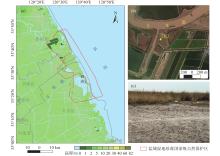
Fig.1
Location of the study area and sampling site"
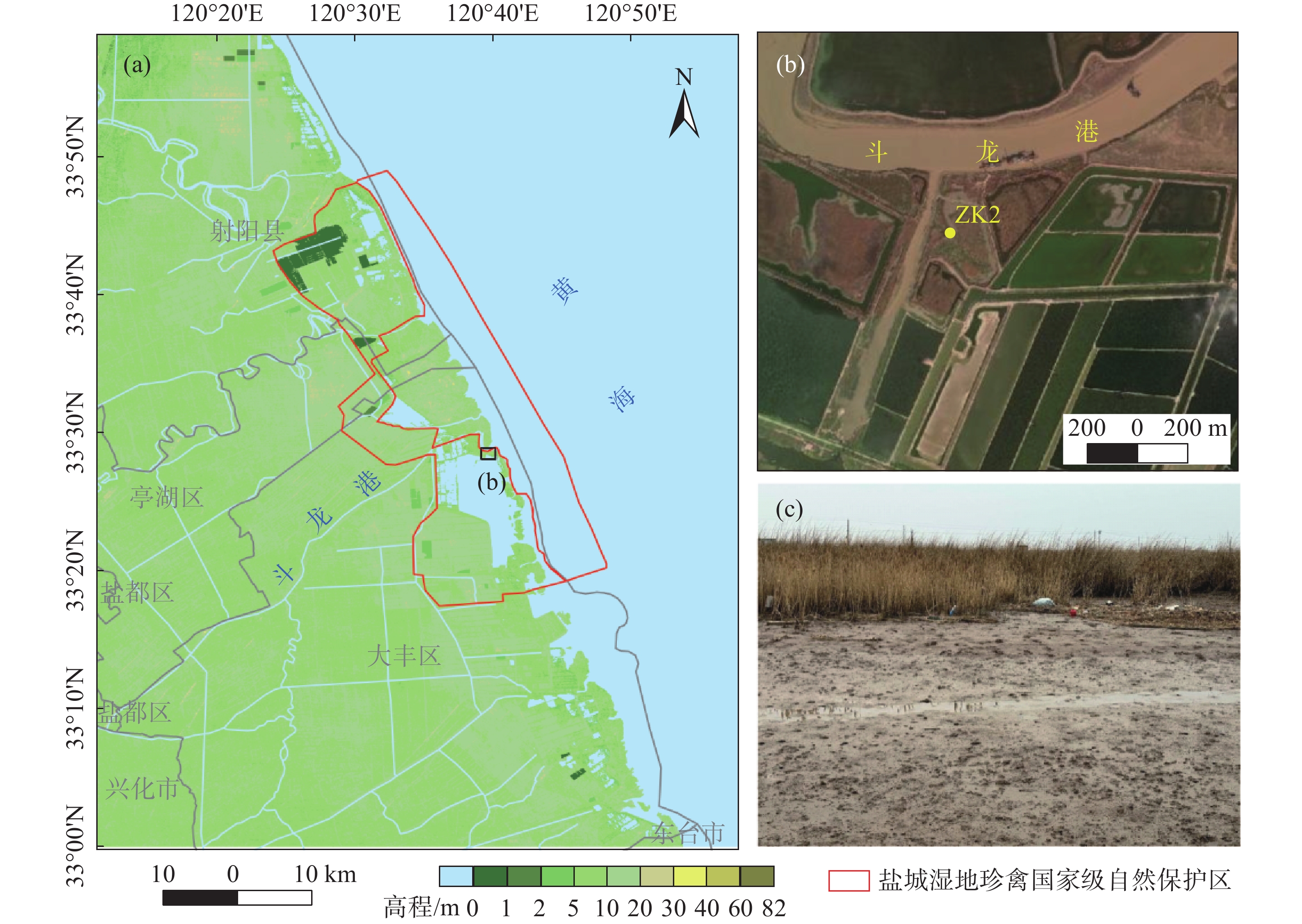
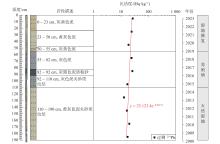
Fig.2
Lithology of ZK2 and results of the constant initial concentration (CIC) model"

Fig.3
False-color composite results of remote sensing images across various periods"
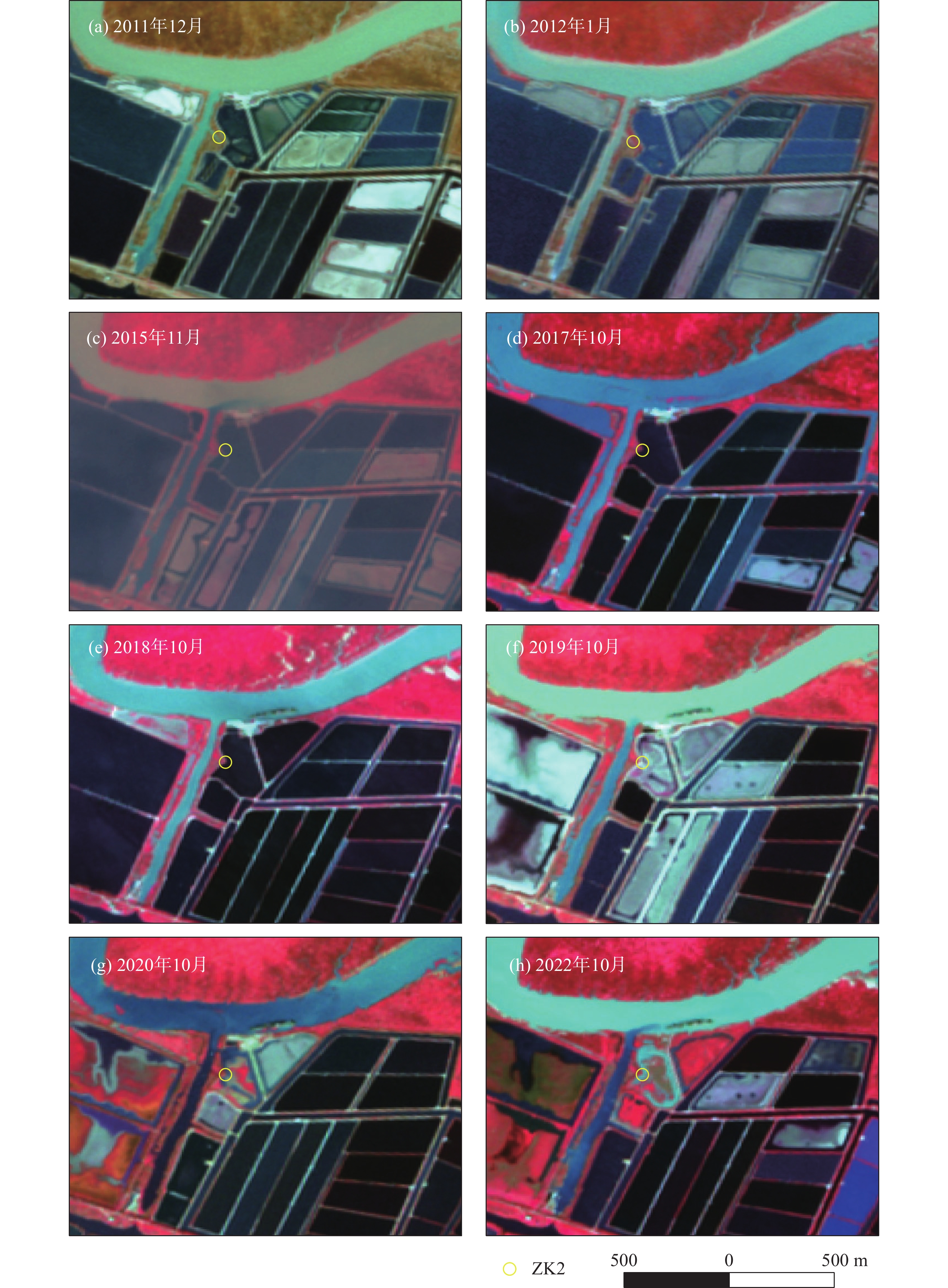
Table 1
Sequence quantity results for each sample"
| 样品编号 (3个重复汇总) | 原始测序通量 (reads) | 质控后数据量 (reads) | 去除人源序列后数据量 (reads) |
| 0~10 cm | 142 251 082 | 141 765 390 | 123 901 256 |
| 20~30 cm | 149 629 618 | 149 052 114 | 141 131 252 |
| 40~50 cm | 135 405 574 | 134 873 814 | 125 164 006 |
| 60~70 cm | 139 971 224 | 136 411 896 | 129 984 496 |
| 80~90 cm | 134 638 828 | 134 067 426 | 126 155 660 |
| 100~110 cm | 138 414 680 | 137 817 074 | 130 227 604 |
| 120~130 cm | 122 898 662 | 120 845 890 | 107 037 452 |
| 140~150 cm | 131 705 044 | 131 287 486 | 113 948 362 |
| 160~170 cm | 125 817 832 | 125 379 490 | 109 517 676 |
| 180~190 cm | 127 411 928 | 126 922 724 | 113 297 860 |
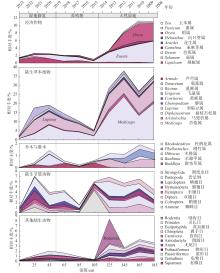
Fig.4
Relative abundances of terrestrial plants and animals"
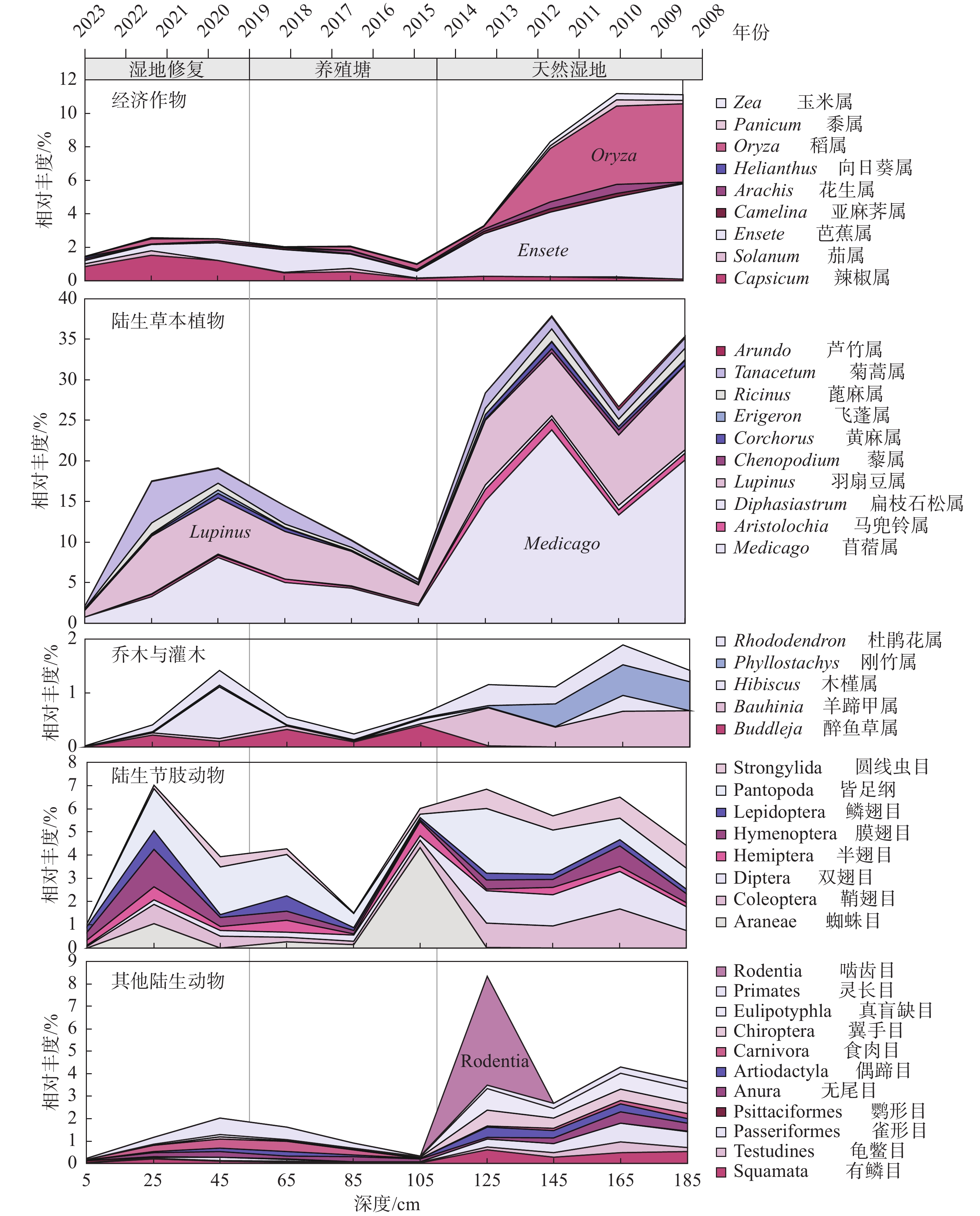
Fig.5
Relative abundances of aquatic plants and animals"
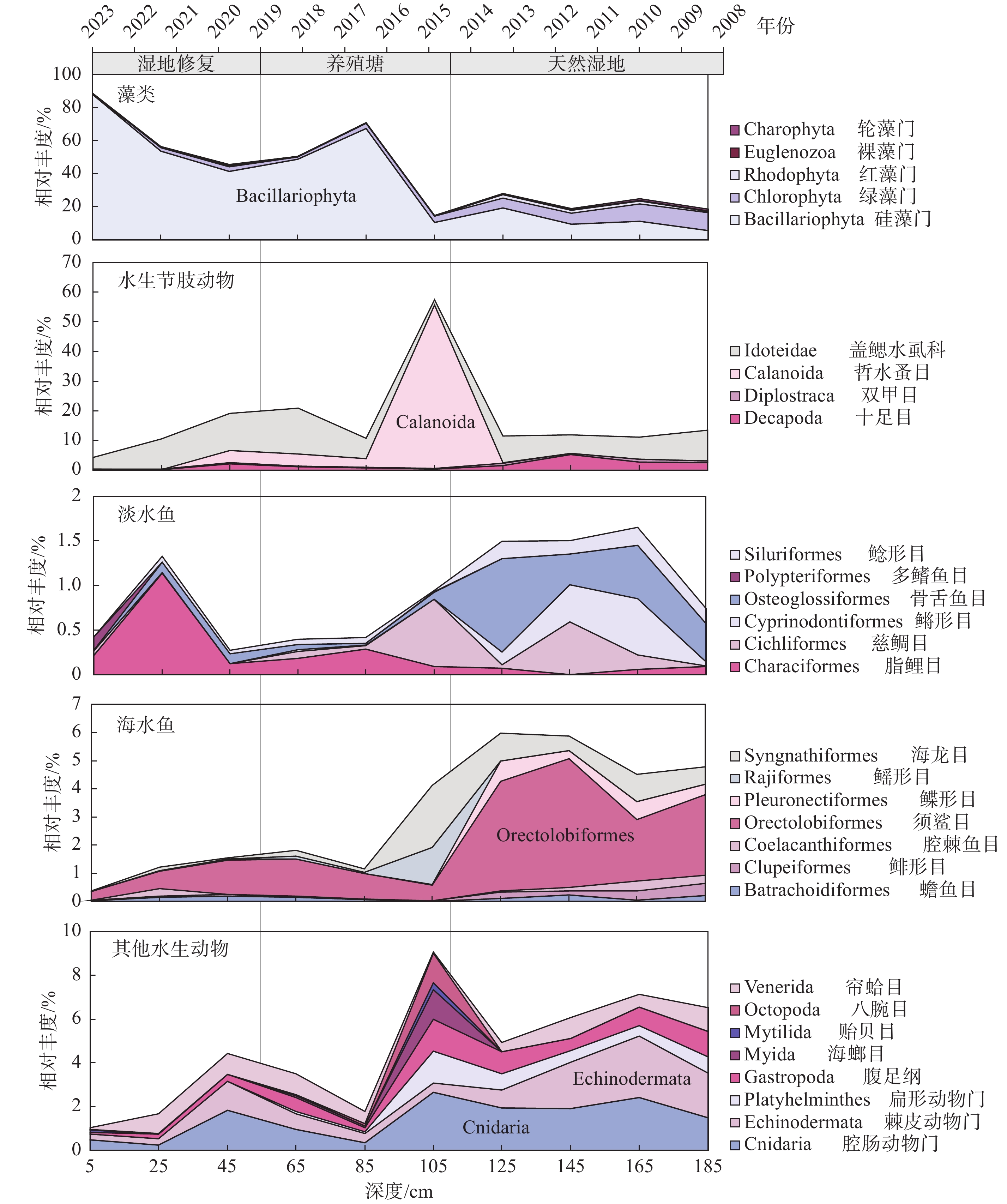
Fig.6
Classification of Bacillariophyta"
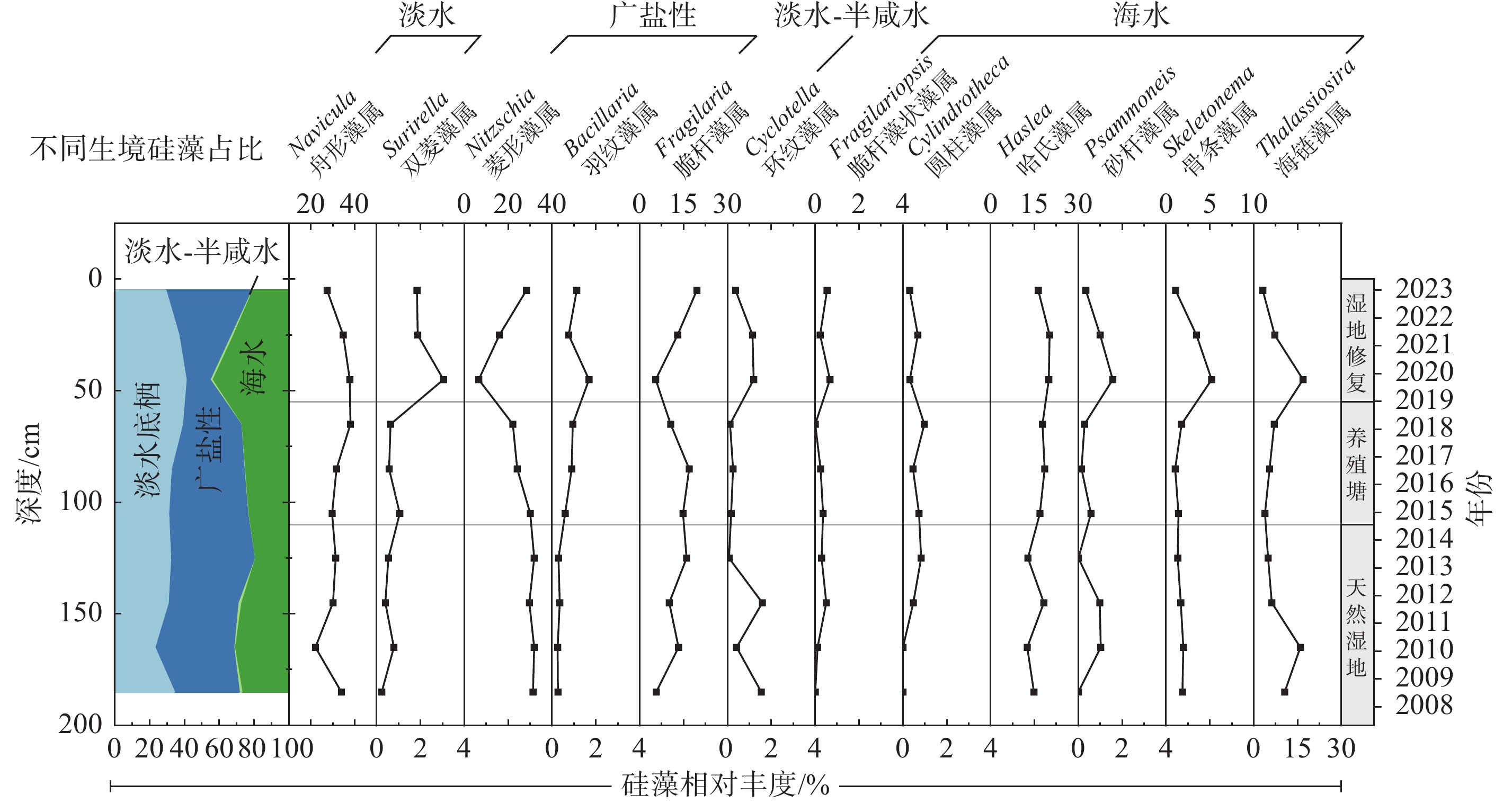
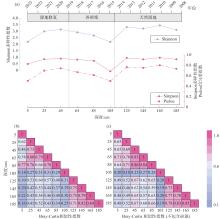
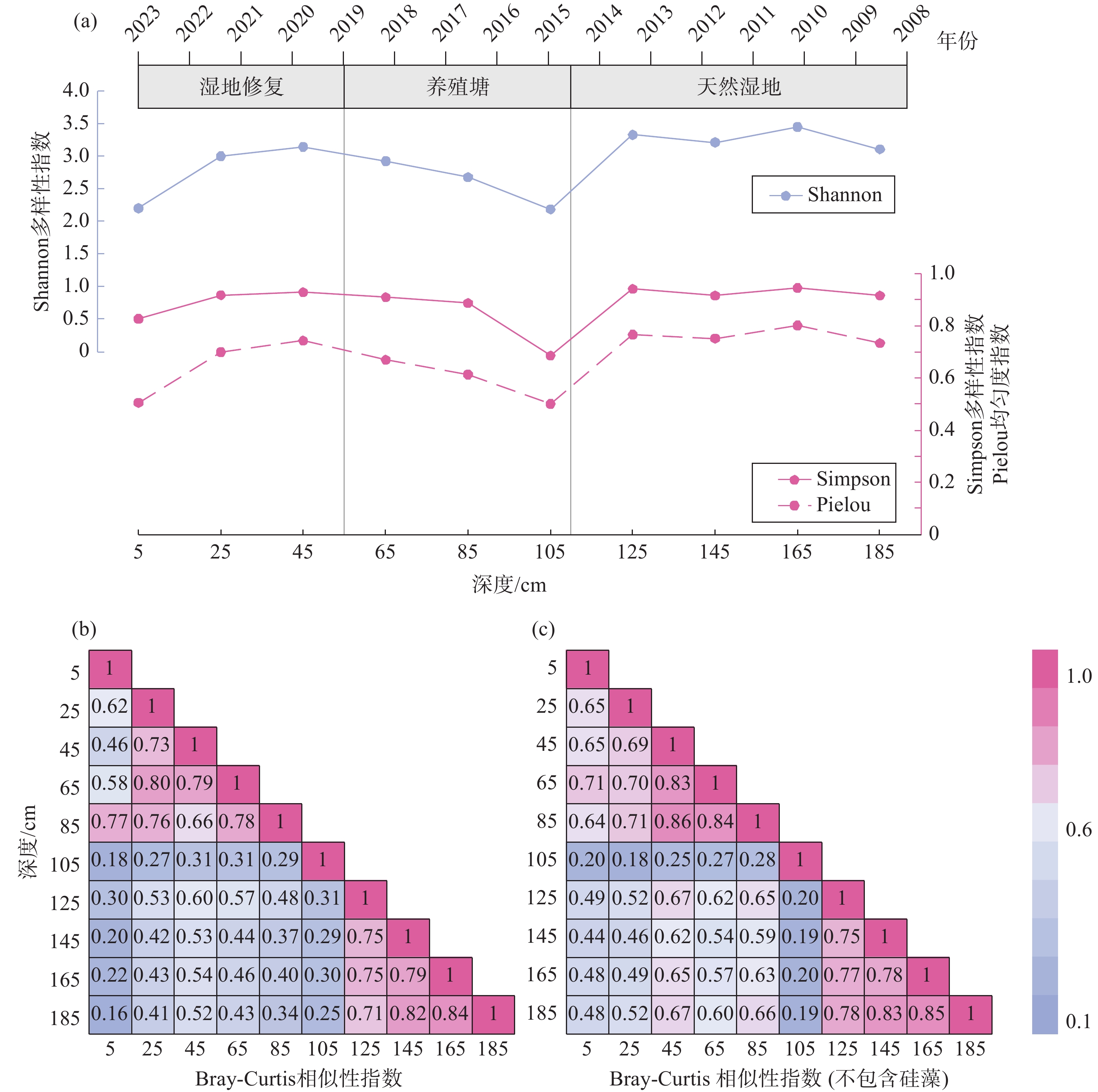
Fig.7
α-diversity indices and Bray-Curtis similarity index across different periods"
| 1 | CHEN A, SUI X, WANG D S, et al.. Landscape and avifauna changes as an indicator of Yellow River Delta Wetland restoration. Ecological Engineering, 2016, 86, 162- 173. |
| 2 | JIN L X, YU P S, LIU C G, et al.. Photovoltaic power station impacts on the benthic ecosystem and sediment carbon storage in tidal flats in China. Environmental Science & Technology, 2024, 58 (47): 20954- 20967. |
| 3 | KOCH E W, BARBIER E B, SILLIMAN B R, et al.. Non-linearity in ecosystem services: Temporal and spatial variability in coastal protection. Frontiers in Ecology and the Environment, 2009, 7 (1): 29- 37. |
| 4 | SHEPARD C C, CRAIN C M, BECK M W.. The protective role of coastal marshes: A systematic review and meta-analysis. PLoS One, 2011, 6 (11): e27374. |
| 5 | 刘博远, 陈雪初, 张晓涵, 等.. 秸秆埋藏对富营养化盐沼湿地碳汇功能的影响. 华东师范大学学报(自然科学版), 2025 (2): 34- 41. |
| 6 | 李润, 陈洁南, 陈灏, 等.. 河口盐沼水体溶解态有机质的动态变化特征及降解转化机理——以上海崇明东滩盐沼湿地为例. 华东师范大学学报(自然科学版), 2025 (2): 55- 67. |
| 7 | BOURNAZEL J, KUMARA M P, JAYATISSA L P, et al.. The impacts of shrimp farming on land-use and carbon storage around Puttalam lagoon, Sri Lanka. Ocean & Coastal Management, 2015, 113, 18- 28. |
| 8 | GAZI M Y, HAQUE M I, ALAM M Z, et al.. Spatiotemporal landuse dynamics driven by socioeconomic context in the southwestern coastal districts of Bangladesh. Ocean & Coastal Management, 2023, 245, 106859. |
| 9 | GU D Q, ZHANG Y Z, FU J, et al.. The landscape pattern characteristics of coastal wetlands in Jiaozhou Bay under the impact of human activities. Environmental Monitoring and Assessment, 2007, 124 (1): 361- 370. |
| 10 | WANG X X, XIAO X M, ZOU Z H, et al.. Tracking annual changes of coastal tidal flats in China during 1986–2016 through analyses of Landsat images with Google Earth Engine. Remote Sensing of Environment, 2020, 238, 110987. |
| 11 | 张婷玉, 袁琳, 张超, 等.. 海岸工程及生物入侵对上海南汇东滩海岸带格局演变的影响. 华东师范大学学报(自然科学版), 2023 (3): 167- 180. |
| 12 | 王春叶, 周斌, 丁晓东, 等.. 围垦对椒江口夏季浮游植物群落结构和多样性的影响. 华东师范大学学报(自然科学版), 2014 (4): 141- 153. |
| 13 | 张晓涵, 田慧敏, 陈雪初, 等.. 长江口横沙岛不同发育年限盐沼植被生长特征及其固碳功能差异. 华东师范大学学报(自然科学版), 2024 (1): 113- 121. |
| 14 | FOSTER N R, JONES A R, SERRANO O, et al.. Environmental DNA identifies coastal plant community shift 1000 years ago in Torrens Island, South Australia. Communications Earth & Environment, 2024, 5, 115. |
| 15 | GEDAN K B, SILLIMAN B R, BERTNESS M D.. Centuries of human-driven change in salt marsh ecosystems. Annual Review of Marine Science, 2009 (1): 117- 141. |
| 16 | GOSS-CUSTARD J D, YATES M G.. Towards predicting the effect of salt-marsh reclamation on feeding bird numbers on the wash. Journal of Applied Ecology, 1992, 29 (2): 330- 340. |
| 17 | 肖美群, 邓兵, 张国森, 等.. 绿华岛贻贝养殖区环境变化的沉积记录. 华东师范大学学报(自然科学版), 2025 (2): 77- 85. |
| 18 | GONÇALVES C, FERNANDES J, NETO J M, et al.. Evolution and effectiveness of salt marsh restoration: A bibliometric analysis. Water, 2024, 16 (8): 1175. |
| 19 | LIU Z Z, CUI B S, HE Q.. Shifting paradigms in coastal restoration: Six decades’ lessons from China. Science of the Total Environment, 2016, 566, 205- 214. |
| 20 | SUN Y G, LI X Z, MANDER Ü, et al.. Effect of reclamation time and land use on soil properties in Changjiang River Estuary, China. Chinese Geographical Science, 2011, 21 (4): 403- 416. |
| 21 | 吴威, 李彩霞, 陈雪初.. 基于生态系统服务的海岸带生态修复工程成效评估——以鹦鹉洲湿地为例. 华东师范大学学报(自然科学版), 2020 (3): 98- 108. |
| 22 | 贺坤, 张紫菀, 宋桉楠, 等.. 海岸带生态修复工程对鸟类多样性及群落动态变化的影响分析. 华东师范大学学报(自然科学版), 2023 (3): 158- 166. |
| 23 | 刘昉勋, 蔡守坤, 黄致远.. 江苏海岸带植被的特征、分布及利用. 植物生态学与地植物学丛刊, 1983, 7 (2): 100- 112. |
| 24 | 田波, 周云轩, 袁琳, 等.. 长江口横沙浅滩区域湿地生物多样性和生态环境现状调查与评估. 华东师范大学学报(自然科学版), 2013 (4): 120- 127. |
| 25 | 刘荣娟, 濮励杰, 朱明, 等.. 2000—2020年江苏省如东海岸线与滩涂围垦时空演变及影响机制. 地理研究, 2021, 40 (8): 2367- 2379. |
| 26 | 何蕾, 李国胜, 崔林林, 等.. 江苏沿海滩涂围垦与社会经济发展的耦合关系. 生态学报, 2021, 41 (23): 9228- 9238. |
| 27 | 欧阳夏语, 倪天泽, 吴晓涵, 等.. 盐城潮间带大型底栖动物群落分布特征. 湿地科学, 2022, 20 (3): 427- 434. |
| 28 | 王娟, 张华兵, 刘玉卿, 等.. 盐城滨海湿地植物群落种间格局与竞争的关系研究. 生态学报, 2020, 40 (24): 8966- 8973. |
| 29 | PEDERSEN M W, OVERBALLE-PETERSEN S, ERMINI L, et al.. Ancient and modern environmental DNA. Philosophical Transactions of the Royal Society of London Series B, Biological Sciences, 2015, 370 (1660): 20130383. |
| 30 | SJÖGREN P, EDWARDS M E, GIELLY L, et al.. Lake sedimentary DNA accurately records 20th Century introductions of exotic conifers in Scotland. New Phytologist, 2017, 213 (2): 929- 941. |
| 31 | 张晓祥, 严长清, 徐盼, 等.. 近代以来江苏沿海滩涂围垦历史演变研究. 地理学报, 2013, 68 (11): 1549- 1558. |
| 32 | 孙檀松.. 江苏沿海滩涂开发现状分析. 海洋开发与管理, 1995, 12 (2): 8- 11. |
| 33 | JOEL G S C, PENABEI S, NDONTCHUENG M M, et al.. Precision measurement of radioactivity in gamma-rays spectrometry using two HPGe detectors (BEGe-6530 and GC0818-7600SL models) comparison techniques: Application to the soil measurement. MethodsX, 2016, 4, 42- 54. |
| 34 | MCCALL P L, ROBBINS J A, MATISOFF G.. 137Cs and 210Pb transport and geochronologies in urbanized reservoirs with rapidly increasing sedimentation rates. Chemical Geology, 1984, 44 (1/2/3): 33- 65. |
| 35 | BOLGER A M, LOHSE M, USADEL B.. Trimmomatic: A flexible trimmer for Illumina sequence data. Bioinformatics, 2014, 30 (15): 2114- 2120. |
| 36 | BUCHFINK B, XIE C, HUSON D H.. Fast and sensitive protein alignment using DIAMOND. Nature Methods, 2015, 12 (1): 59- 60. |
| 37 | PATRO R, DUGGAL G, LOVE M I, et al.. Salmon provides fast and bias-aware quantification of transcript expression. Nature Methods, 2017, 14 (4): 417- 419. |
| 38 | 李从先, 汪品先. 长江晚第四纪河口地层学研究 [M]. 北京: 科学出版社, 1998. |
| 39 | MA X L, DENG Z X, BLAIR D, et al.. Cyanobacterial bloom associated with a complete turnover of a Daphnia population in a warm-temperate eutrophic lake in Eastern China. Freshwater Biology, 2022, 67 (3): 508- 517. |
| 40 | 赵小雷, 凌云, 张光富, 等.. 大丰麋鹿保护区不同生境梯度下滩涂湿地植被的群落特征. 生态学杂志, 2010, 29 (2): 244- 249. |
| [1] | Pengquan ZHONG, Wei WANG, Jiawei ZHANG, Xu LI, Ziqing ZHOU, Miaoxun WANG, Yuan XU. Effects of the ecological restoration project in the coastal wetlands of the Yangtze River Estuary on benthic ciliate communities [J]. J* E* C* N* U* N* S*, 2026, 2026(3): 110-123. |
| [2] | Xiaoliang JIAO, Xinxin YU, Heyi GONG, Kun SONG, Liangjun DA. Effects of soil conditioners on soil properties and vegetable growth in an open-pit coal mine dump [J]. J* E* C* N* U* N* S*, 2025, 2025(6): 106-115. |
| [3] | Min QUAN, Xiangqian ZHU, Liangjun DA. Coupled models of soil amendments and vegetation restoration for waste dump reclamation of open-pit coal mines [J]. J* E* C* N* U* N* S*, 2025, 2025(6): 63-70. |
| [4] | Wenliang JIANG, Baicheng HU, Dan LI, Yonghong WU, Hongmei YE. Research progress on the ecological restoration and protection of the water-soil interface by periphyton bioregulation techniques [J]. J* E* C* N* U* N* S*, 2025, 2025(2): 1-11. |
| [5] | Yating HOU, Weiming XIE, Jiaheng YUAN, Xianye WANG. Response characteristics of the evolution of Chongming Dongtan wetland in the Yangtze River Estuary to sea level rise [J]. J* E* C* N* U* N* S*, 2025, 2025(2): 42-54. |
| [6] | Yong ZHANG, Can LI, Hualin ZHANG, Yu ZHAN, Hui WANG, Yifan XIAO, Lili YANG, Jiaqi LIU, Zhenglong KUAI. Evaluation of ecosystem health during ecological restoration of the shallow lakes along the shores of Taihu Lake [J]. Journal of East China Normal University(Natural Science), 2024, 2024(1): 17-28. |
| [7] | Rui DING, Xuechu CHEN, Wenhui YOU, Jiayu TU. Evaluation of the effectiveness of coastal ecological restoration based on emergy analysis: A case study from the Yingwuzhou Wetland [J]. J* E* C* N* U* N* S*, 2024, 2024(1): 68-78. |
| [8] | Kun HE, Ziyu ZHANG, Annan SONG, Qifan SHEN, Jiayi WANG, Xuechu CHEN. Impact of coastal ecological restoration project on bird diversity and community dynamics [J]. Journal of East China Normal University(Natural Science), 2023, 2023(3): 158-166. |
| [9] | Xiaoting WANG, Hualong LUAN, Weiguo ZHANG, Nina Siu-Ngan LAM. Assessment of land use exposure to coastal erosion in the delta region and its implications on spatial planning: An example from the Pudong New Area of Shanghai [J]. Journal of East China Normal University(Natural Science), 2023, 2023(3): 181-193. |
| [10] | Yan GAO, Rong WANG. Diversity pattern and driving factors for soil microbes in a peri-urban area [J]. Journal of East China Normal University(Natural Science), 2023, 2023(3): 20-32. |
| [11] | Wei CHANG, Yongchuan YANG, Cheng JIN, Xinyang WANG, Li HUANG, Lihua ZHOU, Siwei HU. Diversity of plants in Chinese Taoist temples and the distribution pattern of Taoist tree species [J]. Journal of East China Normal University(Natural Science), 2023, 2023(3): 9-19. |
| [12] | Ying ZHANG, Xiaohui ZHANG, Tingting LIU, Zhixuan YANG, Jianwu TANG. Fluxes and influencing factors of dissolved CH4 in coastal wetlands [J]. Journal of East China Normal University(Natural Science), 2023, 2023(3): 93-107. |
| [13] | Jing HE, Qicheng ZHONG, Guilian ZHANG, Kaiyun WANG, Yueqi WU, Guishu HE, Dezhi LI, Nana PENG. Soil respiration and its components across different land use types in the Dongtan reclamation area of Chongming Island [J]. Journal of East China Normal University(Natural Science), 2022, 2022(3): 71-81. |
| [14] | Shichen XING, Zun DAI, Xing CHEN, Jian WANG. Two new records of epiphyllous Cheilolejeunea species recorded in Zhejiang Province [J]. Journal of East China Normal University(Natural Science), 2022, 2022(1): 70-75. |
| [15] | Tida CHEN, Dan CUI, Yuxin YUAN, Jiamin LIU, Minsheng HUANG, Ying Li. Changes in water quality and land use structure in the green-belt area around Shanghai [J]. Journal of East China Normal University(Natural Science), 2021, 2021(4): 81-89. |
| Viewed | ||||||
|
Full text |
|
|||||
|
Abstract |
|
|||||
