
 中文核心期刊
J* E* C* N* U* N* S* ›› 2026, Vol. 2026 ›› Issue (3): 148-160.doi: 10.3969/j.issn.1000-5641.2026.03.012
• Environmental Quality and Ecological Remediation • Previous Articles Next Articles
Jinlin YAN, Jiawei ZHANG, Wenxiao LIU, Yue LI, Jiahui FAN, Jinlong WANG, Hongpo DONG*( )
)
Received:2025-01-16
Accepted:2025-11-02
Online:2026-05-25
Published:2026-05-27
Contact:
Hongpo DONG
E-mail:hpdong@sklec.ecnu.edu.cn
CLC Number:
Jinlin YAN, Jiawei ZHANG, Wenxiao LIU, Yue LI, Jiahui FAN, Jinlong WANG, Hongpo DONG. Heavy metal contamination and microbial response in groundwater of the Yangtze River Estuary sea-land interaction zone[J]. J* E* C* N* U* N* S*, 2026, 2026(3): 148-160.
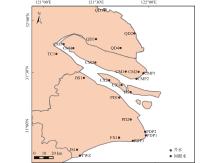
Fig.1
Map of sampling stations"
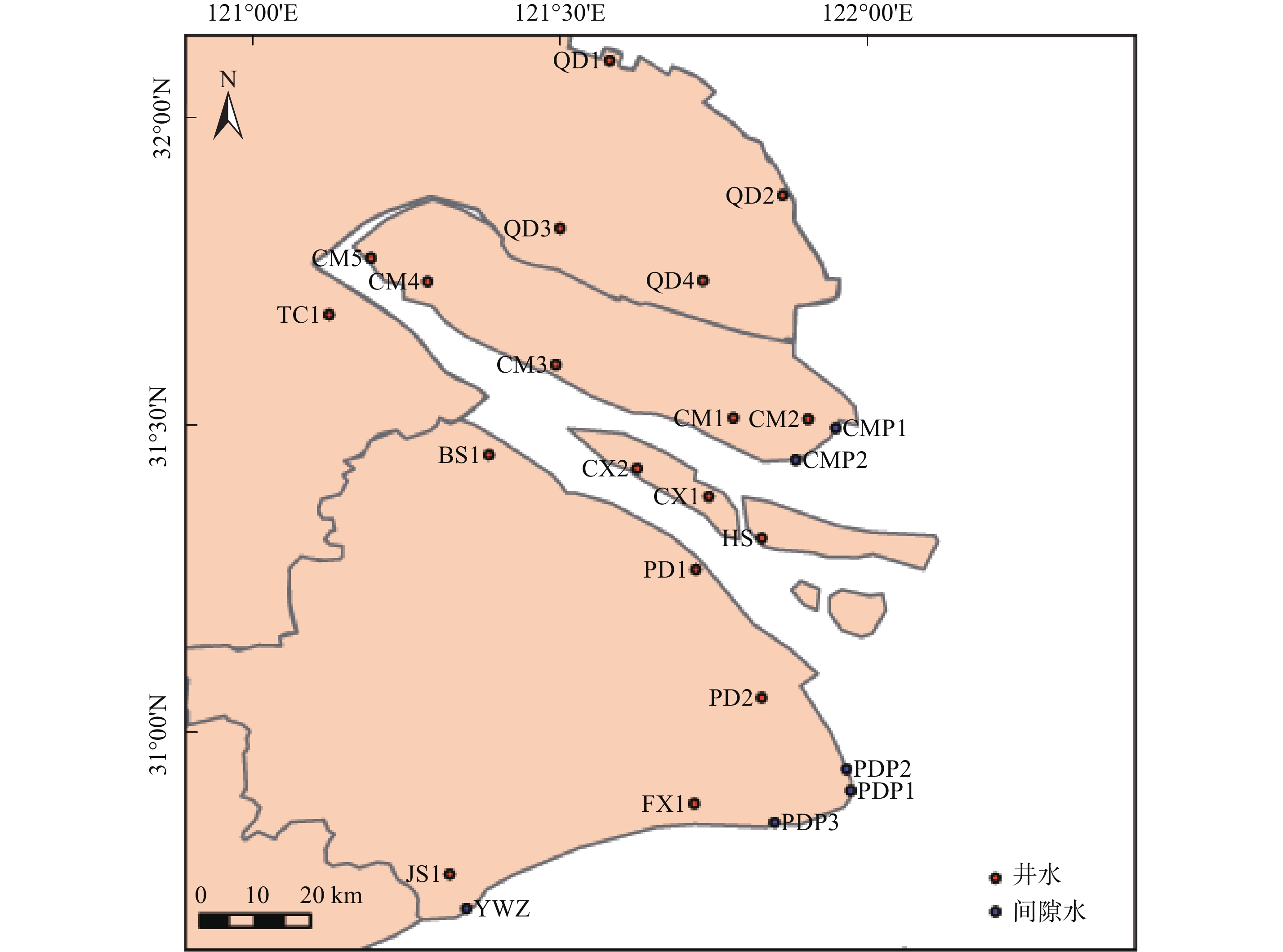
Table 1
Evaluation criteria for the Nemero composite pollution index method"
| 等级 | 单因子污染指数分类标准 | 多因子综合污染指数分类标准 | |||
| Pi | 污染等级 | Pn | 污染等级 | ||
| 1 | Pi≤1 | 安全 | Pn≤0.7 | 安全 | |
| 2 | 1<Pi≤2 | 轻度 | 0.7<Pn≤1 | 预警 | |
| 3 | 2<Pi≤3 | 中度 | 1<Pn≤2 | 轻度 | |
| 4 | Pi>3 | 重度 | 2<Pn≤3 | 中度 | |
| 5 | Pn>3 | 重度 | |||
Table 2
Heavy metal concentrations in groundwater at different stations"
| 站位 | 元素浓度/(μg/L) | ||||||
| Cu | Zn | Cd | Pb | As | Hg | ||
| 井水 | CM1 | - | 47.16 | - | 1.16 | 3.75 | 0.04 |
| CM2 | - | 37.15 | - | 0.36 | 2.70 | 0.05 | |
| CM3 | - | 49.96 | - | - | 0.45 | 0.03 | |
| CM4 | - | 34.33 | - | 2.04 | 0.71 | 0.03 | |
| CM5 | - | 28.78 | - | - | 1.60 | 0.02 | |
| QD1 | - | 34.14 | - | 2.26 | 0.45 | 0.03 | |
| QD2 | - | 61.08 | - | 0.55 | 0.82 | 0.03 | |
| QD3 | - | 35.73 | - | - | 0.23 | 0.02 | |
| QD4 | - | 51.86 | - | - | 0.42 | 0.02 | |
| TC1 | - | 64.61 | - | 0.40 | 0.21 | 0.04 | |
| BS1 | - | 50.80 | - | - | 0.29 | 0.03 | |
| PD1 | - | 70.62 | - | - | 0.70 | 0.02 | |
| PD2 | - | 107.35 | - | - | 0.21 | 0.02 | |
| FX1 | 11.09 | 64.32 | - | - | 0.42 | 0.02 | |
| JS1 | 7.28 | 63.78 | - | - | 0.30 | 0.02 | |
| HS | 8.79 | 68.95 | - | - | 0.56 | 0.02 | |
| CX1 | 14.28 | 60.63 | - | - | 0.38 | 0.02 | |
| CX2 | 16.18 | 32.98 | - | - | 0.23 | 0.02 | |
| 间隙水 | YWZ | 67.93 | 163.94 | 1.98 | 2.42 | 1.07 | 0.03 |
| PDP1 | 33.18 | 156.98 | 0.59 | 15.08 | 1.35 | 0.03 | |
| PDP2 | 40.14 | 155.18 | 0.32 | 24.32 | 1.95 | 0.02 | |
| PDP3 | 25.25 | 117.63 | 0.13 | 12.84 | 1.51 | 0.02 | |
| CMP1 | 17.87 | 381.50 | 0.76 | 2.00 | 3.47 | 0.03 | |
| CMP2 | 37.45 | 167.04 | 0.20 | 12.57 | 1.61 | 0.02 | |
Table 3
Analysis of heavy metal concentration"
| 地下水类型 | 元素 | 检出率/% | 浓度范围/(μg/L) | 平均值/(μg/L) | 中位数/(μg/L) | 百分比/% | 国家Ⅲ类标准/(μg/L) |
| 井水 | Cu | 27.78 | 7.28~16.18 | 11.52 | 11.09 | 5.52 | |
| Zn | 100 | 28.78~107.35 | 53.57 | 51.33 | 92.40 | ||
| Cd | 0 | - | - | - | - | 5 | |
| Pb | 33.33 | 0.36~2.26 | 1.13 | 0.85 | 0.65 | 10 | |
| As | 100 | 0.21~3.75 | 0.80 | 0.44 | 1.38 | 10 | |
| Hg | 100 | 0.02~0.05 | 0.03 | 0.02 | 0.05 | 1 | |
| 间隙水 | Cu | 100 | 17.87~67.93 | 36.97 | 35.32 | 15.31 | |
| Zn | 100 | 117.63~381.50 | 190.38 | 160.46 | 78.87 | ||
| Cd | 100 | 0.13~1.98 | 0.66 | 0.46 | 0.27 | 5 | |
| Pb | 100 | 2.00~24.32 | 11.54 | 12.71 | 4.78 | 10 | |
| As | 100 | 1.07~3.47 | 1.83 | 1.56 | 0.76 | 10 | |
| Hg | 100 | 0.02~0.03 | 0.02 | 0.02 | 0.01 | 1 |
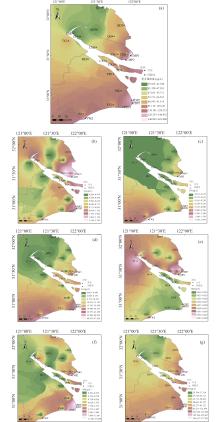
Fig.2
Spatial distribution of heavy metals in groundwater"
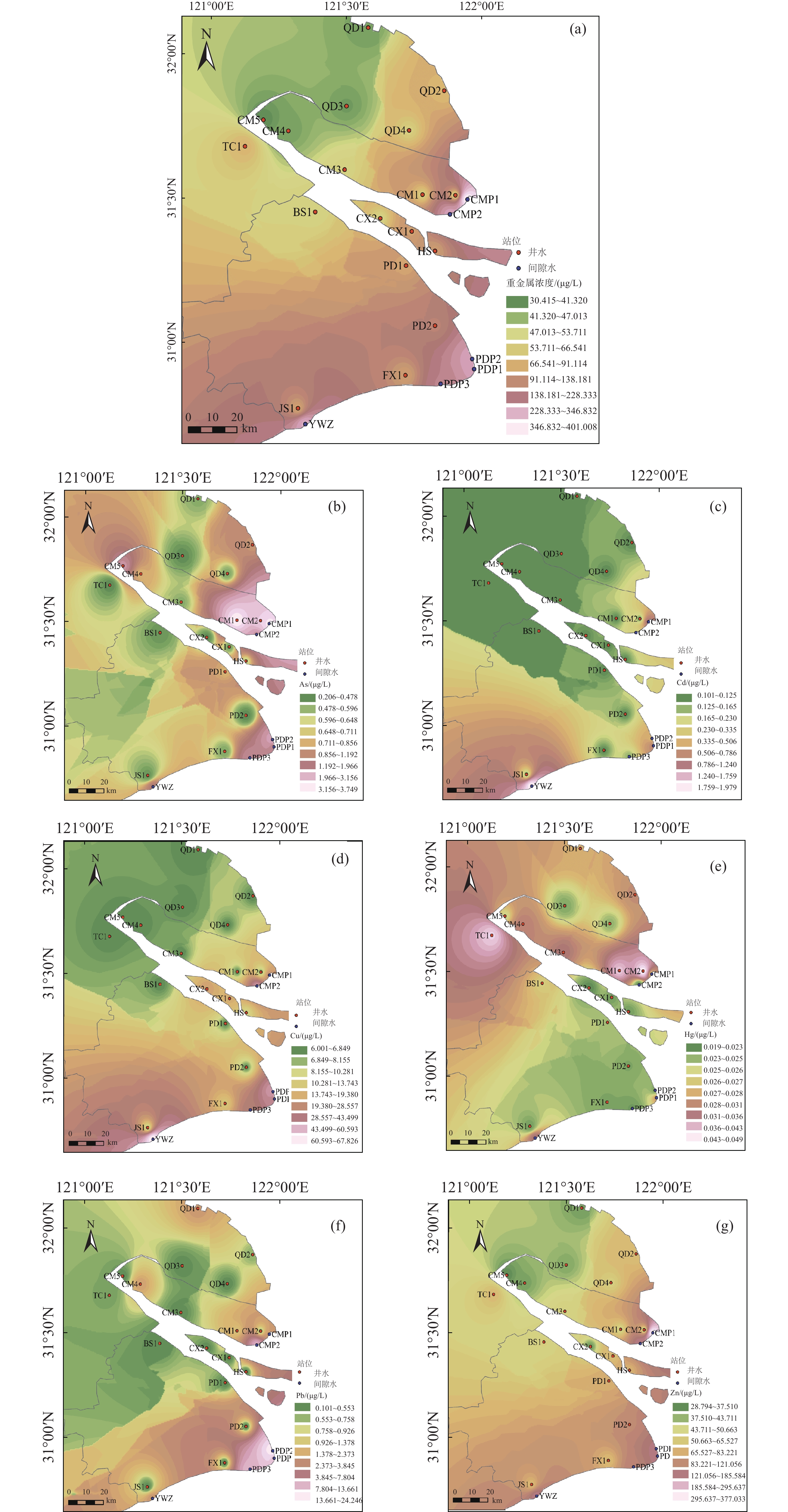
Fig.3
Correlation between heavy metals and environmental factors in groundwater"
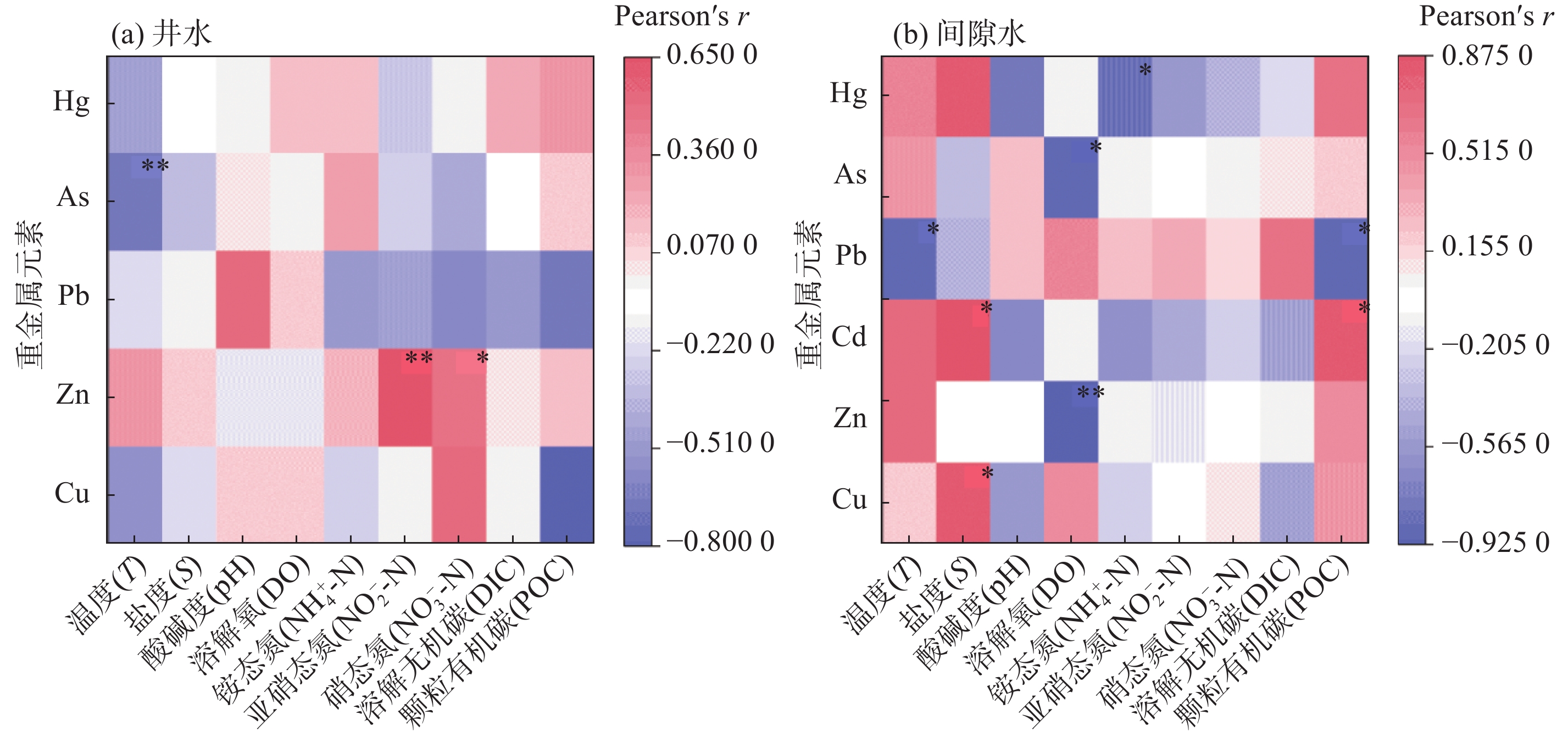
Fig.4
Two-way correlation of heavy metals in groundwater"
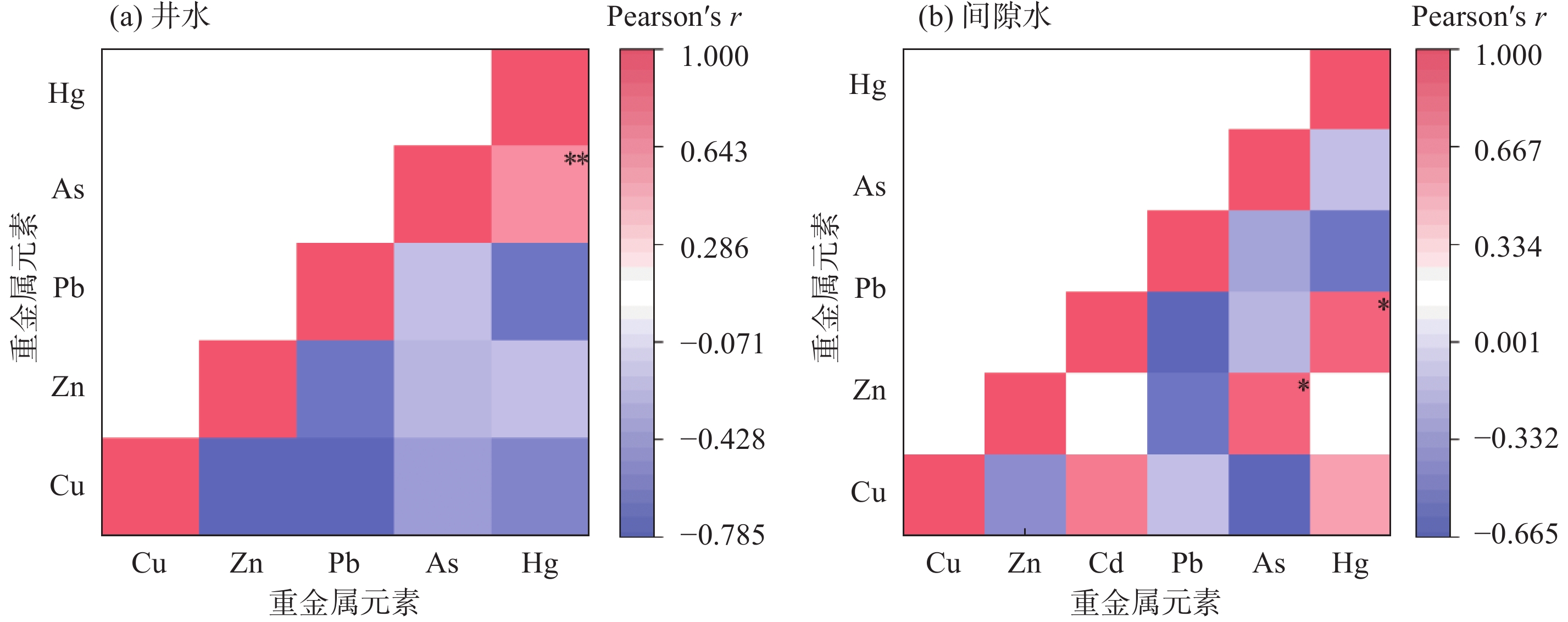
Fig.5
Single factor pollution index of heavy metals in groundwater"
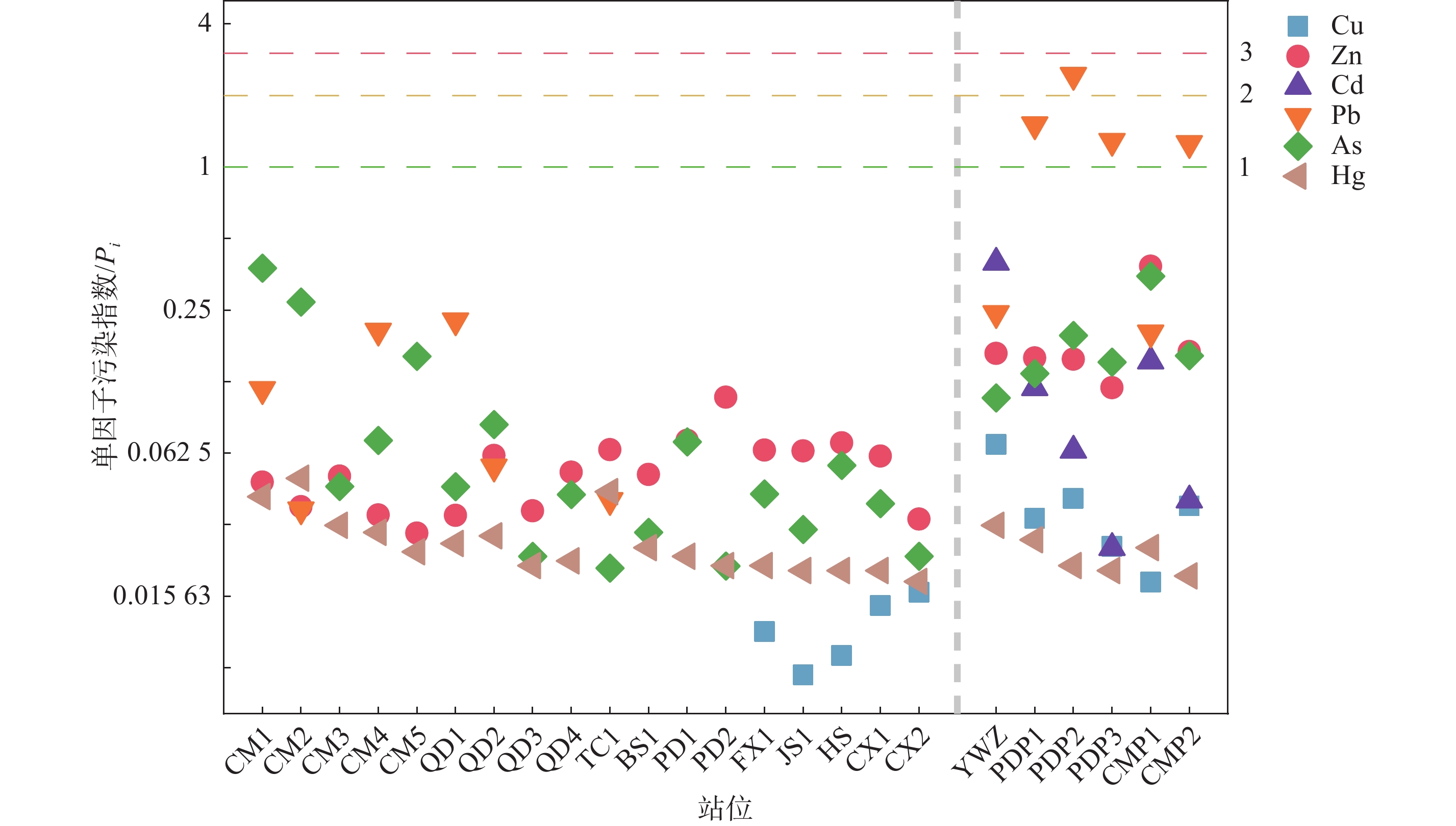
Fig.6
Microbial community composition of groundwater (phylum level)"
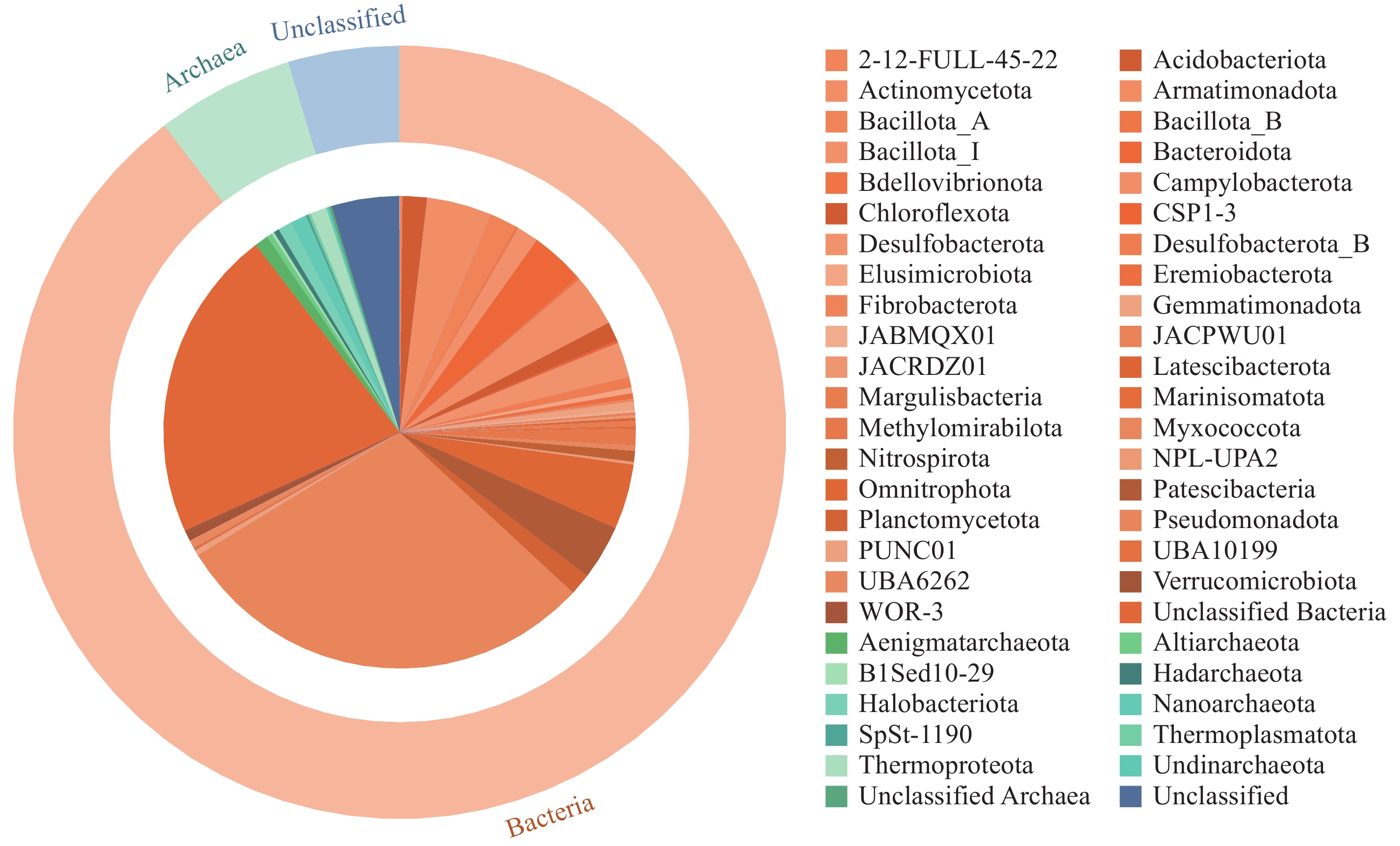
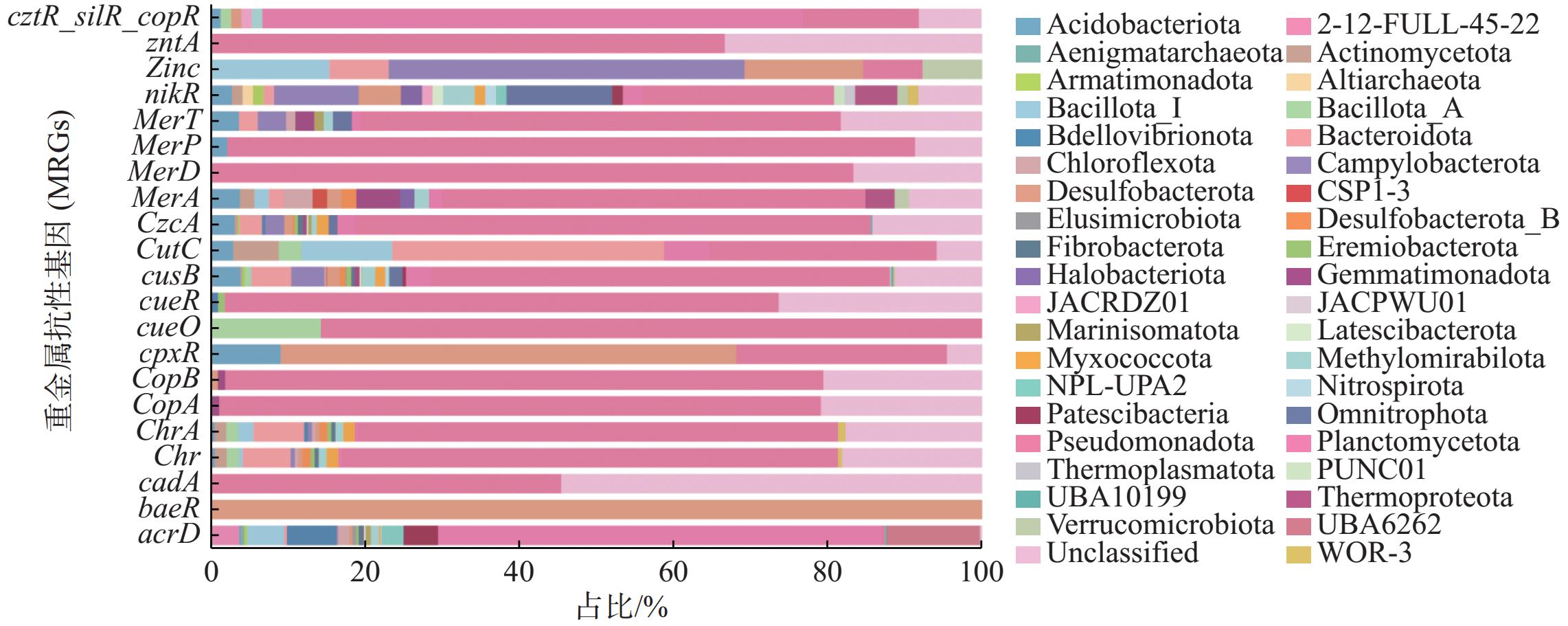
Fig.7
Abundance of metal resistance genes in groundwater"
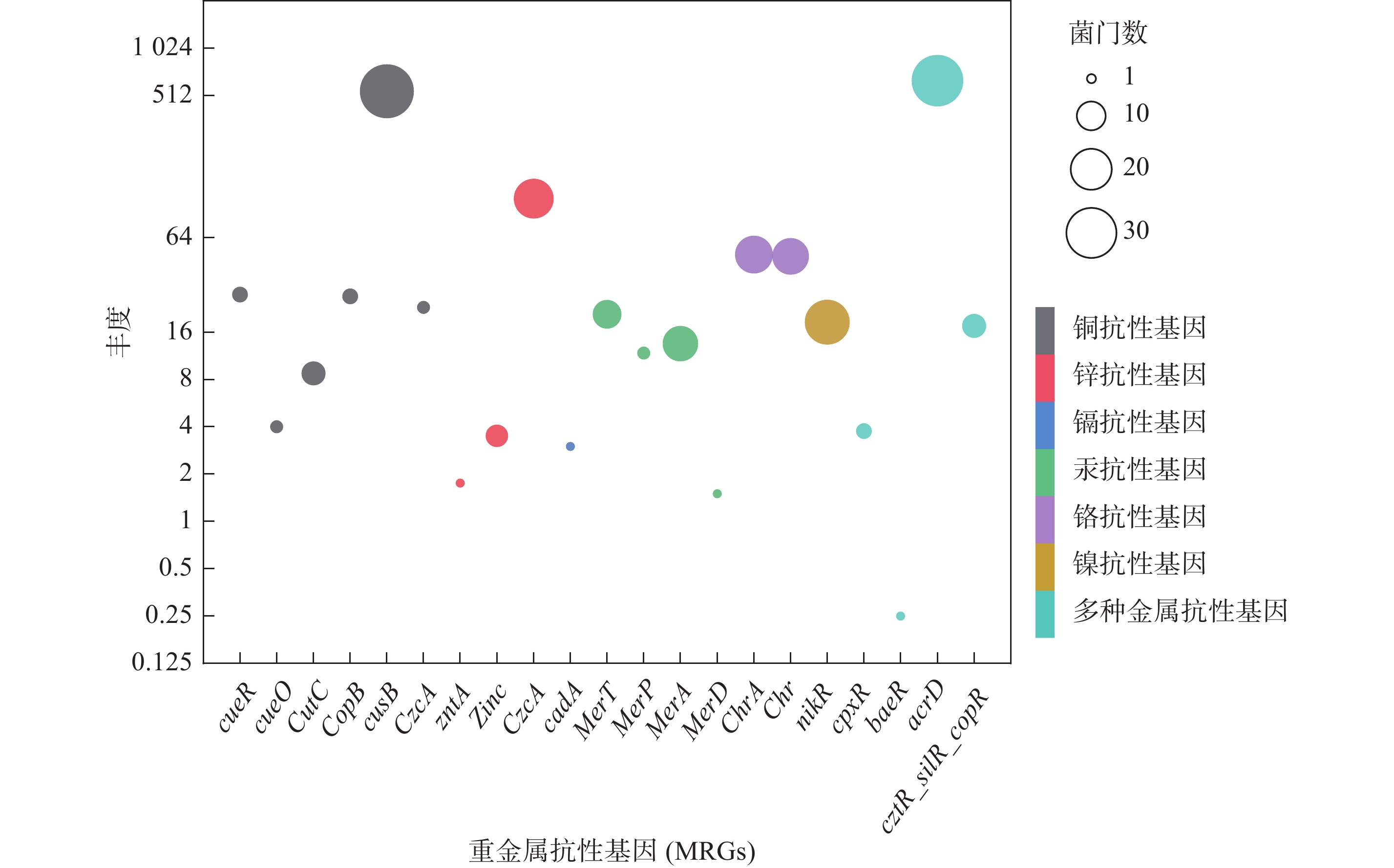
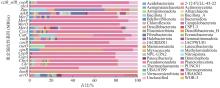
Fig.8
Potential classified host microorganisms for metal resistance genes"
| 1 | PAN L B, MA J, HU Y, et al.. Assessments of levels, potential ecological risk, and human health risk of heavy metals in the soils from a typical county in Shanxi Province, China. Environmental Science and Pollution Research, 2016, 23 (19): 19330- 19340. |
| 2 | YANG Z P, LU W X, LONG Y Q, et al.. Assessment of heavy metals contamination in urban topsoil from Changchun City, China. Journal of Geochemical Exploration, 2011, 108 (1): 27- 38. |
| 3 | RODRÍGUEZ MARTÍN J A, RAMOS-MIRAS J J, BOLUDA R, et al.. Spatial relations of heavy metals in arable and greenhouse soils of a Mediterranean environment region (Spain). Geoderma, 2013, 200, 180- 188. |
| 4 | LI Y J, YUAN Y, TAN W B, et al.. Antibiotic resistance genes and heavy metals in landfill: A review. Journal of Hazardous Materials, 2024, 464, 132395. |
| 5 | NEWTON A, ICELY J.. Land ocean interactions in the coastal zone, LOICZ: Lessons from banda aceh, Atlantis, and Canute. Estuarine, Coastal and Shelf Science, 2008, 77 (2): 181- 184. |
| 6 | RAMESH R, CHEN Z, CUMMINS V, et al.. Land–ocean interactions in the coastal zone: Past, present & future. Anthropocene, 2015, 12, 85- 98. |
| 7 | ZHANG C T, YANG Y.. Modeling the spatial variations in anthropogenic factors of soil heavy metal accumulation by geographically weighted logistic regression. Science of the Total Environment, 2020, 717, 137096. |
| 8 | ZENG J Q, TABELIN C B, GAO W Y, et al.. Heterogeneous distributions of heavy metals in the soil-groundwater system empowers the knowledge of the pollution migration at a smelting site. Chemical Engineering Journal, 2023, 454, 140307. |
| 9 | HU C Y, SHUI B N, YANG X L, et al.. Trophic transfer of heavy metals through aquatic food web in a seagrass ecosystem of Swan Lagoon, China. Science of the Total Environment, 2021, 762, 143139. |
| 10 | KOTHAPALLI C R.. Differential impact of heavy metals on neurotoxicity during development and in aging central nervous system. Current Opinion in Toxicology, 2021, 26, 33- 38. |
| 11 | JAISHANKAR M, TSETEN T, ANBALAGAN N, et al.. Toxicity, mechanism and health effects of some heavy metals. Interdisciplinary Toxicology, 2014, 7 (2): 60- 72. |
| 12 | 何一凡, 肖新宗, 王佳文.. 重金属污染对不同生境中微生物群落结构的影响. 环境科学, 2023, 44 (4): 2103- 2112. |
| 13 | QIU S, MA F, HUANG X, et al.. Study on the adsorption of bacteria in ceramsite and their synergetic effect on adsorption of heavy metals. Water Science and Technology, 2014, 69 (2): 407- 413. |
| 14 | LONG M, ZHOU C, ZHENG X, et al.. Reduction of chromate via biotic and abiotic pathways in the presence of three co-contaminating electron acceptors. Environmental Science & Technology, 2023, 57 (50): 21190- 21199. |
| 15 | LI L G, XIA Y, ZHANG T.. Co-occurrence of antibiotic and metal resistance genes revealed in complete genome collection. The ISME Journal, 2017, 11 (3): 651- 662. |
| 16 | THOMAS J, OLADEINDE A, KIERAN T J, et al.. Co-occurrence of antibiotic, biocide, and heavy metal resistance genes in bacteria from metal and radionuclide contaminated soils at the Savannah River Site. Microbial Biotechnology, 2020, 13 (4): 1179- 1200. |
| 17 | 李晓曼, 李青青, 杨洁, 等.. 上海市典型工业用地土壤和地下水重金属复合污染特征及生态风险评价. 环境科学, 2022, 43 (12): 5687- 5697. |
| 18 | 中华人民共和国生态环境部. 地下水环境监测技术规范: HJ 164—2020 [S]. 北京: 中国环境科学出版社, 2020. |
| 19 | QI Y T, WEI X D, ZHAO M J, et al.. Heavy metal pollution characteristics and potential ecological risk assessment of soils around three typical antimony mining areas and watersheds in China. Frontiers in Environmental Science, 2022, 10, 913293. |
| 20 | 国家质量监督检验检疫总局, 中国国家标准化管理委员会. 地下水质量标准: GB/T 14848—2017 [S]. 北京: 中国标准出版社, 2017. |
| 21 | ZHAO R D, COLES N A, WU J P.. Status of heavy metals in soils following long-term river sediment application in plain river network region, Southern China. Journal of Soils and Sediments, 2015, 15 (11): 2285- 2292. |
| 22 | WU Z Z, LIU T, CHEN Q, et al.. Unveiling the unknown viral world in groundwater. Nature Communications, 2024, 15 (1): 6788. |
| 23 | BOLGER A M, LOHSE M, USADEL B.. Trimmomatic: A flexible trimmer for Illumina sequence data. Bioinformatics, 2014, 30 (15): 2114- 2120. |
| 24 | LI D H, LIU C M, LUO R B, et al.. MEGAHIT: An ultra-fast single-node solution for large and complex metagenomics assembly via succinct de Bruijn graph. Bioinformatics, 2015, 31 (10): 1674- 1676. |
| 25 | KANG D D, LI F, KIRTON E, et al.. MetaBAT 2: An adaptive binning algorithm for robust and efficient genome reconstruction from metagenome assemblies. PeerJ, 2019, 7, e7359. |
| 26 | PARKS D H, IMELFORT M, SKENNERTON C T, et al.. CheckM: Assessing the quality of microbial genomes recovered from isolates, single cells, and metagenomes. Genome Research, 2015, 25 (7): 1043- 1055. |
| 27 | HYATT D, CHEN G L, LOCASCIO P F, et al.. Prodigal: Prokaryotic gene recognition and translation initiation site identification. BMC Bioinformatics, 2010, 11, 119. |
| 28 | CHAUMEIL P A, MUSSIG A J, HUGENHOLTZ P, et al.. GTDB-Tk v2: Memory friendly classification with the genome taxonomy database. Bioinformatics, 2022, 38 (23): 5315- 5316. |
| 29 | PAYSAN-LAFOSSE T, BLUM M, CHUGURANSKY S, et al.. InterPro in 2022. Nucleic Acids Research, 2023, 51 (D1): D418- D427. |
| 30 | JONES P, BINNS D, CHANG H Y, et al.. InterProScan 5: Genome-scale protein function classification. Bioinformatics, 2014, 30 (9): 1236- 1240. |
| 31 | 雷沛, 张洪, 王超, 等.. 沉积物水界面污染物迁移扩散的研究进展. 湖泊科学, 2018, 30 (6): 1489- 1508. |
| 32 | SCHNEIDER A R, PORTER E T, BAKER J E.. Polychlorinated biphenyl release from resuspended Hudson River sediment. Environmental Science & Technology, 2007, 41 (4): 1097- 1103. |
| 33 | 吕建树, 何华春.. 江苏海岸带土壤重金属来源解析及空间分布. 环境科学, 2018, 39 (6): 2853- 2864. |
| 34 | WANG Z Y, SU Q, WANG S, et al.. Spatial distribution and health risk assessment of dissolved heavy metals in groundwater of Eastern China coastal zone. Environmental Pollution, 2021, 290, 118016. |
| 35 | LV H H, JI C C, ZHANG L, et al.. Zinc application promotes nitrogen transformation in rice rhizosphere soil by modifying microbial communities and gene expression levels. Science of the Total Environment, 2022, 849, 157858. |
| 36 | 高春梅, 朱晓芸, 储鸣, 等.. 温度、盐度、pH对剩余污泥铜、铅溶出效应的影响分析. 上海海洋大学学报, 2015, 24 (6): 880- 885. |
| 37 | DEFEO S, BEUTEL M W, RODAL-MORALES N, et al.. Sediment release of nutrients and metals from two contrasting eutrophic California reservoirs under oxic, hypoxic and anoxic conditions. Frontiers in Water, 2024, 6, 1474057. |
| 38 | MIRANDA L S, WIJESIRI B, AYOKO G A, et al.. Water-sediment interactions and mobility of heavy metals in aquatic environments. Water Research, 2021, 202, 117386. |
| 39 | KANG M X, TIAN Y M, PENG S, et al.. Effect of dissolved oxygen and nutrient levels on heavy metal contents and fractions in river surface sediments. Science of the Total Environment, 2019, 648, 861- 870. |
| 40 | GARCIA-ORDIALES E, COVELLI S, RICO J M, et al.. Occurrence and speciation of arsenic and mercury in estuarine sediments affected by mining activities (Asturias, northern Spain). Chemosphere, 2018, 198, 281- 289. |
| 41 | LV Y, LIU J, ZHU R L, et al.. Photoreductive dissolution of iron (hydr)oxides and its geochemical significance. ACS Earth and Space Chemistry, 2022, 6 (4): 811- 829. |
| 42 | LIU Y, QIAO J L, SUN Y K, et al.. Simultaneous sequestration of humic acid-complexed Pb(II), Zn(II), Cd(II), and As(V) by sulfidated zero-valent iron: Performance and stability of sequestration products. Environmental Science & Technology, 2022, 56 (5): 3127- 3137. |
| 43 | 刘琪, 涂响, 王山军, 等.. 长三角地区饮用水水源地典型重金属污染状况及环境风险评估. 中国环境监测, 2024, 40 (6): 112- 121. |
| 44 | CHEN X M, DU Z, SONG X Y, et al.. Evaluating the occurrence frequency of horizontal gene transfer induced by different degrees of heavy metal stress. Journal of Cleaner Production, 2023, 382, 135371. |
| [1] | Tong ZHANG, Shulin KONG, Guanghan YAN, Minsheng HUANG, Yi YU, Yong’en CHEN, Ke LU. Pollution characteristics and risk assessment of microplastics in urban landscape waters of Taiyuan City [J]. J* E* C* N* U* N* S*, 2026, 2026(1): 1-13. |
| [2] | Yangyang HU, Chang LIU, Chengjin CAO, Junhao LI, Liuxing WU, Ruiyun ZHU, Minsheng HUANG, Yan HE, Haochen DU, Lei WANG, Xinlin YAN. Occurrence characteristics and risk assessment of microplastics in industrial wastewater from key industries in the Taihu Lake Basin [J]. J* E* C* N* U* N* S*, 2026, 2026(1): 14-24. |
| [3] | Yi YU, Longyuan ZHAO, Minsheng HUANG, Changneng QIU, Yao ZHOU, Yangyang YI. Invasion status and risk assessment of Pomacea canaliculata in nearshore waters of Shanghai’s circum-urban greenbelt parks [J]. J* E* C* N* U* N* S*, 2026, 2026(1): 156-167. |
| [4] | Hai NIU, Yupeng HUA, Lijie MA, Shuo ZHANG, Ruiyang GUAN, Min SHENG, Wenyan DUAN. Factors influencing heavy metal pollution in open-pit coal mine dumps [J]. J* E* C* N* U* N* S*, 2025, 2025(2): 106-120. |
| [5] | Tiefeng CUI, Daoji LI. Progress and critical issues in research on micro- and nanoplastics in human body [J]. Journal of East China Normal University(Natural Science), 2024, 2024(6): 1-13. |
| [6] | Dingye YANG, Jing YANG, Ruihe JIN, Fangfang DING, Yuxin ZHANG, Min LIU. Occurrence characteristics and risk assessment of halogenated flame retardants in soils of Hefei City [J]. Journal of East China Normal University(Natural Science), 2024, 2024(6): 161-177. |
| [7] | Jing YANG, Yan WU, Yue LI, Xia LIU, Dingye YANG, Yuanyuan CHEN, Ruihe JIN, Ye LI, Min LIU. Occurrence characteristics and healthy risk assessment of hexabromocyclododecane in agricultural soils in Shanghai [J]. Journal of East China Normal University(Natural Science), 2024, 2024(6): 178-187. |
| [8] | Chenming GU, Jing YANG, Ye LI, Ye HUANG, Yan WU, Guoyu YIN, Ruihe JIN, Yi YANG, Min LIU. Advances in research on multimedia fate, risks, and simulation of contaminants of emerging concern in urban agglomerations [J]. Journal of East China Normal University(Natural Science), 2024, 2024(6): 24-38. |
| [9] | Zhifu LI, Yonghong WU, Xuemei LIU, Dan LI. Assessment of water quality and heavy metal contamination of sediments after rice harvesting in a rice-shrimp co-cropping system [J]. Journal of East China Normal University(Natural Science), 2024, 2024(1): 122-133. |
| [10] | Wenchao LI. Pollution characteristics and risk assessment of heavy metals in soil of the public area in an industrial park on the lower reaches of the Yangtze River [J]. Journal of East China Normal University(Natural Science), 2024, 2024(1): 134-143. |
| [11] | Yixuan FANG, Maotian LI, Xiaoqiang LIU, Yan SONG, Mudong LIN, Huikun YAO. Response of heavy metal distribution of surface sediments to aquaculture in Sansha Bay, Fujian [J]. Journal of East China Normal University(Natural Science), 2024, 2024(1): 144-156. |
| [12] | Sicheng HUANG, Chunfu TONG, Yiping ZHU. Effects of floating-bed planting on the retention of heavy metals by emergent hydrophytes [J]. Journal of East China Normal University(Natural Science), 2023, 2023(3): 33-42. |
| [13] | Yue REN, Weisong ZHOU, Guofu HE, Chunyi YANG, Gensen YANG, Jiayan GU, Yuanshu HU. Study on local phytoremediation of arsenic pollution in soil from sludge reforestation [J]. Journal of East China Normal University(Natural Science), 2022, 2022(6): 150-156. |
| [14] | Yiping ZHU, Xiaofei LI, Xia LIANG. Content and ecological risk assessment of heavy metals in the surface sediments of Qingcaosha Reservoir in Shanghai [J]. Journal of East China Normal University(Natural Science), 2021, 2021(2): 54-62. |
| [15] | ZHOU Xiao-xiao, BI Chun-juan, WANG Meng, ZHOU Ya, CHEN Zhen-lou. Pollution effects of atmospheric deposition on heavy metals in leafy vegetables and its health risks [J]. Journal of East China Normal University(Natural Sc, 2018, 2018(2): 141-150. |
| Viewed | ||||||
|
Full text |
|
|||||
|
Abstract |
|
|||||
